How to Freeze Asparagus Without Blanching
Asparagus doesn’t stick around long. It has a short season, it spoils fast, and once it’s gone from the store, it’s gone for months. So if you love it, stocking up while it’s fresh makes sense.
The problem is that asparagus is mostly water, and water doesn’t do well in a freezer. Toss it in without any prep, and you’ll end up with mushy, dull-tasting stalks a few weeks later.
Most guides will tell you to blanch it first (that quick dip in boiling water) before freezing. But if you don’t have the time or patience for that step, you’re not out of luck. Here’s how to freeze asparagus without blanching, and still get decent results months later.
Step 1: Prep the Asparagus
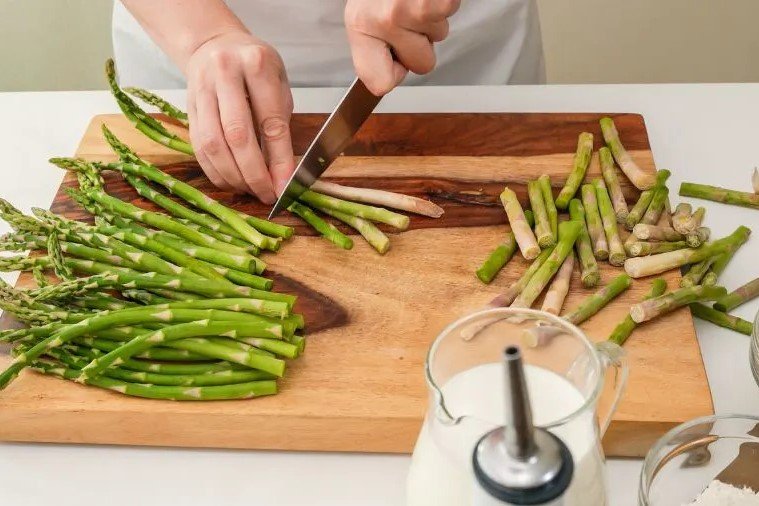
Asparagus is delicate, so work quickly once you start prepping it. The faster you move, the more quality you’ll lock in.
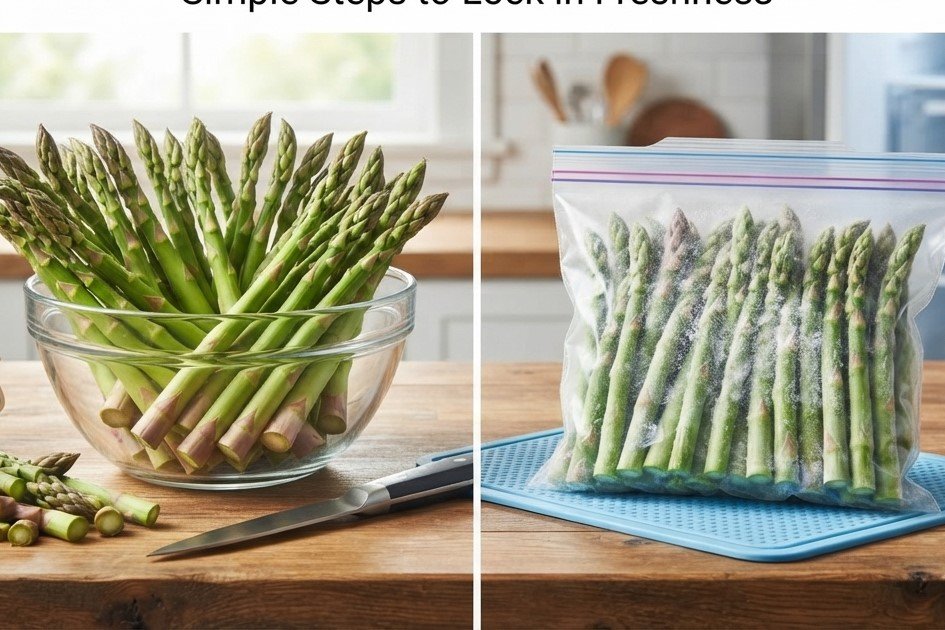
- Trim the ends. Cut off the tough, woody ends you wouldn’t eat anyway. Toss them or add them to your compost.
- Wash the stalks. Rinse off any dirt or grit. You don’t want to freeze that in along with the asparagus.
Since you’re skipping the blanching step, keep in mind the asparagus won’t hold up quite as long in the freezer as blanched asparagus would. That’s the trade-off for saving time now.
Step 2: Dry It Off
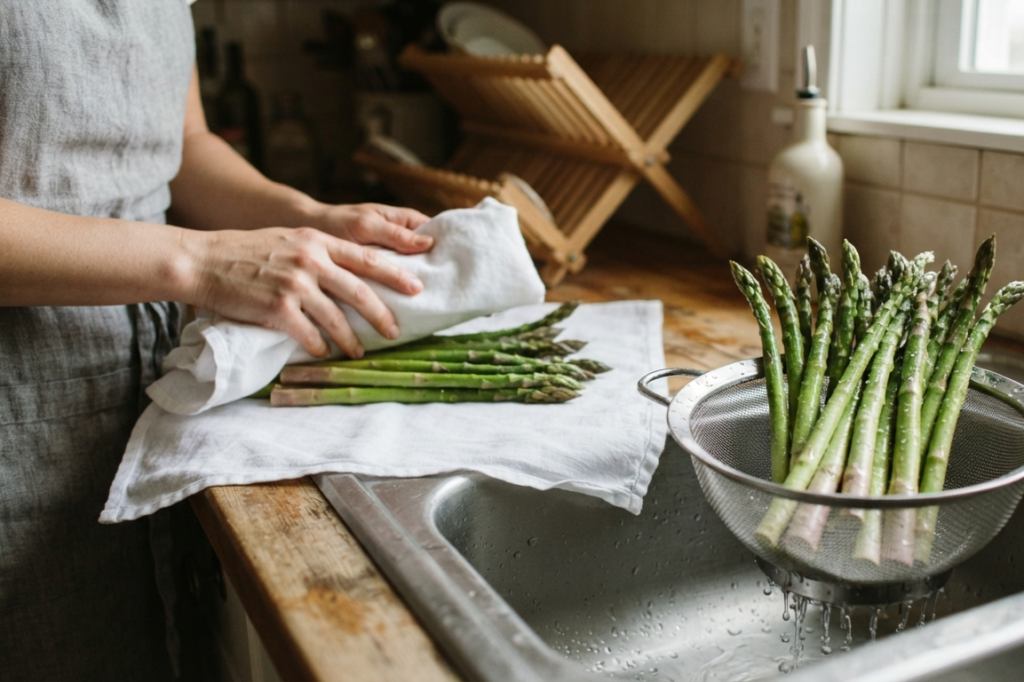
This is the step that matters most when you’re skipping blanching.
Asparagus holds a lot of water naturally, and that water is exactly what causes freezer damage. The more moisture you remove now, the better your asparagus will hold its texture later.
- Let the asparagus drain over the sink for a bit.
- Pat it dry, or let it air dry briefly if you have the time.
You don’t need to dry it out completely. Just get rid of as much surface moisture as you can, without leaving it out so long that it starts to warm up or wilt.
Step 3: Pack It in a Vacuum-Sealed Bag
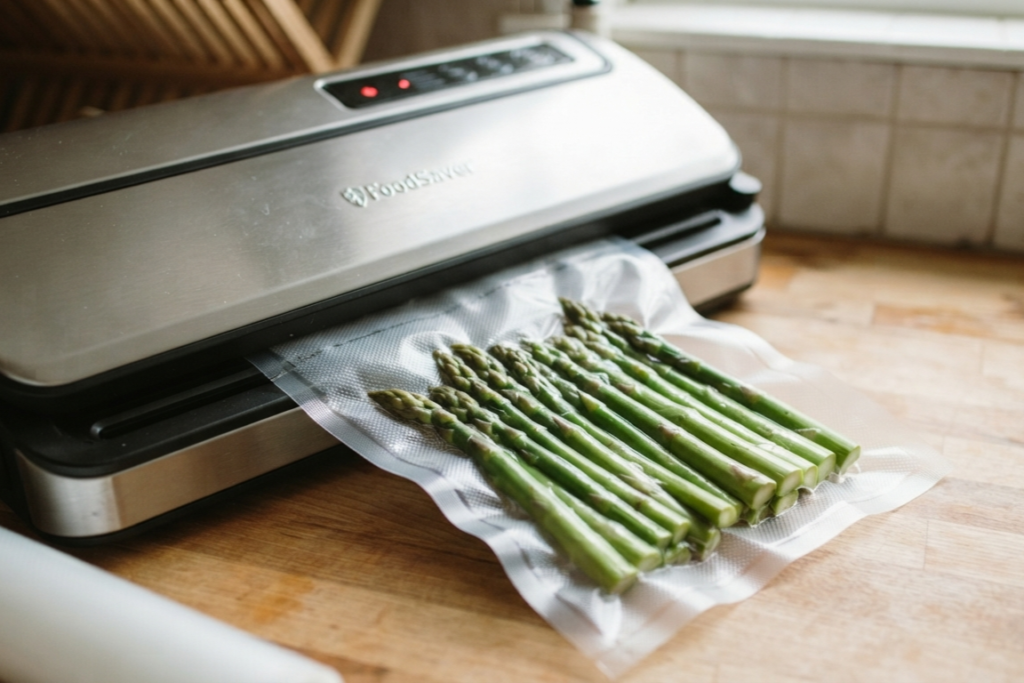
Once the asparagus is dry, move it into a vacuum-sealable bag.
If you plan to steam it later or cook it sous vide, this is also a good time to toss in any seasonings you want, since they’ll infuse right into the bag.
- Make sure the bag seals completely. Any gaps let in extra air and moisture, which speeds up freezer damage.
- Use a vacuum sealer if you have one. Most are simple to use and pull out the excess air in seconds.
- No vacuum sealer? Push out as much air as you can by hand before sealing the bag tightly.
Step 4: Freeze It
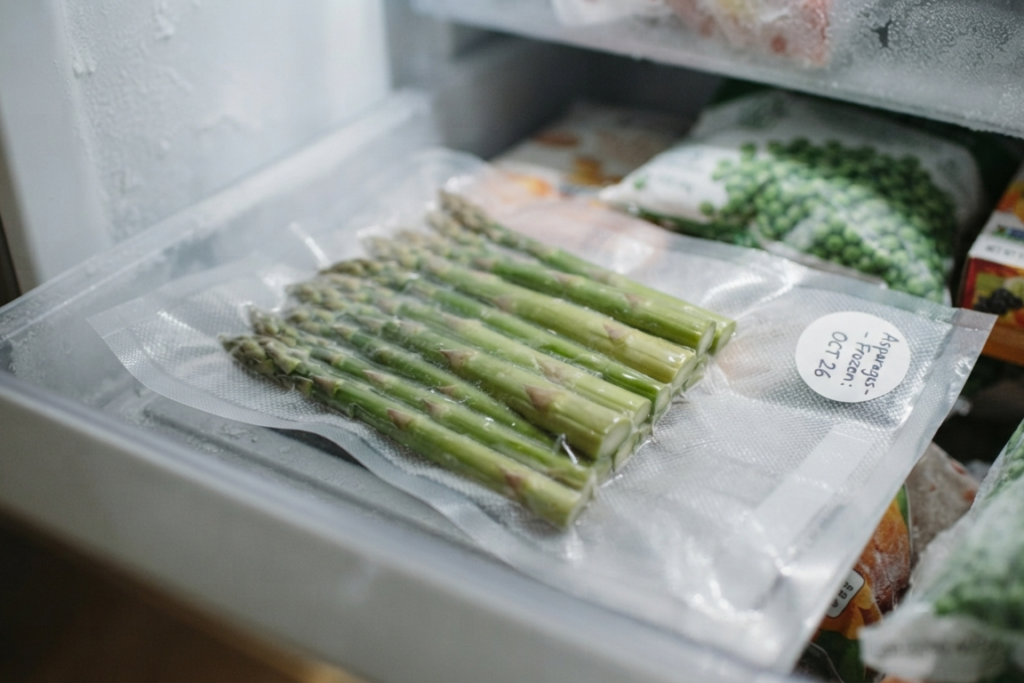
Once it’s sealed, your asparagus is ready for the freezer.
Without blanching, expect your asparagus to stay good for about 2 months in the freezer. After that, the texture and flavor start to break down noticeably.
How to Tell If Frozen Asparagus Has Gone Bad
Before cooking your asparagus, take a quick look at its color.
- Bright green: Good to cook and eat.
- Dull green or gray: Time to toss it. That color shift means the freezer has already broken down the texture and flavor, and it won’t taste right anymore.
How to Reheat Frozen Asparagus
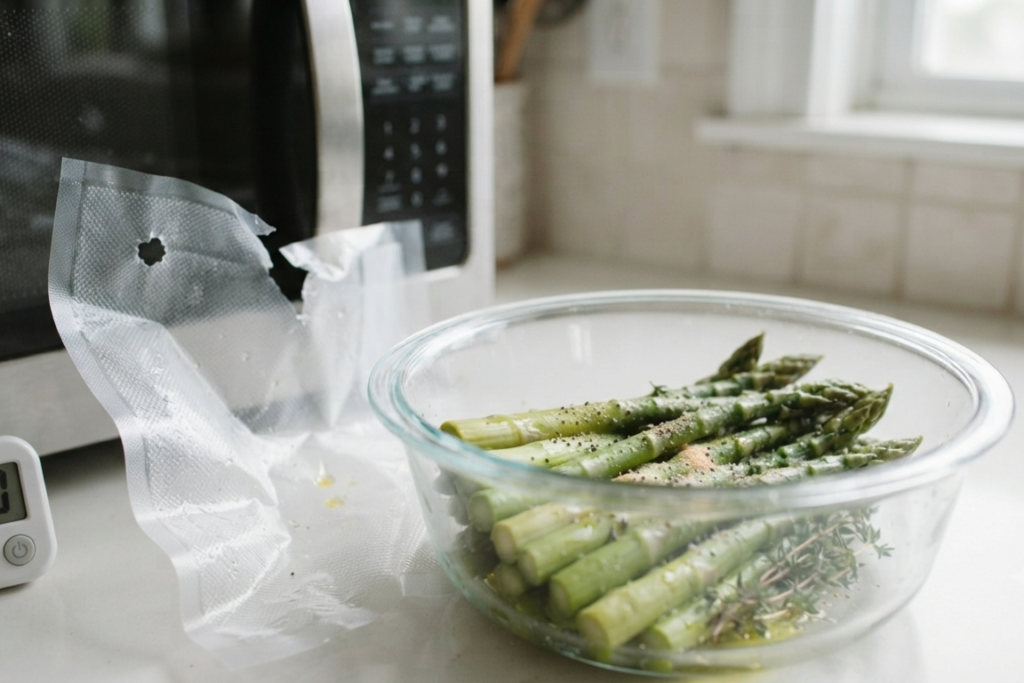
When you’re ready to cook it, here’s the easiest way to bring it back to life:
- Poke a small hole in the bag first. This lets air in slowly, which makes the asparagus much easier to pull out without tearing or damaging it.
- Pour the asparagus (and any seasoning you packed with it) into a microwave-safe bowl.
- Microwave for about 6 minutes. The exact time depends on your microwave’s wattage, so check it partway through.
- Once it’s done, you’ll have warm, steamed, and seasoned asparagus ready to eat.
This method works especially well if you seasoned the asparagus before freezing, since the flavor cooks right in as it steams.
Final Thoughts
Blanching is still the gold standard if you want asparagus to last as long as possible in the freezer. But if you’re short on time, this no-blanch method still gets the job done. Trim it, dry it well, seal it tightly, and you’ll have asparagus ready to cook for the next couple of months, no boiling water required.