Osso Buco with Gremolata Boujee Recipe You Can Try at Home
If you have ever ordered osso buco at a restaurant and thought, ‘There is no way I could make this at home,’ I am here to change your mind. This dish may sound fancy, and it is. But it is also surprisingly easy to make once you break it down into simple steps.
Osso buco literally means “bone with a hole” in Italian. This dish is all about slow cooked tenderness. When you finish it with gremolata, which is a zesty mix of lemon zest, garlic, and parsley, you get this amazing contrast of rich and bright flavors that tastes wonderful together.
It is boujee, yes. And it is absolutely doable at home.
What is Osso Buco?
Osso buco is an Italian dish traditionally made with cross cut veal shanks. The meat is braised slowly with onions, carrots, celery, white wine, and broth until the meat becomes tender and flavorful. The marrow from the bone infuses the sauce, giving it a rich, velvety texture.
The dish originated in Milan, Italy. Sometimes you will see it called Osso buco alla Milanese, especially when it is served with saffron risotto.
What is Gremolata?
Gremolata is a simple but vibrant Italian condiment. It is made with finely chopped parsley, garlic, and lemon zest. You sprinkle it over the osso buco just before serving. It instantly cuts through the richness of the dish with fresh, citrusy notes.
Think of it as the finishing touch that wakes everything up.
Ingredients
This recipe makes 4 servings.
For the Osso Buco
| Ingredient | Amount |
|---|---|
| Veal shanks (about 1.5 inches thick) | 4 pieces |
| Salt and pepper | To taste |
| All purpose flour for dredging | Half cup |
| Olive oil | 3 tablespoons |
| Onion, chopped | 1 |
| Carrots, chopped | 2 |
| Celery stalks, chopped | 2 |
| Garlic cloves, minced | 3 |
| Dry white wine | 1 cup |
| Beef or veal broth | 1.5 cups |
| Crushed tomatoes | 1 cup |
| Bay leaf | 1 |
| Dried thyme | 1 teaspoon |
| Rosemary | 1 teaspoon |
For the Gremolata
| Ingredient | Amount |
|---|---|
| Lemon zest | From 1 lemon |
| Finely chopped parsley | 2 tablespoons |
| Small garlic clove, minced | 1 |
Step by Step Cooking Instructions
Follow these steps carefully to make the perfect osso buco with gremolata.
Step 1: Prep the Meat
Pat the veal shanks dry with a paper towel. Season them generously with salt and pepper. Then dredge them lightly in flour. This means coating each shank with a thin layer of flour.
Step 2: Sear the Meat
In a heavy bottomed pot or Dutch oven, heat the olive oil over medium high heat. Brown the veal shanks on all sides. This takes about 3 to 4 minutes per side. Once browned, remove them from the pot and set them aside on a plate.
Step 3: Sauté the Aromatics
In the same pot, add the chopped onion, carrots, celery, and minced garlic. Cook them until they become soft and fragrant. This takes about 5 to 7 minutes.
Step 4: Deglaze the Pot
Pour in the white wine. Use a wooden spoon to scrape up any brown bits from the bottom of the pot. Those brown bits are full of flavor. Let the wine simmer for 2 to 3 minutes.
Step 5: Add Liquids and Herbs
Stir in the broth, crushed tomatoes, bay leaf, thyme, and rosemary. Return the veal shanks to the pot. Cover the pot with a lid. Simmer on low heat on the stove or transfer to an oven preheated to 325 degrees Fahrenheit (160 degrees Celsius). Cook for 2 and a half to 3 hours. The meat is ready when it is fork tender, meaning a fork goes in easily with no resistance.
Step 6: Make the Gremolata
While the osso buco cooks, make the gremolata. In a small bowl, mix together the lemon zest, finely chopped parsley, and minced garlic. Set it aside.
Step 7: Serve
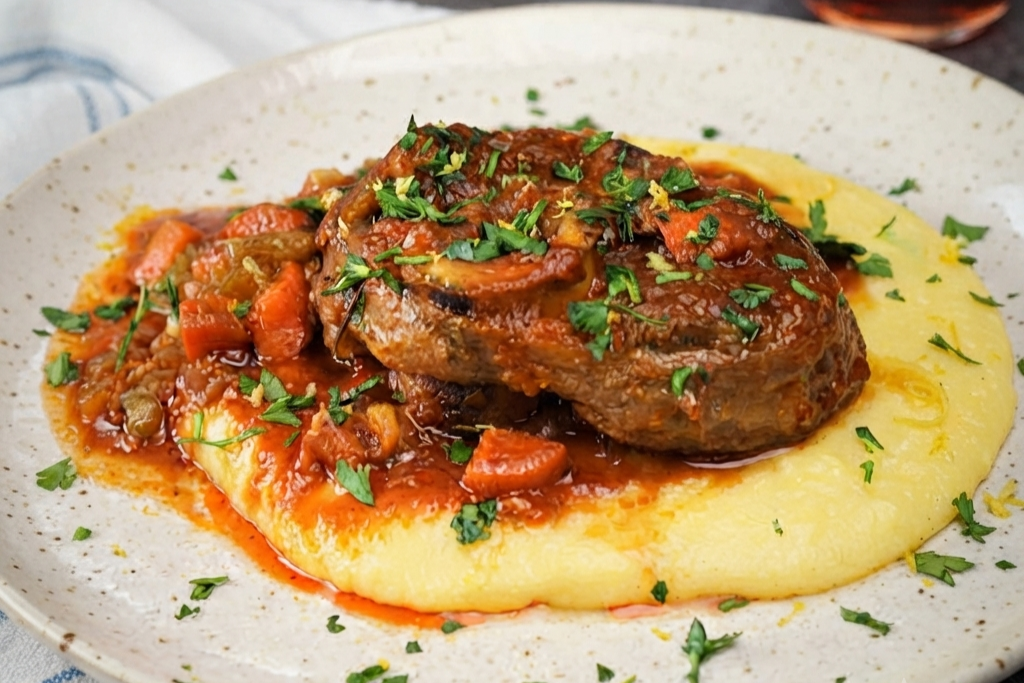
Spoon the osso buco over mashed potatoes, risotto, or polenta. Drizzle the rich sauce on top. Sprinkle the fresh gremolata over everything just before serving.
Nutritional Information
Osso buco is a rich and hearty dish. Below is the approximate nutritional information per serving. Values may vary based on exact ingredients used.
| Nutrient | Approximate Amount |
|---|---|
| Calories | 550 to 650 |
| Protein | 45 grams |
| Fat | 25 grams |
| Carbohydrates | 20 grams |
| Fiber | 3 grams |
| Sugar | 6 grams |
| Sodium | 800 mg |
This dish is high in protein from the veal. It also provides iron and vitamin A from the vegetables. The gremolata adds a boost of vitamin C from the lemon zest and parsley.
Tips for Cooking and Prepping
If I can give you one piece of advice, do not rush it. Osso buco needs time to become tender. That is the magic of braising.
I like to sear the meat well first. You want a deep brown crust on all sides because that is where the flavor begins. Use a heavy bottomed pot or Dutch oven for even heat.
When adding the braising liquid, which is a mix of broth, white wine, and tomatoes, make sure it comes about halfway up the meat. Do not fully submerge it. This keeps the sauce rich, not watery. Once it is in the oven, let it do its thing. Resist the urge to peek too often.
And finally, do not skip the gremolata. It might look like a garnish, but it is what elevates this dish from cozy to restaurant level.
Can Other Meats Be Used?
Traditionally, osso buco is made with veal. But if you cannot find it or prefer something else, beef shanks are a great substitute. Do note that they will take a bit longer to become tender. Lamb shanks also work beautifully for a slightly gamier flavor.
The key is to use bone in cuts because that is where all the flavor and that signature marrow goodness comes from.
Serving Suggestions
Osso buco pairs wonderfully with risotto alla Milanese, creamy mashed potatoes, or even buttered polenta. The rich, savory sauce deserves something that can soak it all up.
If you want a lighter pairing, serve it with crusty bread and a simple arugula salad with lemon dressing to balance the richness.
Make Ahead and Storage Tips
This is one of those dishes that actually tastes better the next day. The flavors deepen as it rests, so do not hesitate to make it ahead.
Store cooled osso buco in an airtight container in the fridge for up to 4 days. You can also freeze it for up to 3 months. Reheat gently over low heat on the stove or in the oven. Add a splash of broth if needed to loosen the sauce.
If you are hosting a dinner, braise it a day before. This way, the pressure is off your shoulders and the dish will be even more flavorful.
Conclusion
Osso buco with gremolata sounds fancy, but it is absolutely doable at home. The key is patience. You let the meat cook low and slow until it becomes fall apart tender. The rich, velvety sauce is perfect for soaking up with mashed potatoes, risotto, or polenta.
And then there is the gremolata. That simple mix of lemon zest, parsley, and garlic takes this dish from cozy to restaurant level. It adds a bright, fresh pop that balances the richness beautifully.
Whether you are cooking for a special occasion or just want to try something new, this recipe is sure to impress. Make it a day ahead for even deeper flavor. Serve it with pride. And enjoy every single bite.
FAQs
Here are answers to common questions about osso buco.
What cut of meat is Osso Buco?
Osso buco uses cross cut veal shanks. That means the shank is sliced horizontally to include the marrow bone. This cut is ideal for braising because it is full of connective tissue that melts into tender perfection after slow cooking.
What is Osso Buco in English?
In English, osso buco translates literally to “bone with a hole.” This refers to the marrow bone at the center of the veal shank.
Why is Osso Buco so expensive?
It is all about the cut. Veal shanks are a specialty item and take time to cook properly. That is why it is often priced higher in restaurants. But making it at home cuts the cost significantly, and you get the same luxurious results.
Is Osso Buco difficult to cook?
Not at all. It is more about patience than skill. Once you have seared the meat and added your braising liquid, the oven does the hard work.
What is the secret to tender Osso Buco?
Two things: low and slow cooking and moisture. Braise the meat gently for a few hours, and do not let the liquid dry out. The connective tissues will break down into gelatin, giving you that fall apart tenderness.