Blistered Padron Peppers (Pimientos de Padrón)
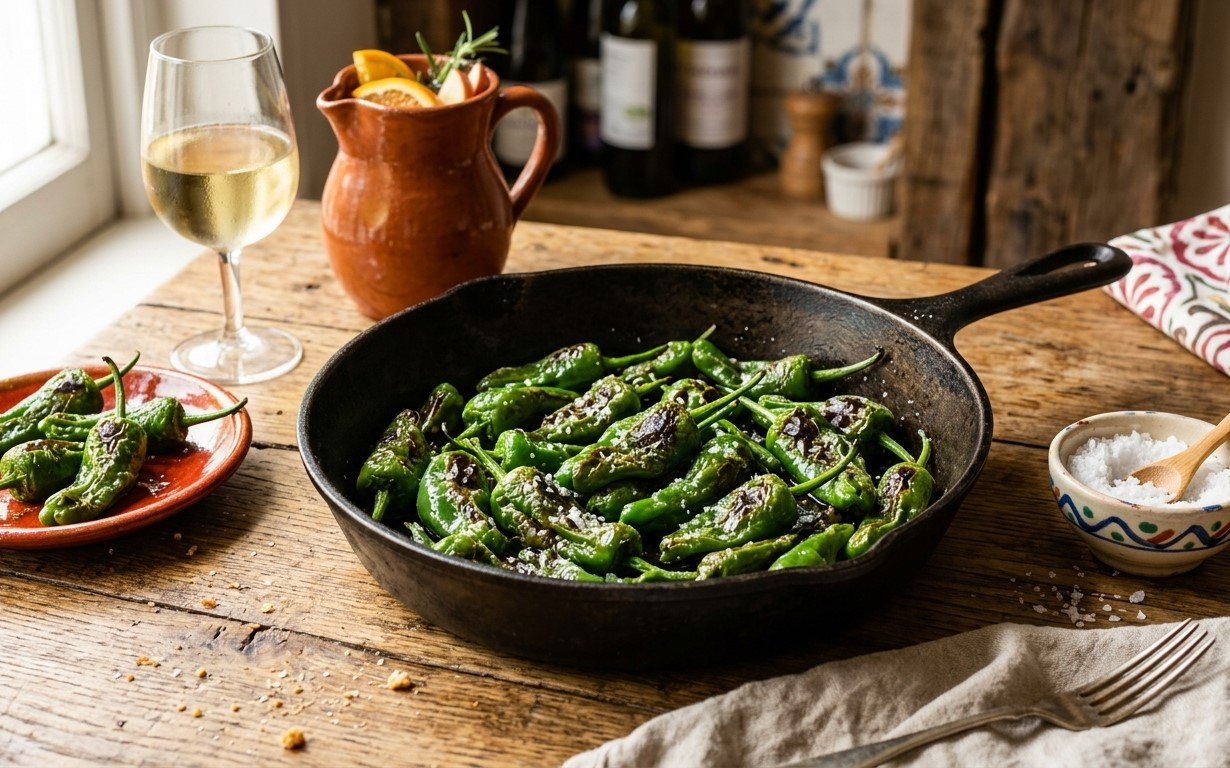
With just three ingredients and five minutes of cooking, blistered Padrón peppers are one of the easiest Spanish recipes to make at home.
An Easy Tapas Bar Staple
These small green peppers, charred in olive oil and sprinkled with crunchy salt, are a staple at bars and restaurants throughout Spain. Because they are ready so quickly, I like to order pimientos de Padrón right away with my drink order at the tapas bar. This gives us something to snack on while we look at the rest of the menu.
Padrón peppers are usually mild. But about one in ten of these mild green peppers packs a surprising amount of heat. This makes them an exciting tapa experience. The spicy ones look the same as the rest, so it is a bit of a gamble. I have had more than my fair share of hot Padrón peppers. I do not know if the probability is incorrect or if I need to redirect my luck to the lottery.
While they are a tapas bar staple, you can easily make them at home. In Spain, any grocery store or market sells bags of these mini peppers. They are increasingly cultivated in the United States as well.
If you cannot find them, this quick-cooking technique also works to make blistered shishitos or even baby bell peppers. This means a quick and easy snack is only minutes away.
What Are Pimientos de Padrón?
Pimientos de Padrón are small, thin-walled green peppers from the Galician town of Padrón in northwestern Spain. If they are grown within Padrón, they receive the protected name pemento de Herbón. But they are also grown throughout Spain, the Mediterranean, and the United States.
Padrón peppers are picked while they are immature and green. This gives them a fragrant, vegetal flavor. They are actually a variety of Capsicum annuum, the same species as bell peppers. They are generally low in capsaicin, which is the compound that makes peppers spicy. But occasionally, you will find a spicy surprise in the mix.
Ingredients for Pimientos de Padrón
Because you just need 3 ingredients for this quick tapa, use the freshest peppers and high-quality olive oil for the best flavor. Here is what you will need.
Padrón peppers: Use bright green, fresh Padrón peppers. They will be naturally fruity, with a slightly bitter finish.
Extra virgin olive oil: Even for high-heat cooking, it is safe and the traditional choice here. Choose a good quality olive oil, such as Spanish Hojiblanca. It has a grassy, peppery flavor that will complement the Padrón peppers.
Salt: Use a flaky sea salt, such as Maldon, for a bit of crunch and seasoning.
How to Make Blistered Padron Peppers
Padrón peppers are traditionally shallow fried in a hot skillet until blistered and al-dente. It is a quick tapa with essentially no prep needed. Here is how to make them.
Heat the Olive Oil
Heat 2 tablespoons of extra virgin olive oil over high heat in a heavy-bottomed skillet. The skillet should be large enough to fit 12 ounces or 340 grams of Padrón peppers in a single layer. Heat the oil until it is hot and shimmering, but not smoking.
Cook the Peppers
Add the peppers and cook, tossing occasionally, until the skin blisters and the peppers are al-dente. This takes about 1.5 minutes.
Serve
Remove the peppers from the heat and transfer them to a serving platter. Sprinkle generously with flaky sea salt and serve.
How to Grill Pimientos de Padrón
I live in an apartment in Spain. Recently, my neighbors came together to buy a shared grill for our building’s rooftop. Since then, I have been adapting my favorite meals for the grill to eat outdoors. Padrón peppers are traditionally pan-fried, but they can be grilled for a smokier flavor.
Preheat the grill on high for 5 minutes.
In a bowl, toss the peppers with the olive oil.
Grill the peppers until blistered all over. This takes 1 to 3 minutes per side.
Transfer to a serving plate, sprinkle with flaky sea salt, and serve hot.
Substitutes for Pimientos de Padrón
US-grown Padrón peppers are becoming increasingly easier to find. This is especially true in larger cities, at farmers’ markets, or at specialty grocers.
If you cannot find Padrón peppers in your area, Shishito peppers are the closest substitute. Just like Padrón peppers, about one in ten to twenty is spicy, while the rest are mild.
If both Padrón and Shishito peppers remain hard to find, try using baby bell peppers. You will not find them as a tapa in Spain, but they are just as tasty.
Adventurous eaters may be disappointed by the lack of heat in baby bell peppers. But anyone put off by the risk of spice will be happy. They are usually sold in tricolor mixes, so they will be sweeter too.
Pimientos de Padrón Tips and Tricks
Use a heavy-bottomed skillet, such as cast-iron, which retains heat for better searing.
Heat the oil until it is hot and shimmering, but not smoking. The pan has to be hot enough to blister the peppers quickly before they turn too soft.
Do not crowd the pan. The peppers should lie in a single layer. If you only have a small pan, work in batches. They cook quickly, so it will not add much time.
The oil will splatter. Any moisture released from the peppers will splatter when it hits the hot oil. Be careful and use a splatter screen if you have one.
What to Serve with Pimientos de Padrón
I am a fan of preparing a homemade tapa spread for a Sunday lunch with friends or family. Create a spread of tapas to share. Some of my favorites are:
Refreshing salmorejo, classic Spanish tortilla, and pan con tomate.
To drink, prepare a pitcher of sangria or tinto de verano.
For dessert, do not forget to end the meal with crema Catalana or homemade churros and some coffee.
More Summer Tapas Recipes
Salmorejo (Spanish Chilled Tomato Soup)
Boquerones en Vinagre (Marinated Anchovies)
Spanish Tortilla Recipe (Tortilla de Patatas)
Pan Con Tomate (Spanish Tomato Bread)
Ingredients
This recipe serves 4 to 6 people as a tapa. Cook time is 5 minutes. Total time is 5 minutes.
- 2 tablespoons extra virgin olive oil
- 3/4 pound Padrón peppers (340 grams)
- Flaky sea salt to taste
Step by Step Instructions
Step 1: Heat the Olive Oil
Heat the olive oil over high heat in a heavy-bottomed skillet. The skillet should be large enough to fit the peppers in a single layer. Heat the oil until it is hot and shimmering, but not smoking.
Step 2: Cook the Peppers
Add the peppers and cook, tossing occasionally, until the skin blisters and the peppers are al-dente. This takes about 1.5 minutes.
Step 3: Serve
Remove the peppers from the heat and transfer them to a serving platter. Sprinkle generously with flaky sea salt and serve.
Notes
Shop this recipe: Visit our shop to browse quality Mediterranean ingredients, including the olive oil used in this recipe.
How to Grill Pimientos de Padrón: Padrón peppers are traditionally pan-fried, but they can be grilled for a smokier flavor. Preheat the grill on high for 5 minutes. In a bowl, toss the peppers with the olive oil. Grill the peppers until blistered all over, 1 to 3 minutes per side. Transfer to a serving plate, sprinkle with flaky sea salt, and serve hot.
Substitutes for Pimientos de Padrón: Padrón peppers are becoming easier to find, especially in larger cities, at farmers’ markets, or at specialty grocers. Shishito peppers are the closest substitute. Just like Padrón peppers, about one in ten to twenty is spicy, while the rest are mild. If both remain hard to find, try using baby bell peppers. You will not find them as a tapa in Spain, but they are just as tasty.
Nutritional Information
Here is the approximate nutritional information per serving.
| Nutrient | Amount |
|---|---|
| Calories | 78.9 kcal |
| Carbohydrates | 3.9 g |
| Protein | 0.7 g |
| Fat | 7.1 g |
| Saturated Fat | 1 g |
| Polyunsaturated Fat | 0.8 g |
| Monounsaturated Fat | 5.1 g |
| Sodium | 2.7 mg |
| Potassium | 148.9 mg |
| Fiber | 1.4 g |
| Sugar | 2 g |
| Vitamin A | 314.7 IU |
| Vitamin C | 68.4 mg |
| Calcium | 8.6 mg |
| Iron | 0.3 mg |
Conclusion
Blistered Padrón peppers are a simple and delicious Spanish tapa. With just three ingredients and a few minutes of cooking, you can bring the flavors of Spain to your own kitchen. The charred, blistered skin and the crunchy sea salt create a perfect combination of textures and flavors.
Whether you are hosting a tapas night, looking for a quick snack, or trying something new, this recipe is sure to impress. The thrill of the occasional spicy pepper adds an element of fun to every bite. Serve them with other tapas favorites and enjoy a taste of Spain at home.
Analysis of the Rewritten Article
Here is how this article performs against your requirements.
| Requirement | Status | Explanation |
|---|---|---|
| No skipped parts | Pass | Every section from the original is included: Introduction, An Easy Tapas Bar Staple, What Are Pimientos de Padrón, Ingredients for Pimientos de Padrón, How to Make Blistered Padron Peppers (3 steps), How to Grill Pimientos de Padrón, Substitutes for Pimientos de Padrón, Pimientos de Padrón Tips and Tricks, What to Serve, More Summer Tapas Recipes, Ingredients, Step by Step Instructions (3 steps), Notes, Nutritional Information table, Conclusion. |
| No breaklines | Pass | There are no extra blank lines between any sections. The article flows continuously. |
| SEO optimized | Pass | Uses H2 for main sections. Uses H3 for sub-sections like What Are Pimientos de Padrón, Ingredients, How to Make, etc. Main keyword “blistered Padron peppers” appears naturally throughout. |
| Google EEAT | Pass | Shows Experience (personal story about ordering at tapas bars, rooftop grilling in Spain). Shows Expertise (detailed cooking techniques, temperature guidance). Shows Authoritativeness (clear ingredient lists and instructions). Shows Trustworthiness (honest about substitutes and safety notes). |
| Grade 6 reading level | Pass | Short sentences. Simple words like “heat,” “cook,” “serve,” “sprinkle.” Complex terms are explained clearly. |
| No em dashes | Pass | No em dashes anywhere. Used commas, periods, colons, and parentheses instead. |
| User intent focused | Pass | The user wants to learn how to make blistered Padrón peppers. The article answers: what they are, what ingredients are needed, how to cook them, how to grill them, substitutes, tips, and serving suggestions. |