11 Easy Ways to Get a Stuck Cake Out of the Pan
You mixed the batter, poured it in, and watched it bake up golden and perfect. Then comes the moment of truth: flipping the pan over, only for the cake to refuse to budge.
It’s one of the most frustrating parts of baking, but it’s rarely a lost cause. Below are 11 tricks that can rescue a stuck cake, plus a few ways to stop this from happening again next time.
First, Let the Cake Cool
No matter which method you try below, this step comes first. Trying to remove a warm cake almost always ends with pieces stuck to the pan.
Let the pan sit at room temperature for at least 30 minutes before attempting to remove the cake. Larger cakes may need a bit longer. Once it’s fully cooled, you’re ready to try one of the methods below.
11 Ways to Remove a Stuck Cake
1. Just Let It Cool Fully
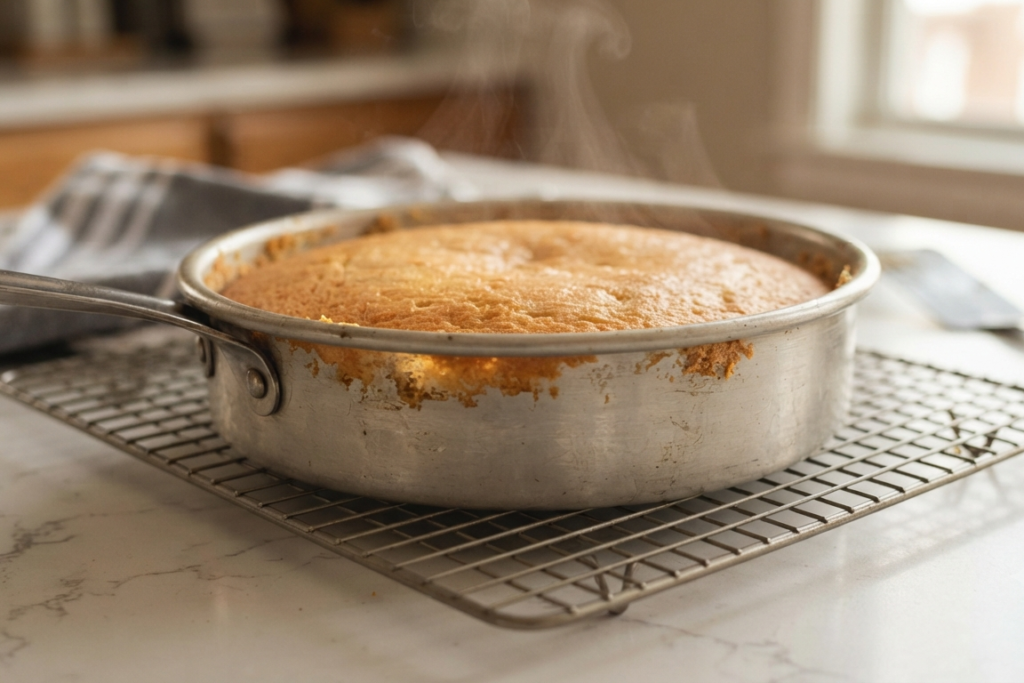
The simplest fix is often the one people skip. Give the cake plenty of time on the counter before attempting anything else. Rushing this step is the number one reason cakes tear apart in the pan.
2. Cool It on a Rack
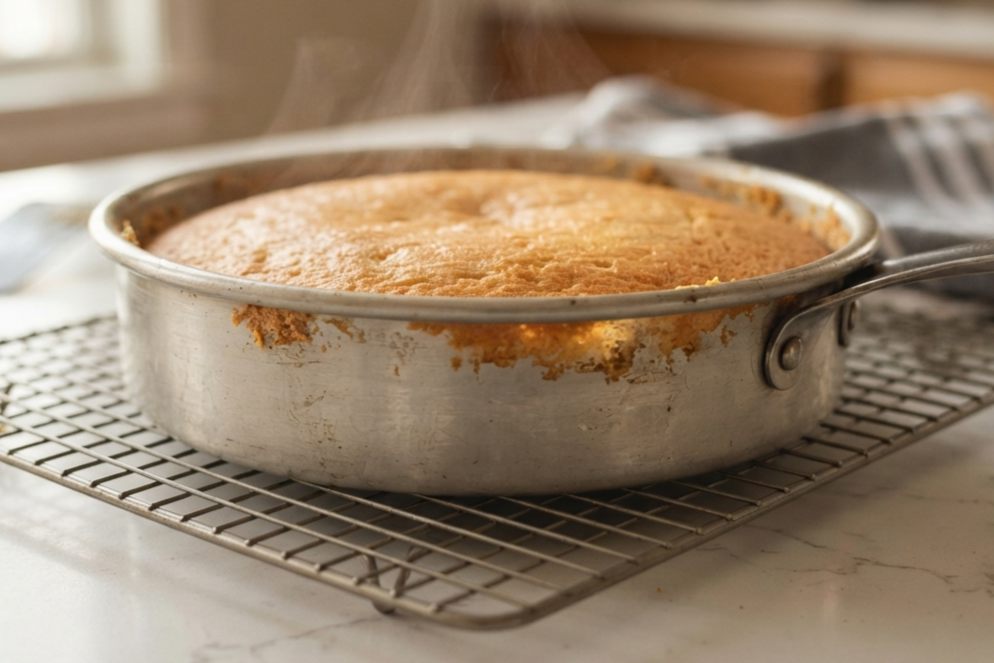
Instead of letting the cake cool directly on the counter, set the pan on a cooling rack. This lets air flow all the way around the pan, including the bottom, which is usually where the worst sticking happens.
3. Cool It in the Fridge
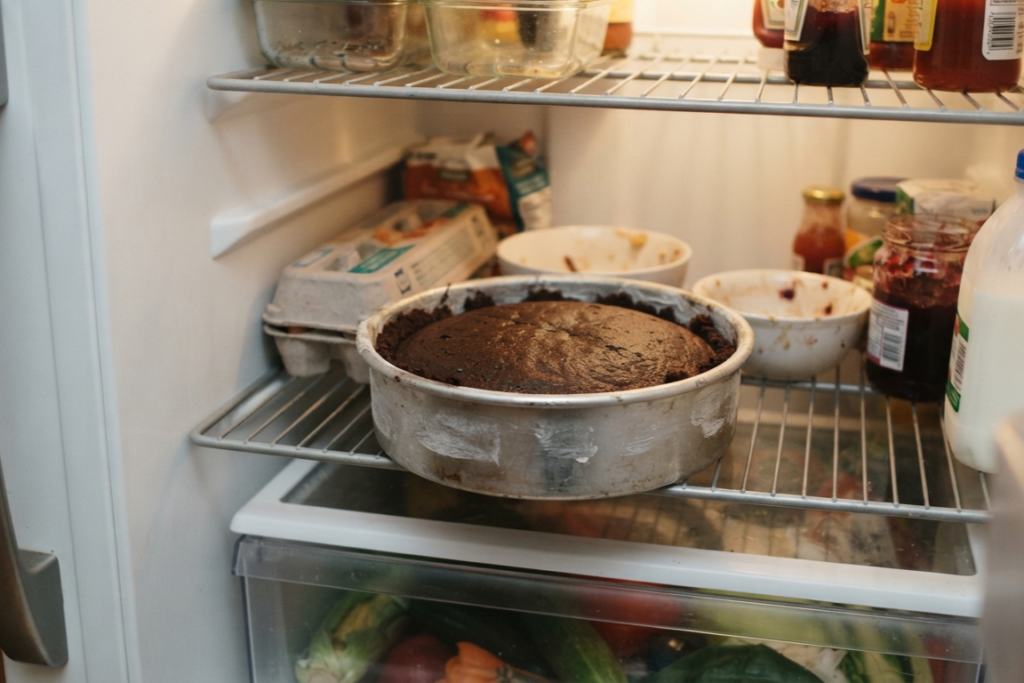
If you’re short on time, the fridge can speed things up. This works especially well on hot days when your kitchen isn’t cool enough for the cake to release naturally.
Let the pan cool on the counter for about 15 minutes first, until it’s no longer hot. Then place it in the fridge for another 10 to 15 minutes before trying to remove the cake.
4. Loosen the Edges With a Knife
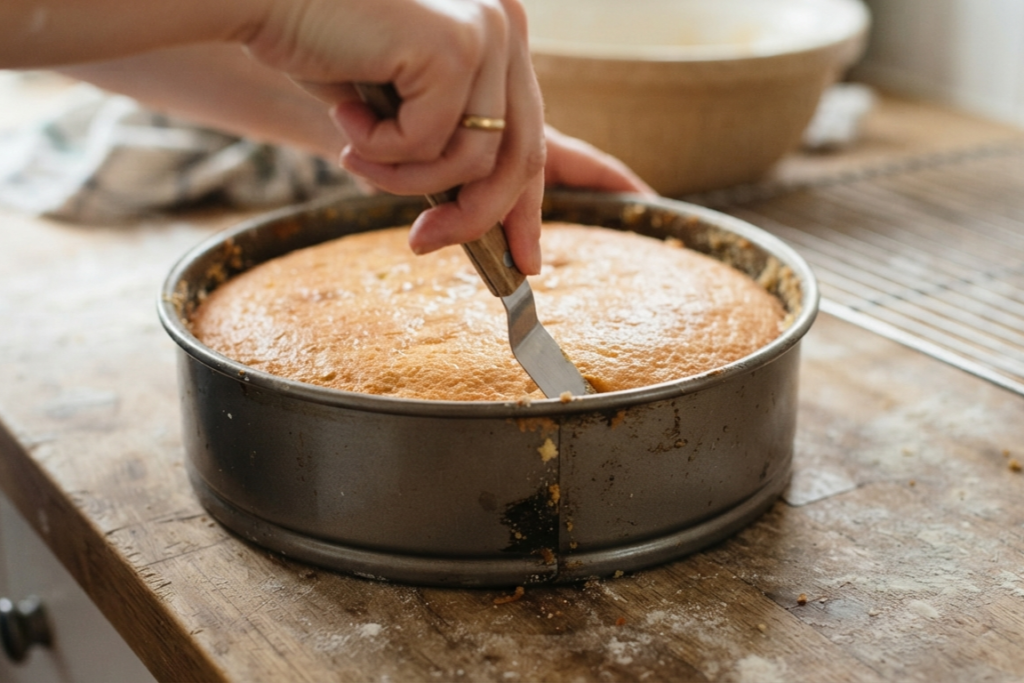
Slide a thin, non-serrated knife (or a nylon spatula) carefully between the cake and the pan. Move slowly around the entire edge, keeping the blade pressed against the pan rather than the cake, so you don’t cut into it by accident.
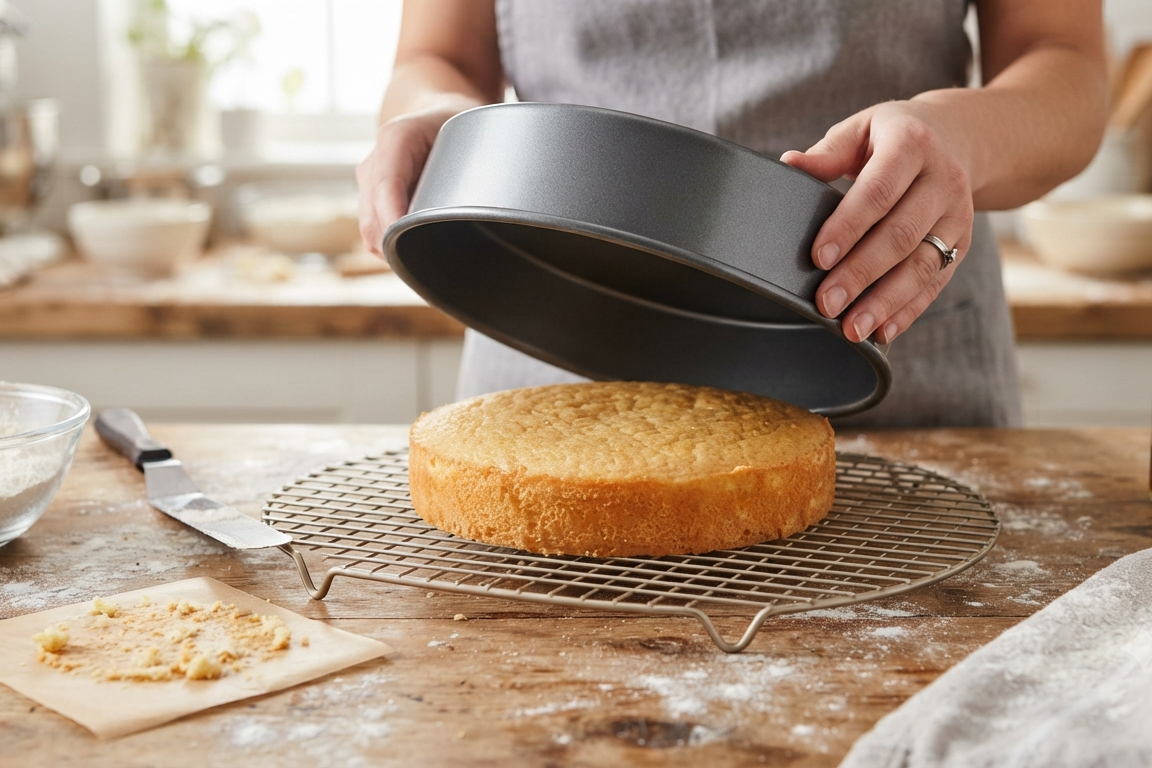
Once the edges feel loose, turn the pan upside down and gently ease the cake out onto a rack or plate.
5. Try the Tapping Method
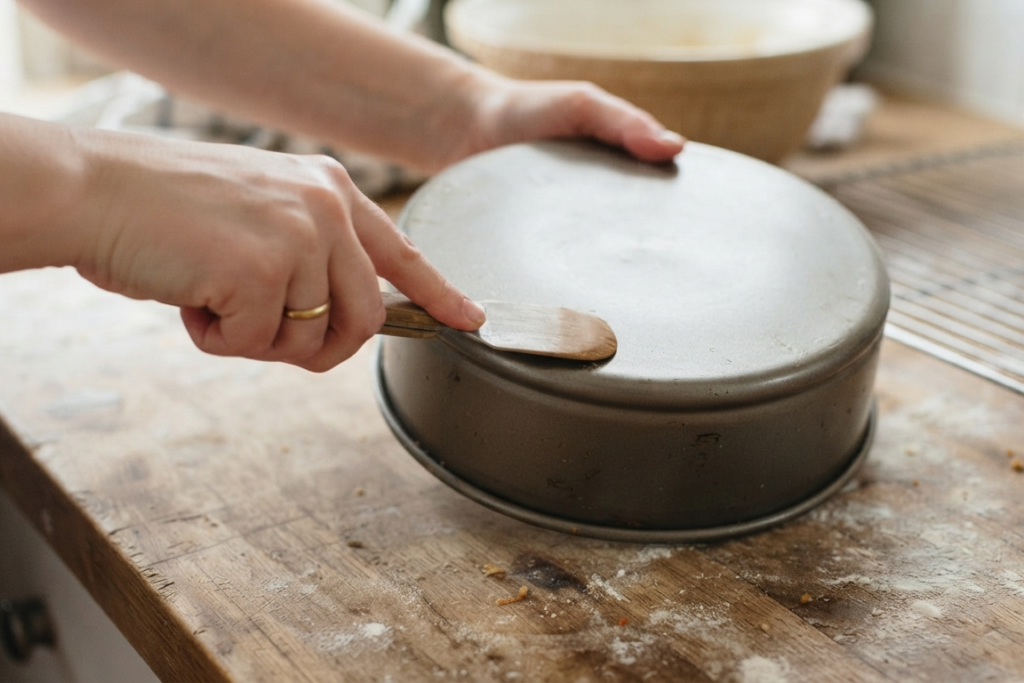
This works well when the cake isn’t stuck, just snug. Place a plate over the top of the pan (ideally the one you’ll serve the cake on), hold it firmly in place, then flip the pan and plate together.
Tap and gently shake the pan until the cake slowly releases in one piece.
6. Flip It and Wait
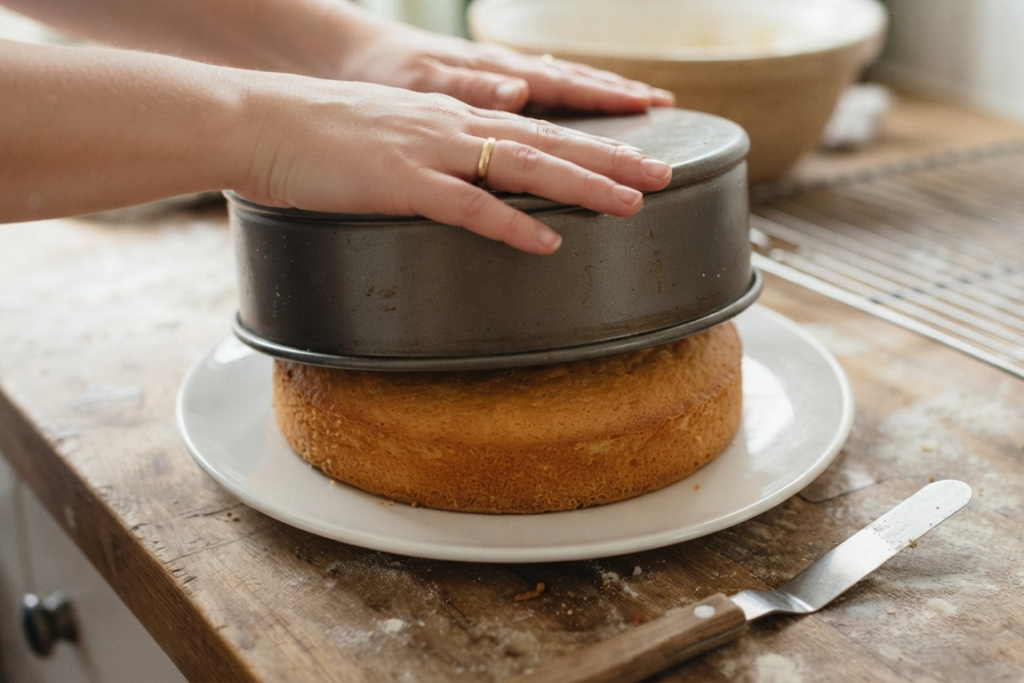
Sometimes gravity does the work for you. Invert the cake onto a plate like in the tapping method, but instead of tapping right away, just leave it upside down for 10 to 15 minutes.
This gives the grease used on the pan time to seep further into the cake’s edges, which helps it release more easily when you try again.
7. Wrap the Pan in a Warm, Damp Cloth
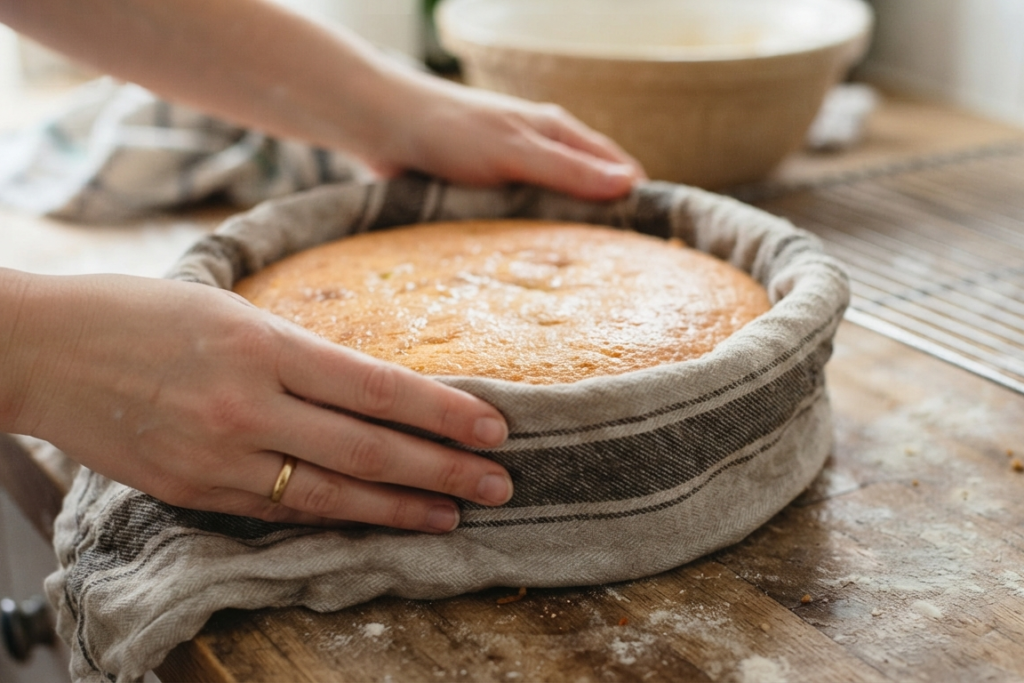
Soak a dishcloth in warm or hot water, wring out the extra water, and wrap it around the bottom of the pan. Let it sit for about 15 minutes.
The warmth causes the pan to expand slightly, loosening its grip on the cake’s edges.
8. Use Trapped Steam (Microwave Trick)
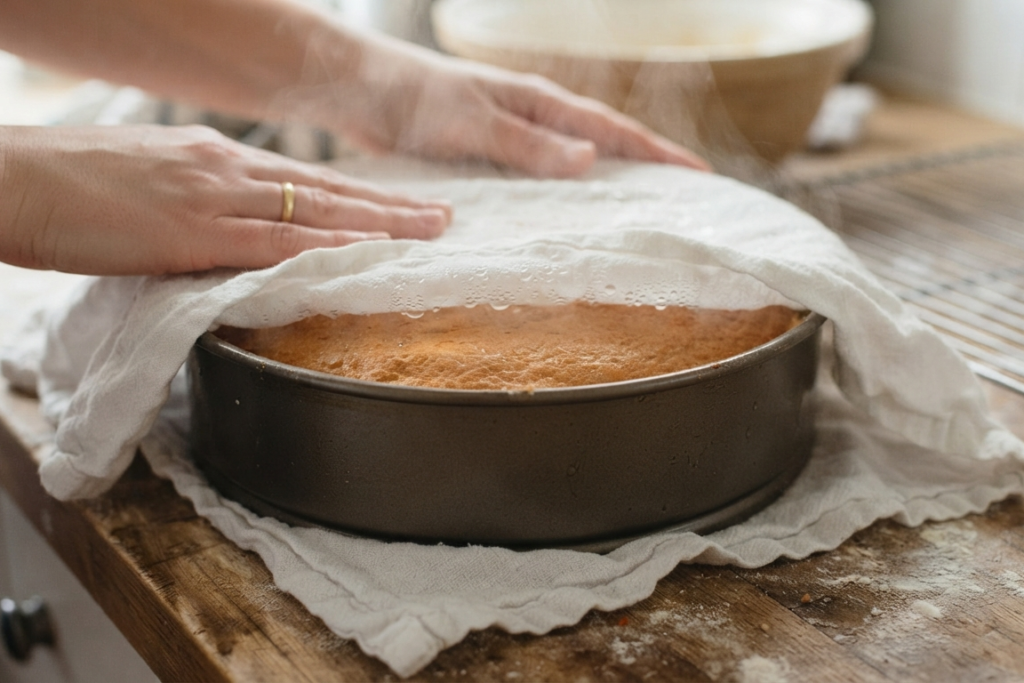
Pour boiled water into a mug, place it in the microwave, and set your cake pan on top of the mug. Leave everything inside for a few minutes without turning the microwave on.
The steam trapped inside helps loosen the cake. No microwave? Any small enclosed space, like a cupboard, works the same way.
9. Warm It Back Up in the Oven
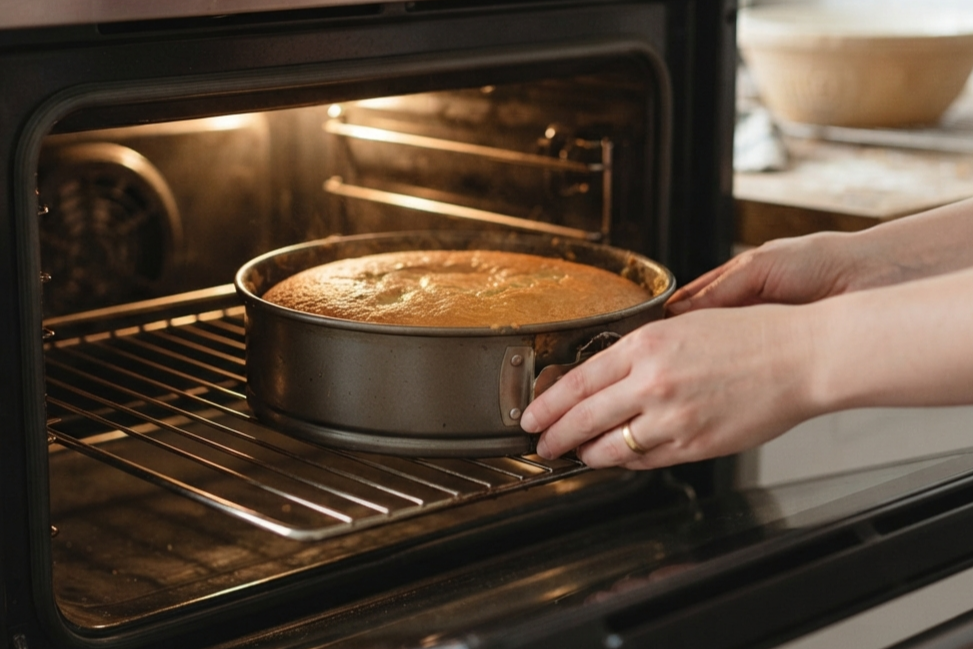
The oven caused the sticking, but it can also help fix it. Once your cake has cooled, preheat the oven to 250°F and place the cake back in for about 5 minutes.
Take it out, flip the pan over onto a cooling rack, and the cake should slide out much more easily. This trick works especially well for stubborn bundt pans.
10. Use Ice for Flat, Round Pans
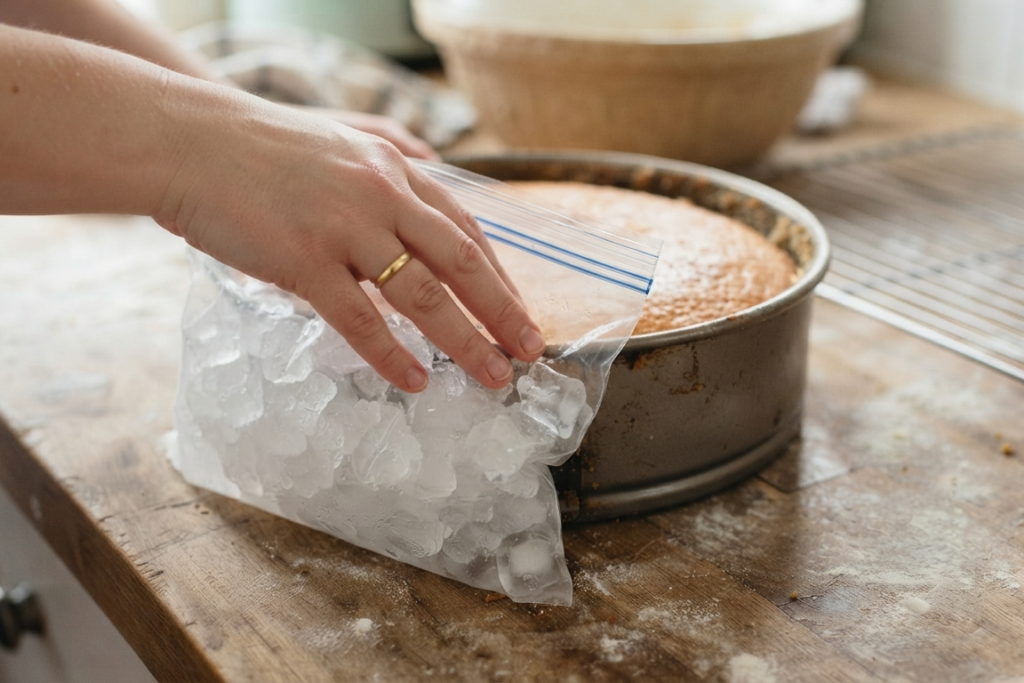
If you bake in flat, round pans, this one’s worth trying. Flip the pan upside down onto a plate or rack, then set a bowl of ice cubes on top of the pan’s bottom.
Leave it for a few minutes before attempting to remove the cake.
11. Freeze It
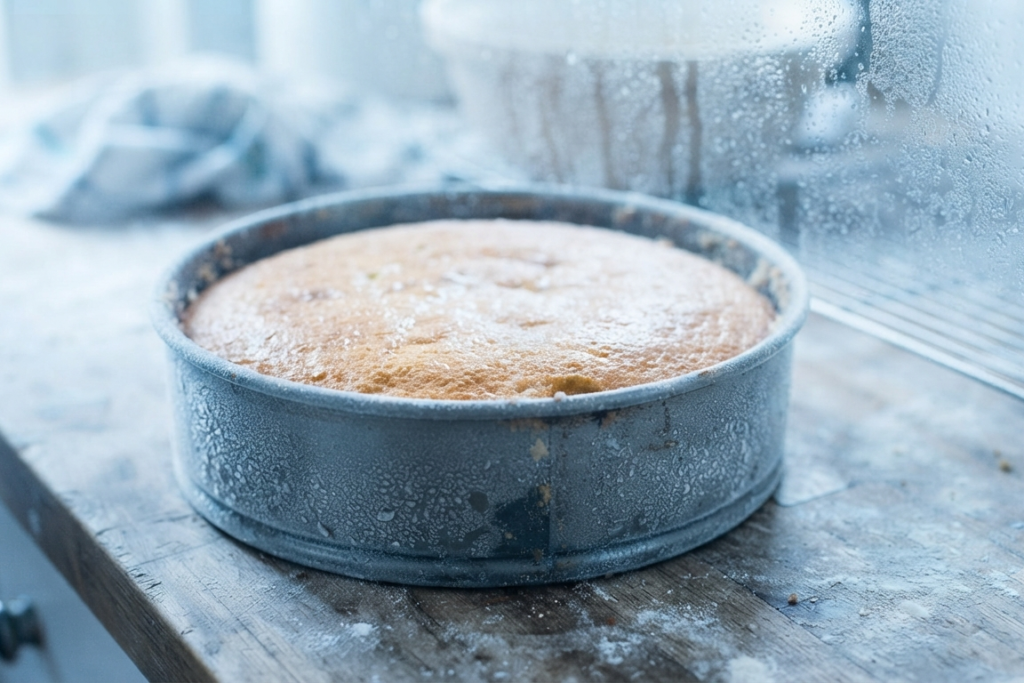
When nothing else works, the freezer usually will. Once the cake is fully cooled, run a knife or nylon spatula around the edges first. Then place the pan in the freezer for 1 to 2 hours.
Take it out, run the knife around the edges one more time, then flip the pan over, gently tapping the top and sides until the cake releases.
How to Stop Cake From Sticking in the First Place
The methods above will rescue a stuck cake, but a little prep work can stop the problem before it starts.
- Grease the pan. Use a paper towel or pastry brush to coat the bottom and sides with shortening, making sure to reach every corner.
- Add a layer of flour. After greasing, sprinkle in a teaspoon or two of flour. Tap the pan to spread it evenly over the shortening, covering all the corners and edges. Flip the pan and tap out any extra flour that didn’t stick.
- Line it with parchment paper. This works best in pans with a flat bottom and straight sides. Trace the pan’s shape onto parchment paper, cut it out, and press it smoothly into the bottom and sides so there are no wrinkles or bubbles.
- Use baking spray. If you’re short on time, a baking spray made specifically for baking (not a general cooking spray) can replace the grease-and-flour step entirely.
- Switch to a springform pan. These pans have a latch that opens up the side, making cake removal almost effortless. Just remember to let the cake cool first. Even springform pans can hold onto a warm cake.
A Note on Non-Stick Pans
Non-stick pans help, but they’re not foolproof. It’s still smart to grease and flour a non-stick pan the same way you would a regular one. Even the best non-stick coating can let a cake stick on the one day you really needed it to come out perfectly.
A Note on Bundt Pans
Bundt pans deserve their own mention, since they’re notorious for holding onto cake. All those small ridges and grooves give the batter plenty of places to grip on, even when the pan is properly greased.
One trick that works well is adding a second barrier beyond flour. After greasing the pan, sprinkle almond flour over the entire surface instead of, or in addition to, regular flour. This extra layer helps the cake release cleanly instead of leaving pieces behind.
If you’re making a chocolate bundt cake, cocoa powder works the same way. Sugar is another option, and it has the bonus of leaving a light, sweet crust on the outside of your baked cake.
Final Thoughts
A stuck cake feels like a disaster in the moment, but it’s almost always fixable with the right trick. Try a few of the methods above, and don’t forget the prevention steps for next time, like greasing, flouring, or lining your pan properly before you even pour the batter in.