How to Heat-Treat Flour at Home (2 Easy Methods)
Raw cookie dough is hard to resist. But eating it straight from the bowl isn’t as harmless as it seems, and the flour is usually the reason why.
Regular flour can carry bacteria that only gets killed off during baking. So if you’re eating raw dough, that flour needs to be heat-treated first to make it safe.
The good news is that heat-treating flour at home is simple, and you don’t need any special equipment to do it. Here are two easy ways to get it done.
Why Flour Needs to Be Heat-Treated
Flour comes straight from raw grain, and it hasn’t been cooked or baked at any point before it lands in your kitchen. That means any bacteria on the grain can still be present in the bag.
Normally, baking a cookie or cake kills off that bacteria. But when you eat dough raw, whether it’s cookie dough, cake batter, or anything with untreated flour, that step never happens.
Heat-treating the flour ahead of time solves this, so you can safely eat dough or batter raw whenever you like.
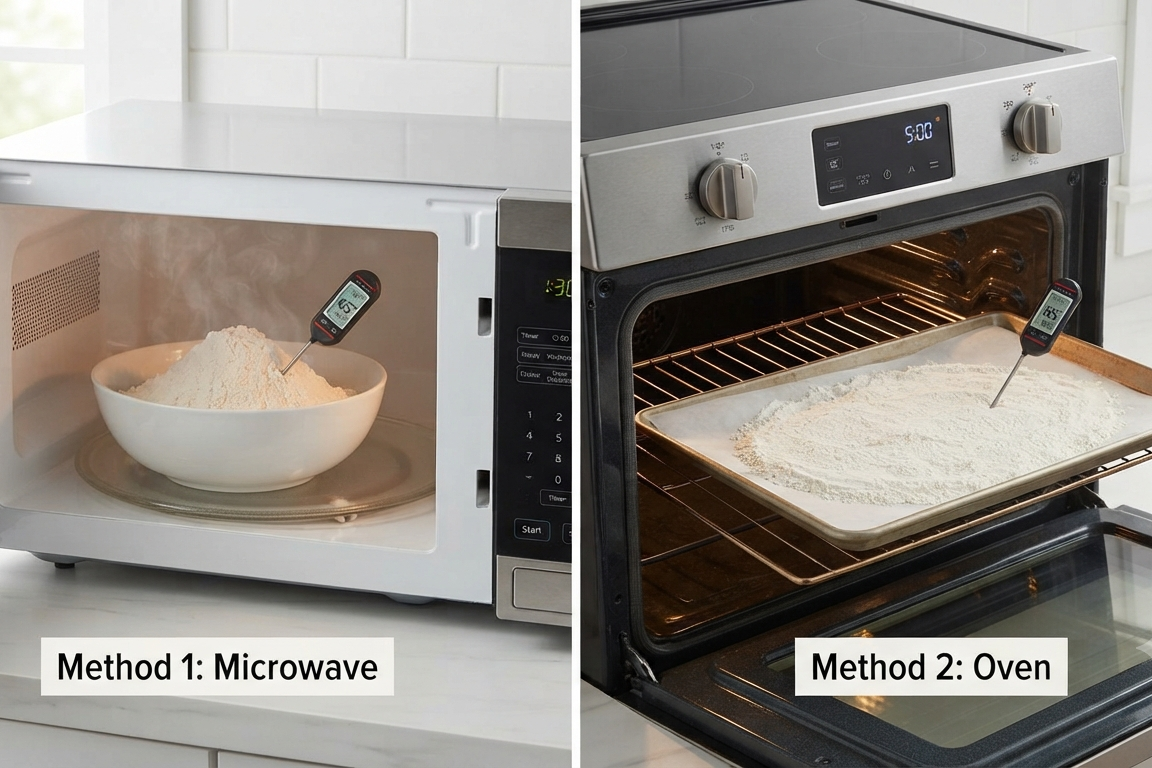
Method 1: Heat-Treat Flour in the Microwave
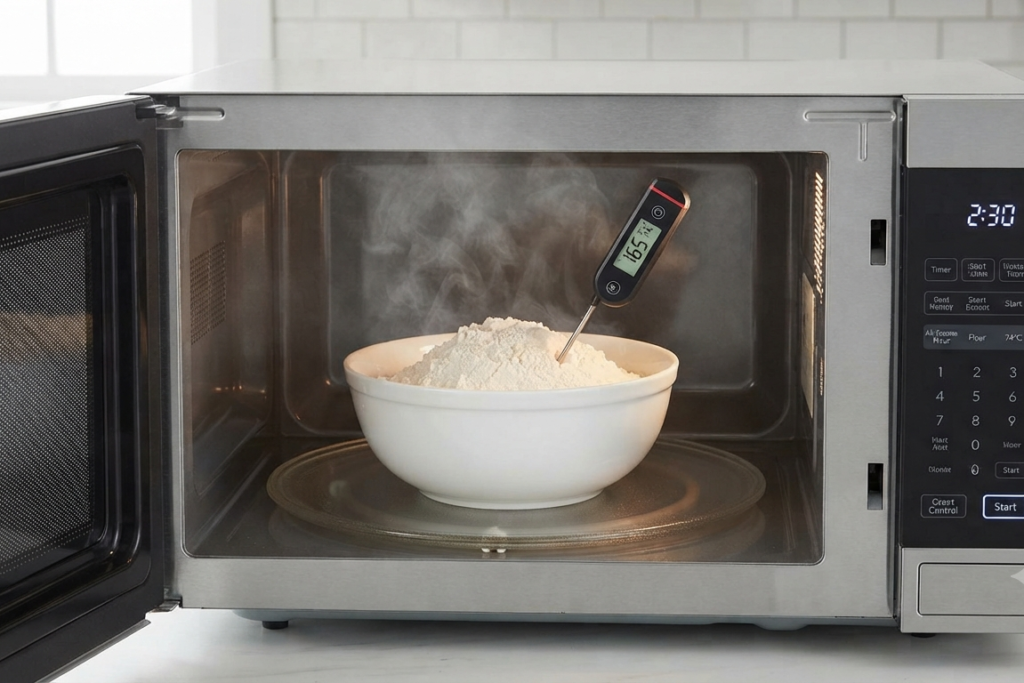
This is the fastest method, and almost everyone already has what they need for it.
What you’ll need:
- A microwave-safe bowl
- All-purpose flour
- An instant-read thermometer
Steps:
- Add your flour to the microwave-safe bowl. If your recipe calls for a certain amount, add an extra cup or two just to be safe. Some people prefer to heat-treat a whole bag at once so it’s ready whenever they need it.
- Microwave on high for 30 seconds.
- Take the bowl out and stir the flour well. Stirring spreads the heat evenly and keeps any part of the flour from burning.
- Check the temperature with your instant-read thermometer in a few different spots. You’re aiming for 165°F all the way through.
- If any part of the flour is below that temperature, microwave it for another 30 seconds, stir, and check again.
- Repeat until every part of the flour reads 165°F or higher.
Once it hits that temperature everywhere, your flour is safe to eat raw. It’s a quick process, and there’s really no reason to skip it before your next batch of cookie dough.
Method 2: Heat-Treat Flour in the Oven
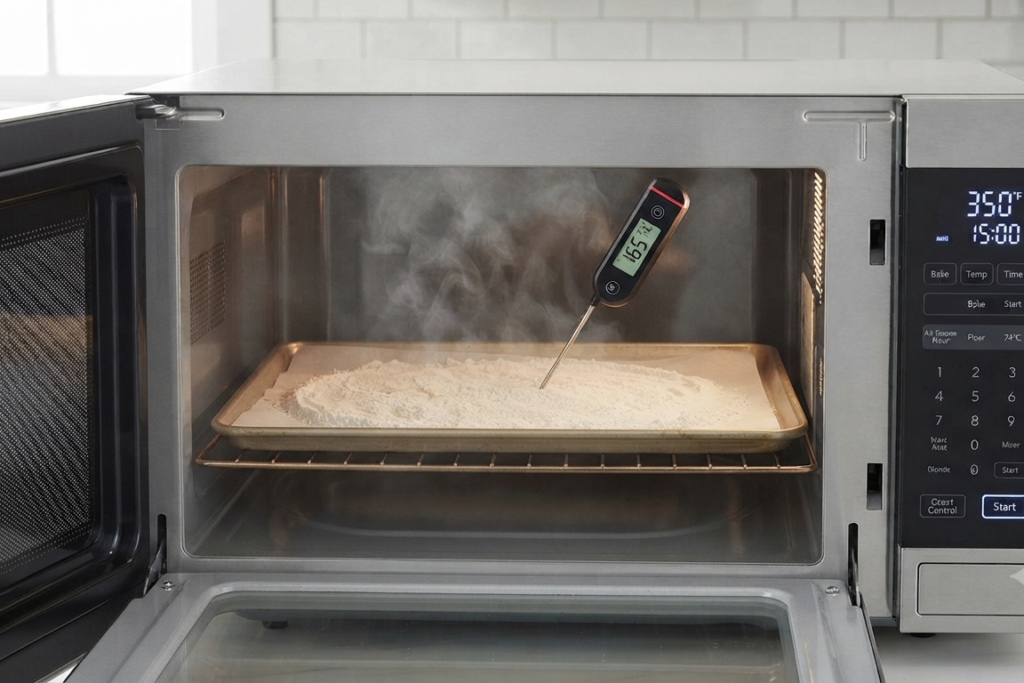
If you need to treat a larger batch of flour, the oven is usually the better option, since most ovens hold a lot more than a microwave bowl does.
What you’ll need:
- A baking pan or cookie sheet with sides (so the flour doesn’t spill over the edges)
- All-purpose flour
- An instant-read thermometer
Steps:
- Preheat your oven to 300°F.
- Spread the flour out evenly on the pan. Add more flour than your recipe calls for, since a bit will likely stick to the pan and get wasted.
- Bake for 2 minutes, then pull it out and stir.
- Repeat the 2-minute baking and stirring process a few more times.
- Start checking the temperature with your instant-read thermometer, testing in several spots across the pan.
- Once every spot reads 165°F, the flour is ready.
A little flour sticking to the pan is normal, so don’t worry if that happens. Just don’t try to scrape it off and use it. It’s better to let that small amount go than risk using flour that wasn’t heated evenly.
Before making cookie dough with your oven-treated flour, let it cool for at least 30 minutes. This helps it mix into your dough properly instead of affecting the texture.
Microwave or Oven: Which Should You Use?
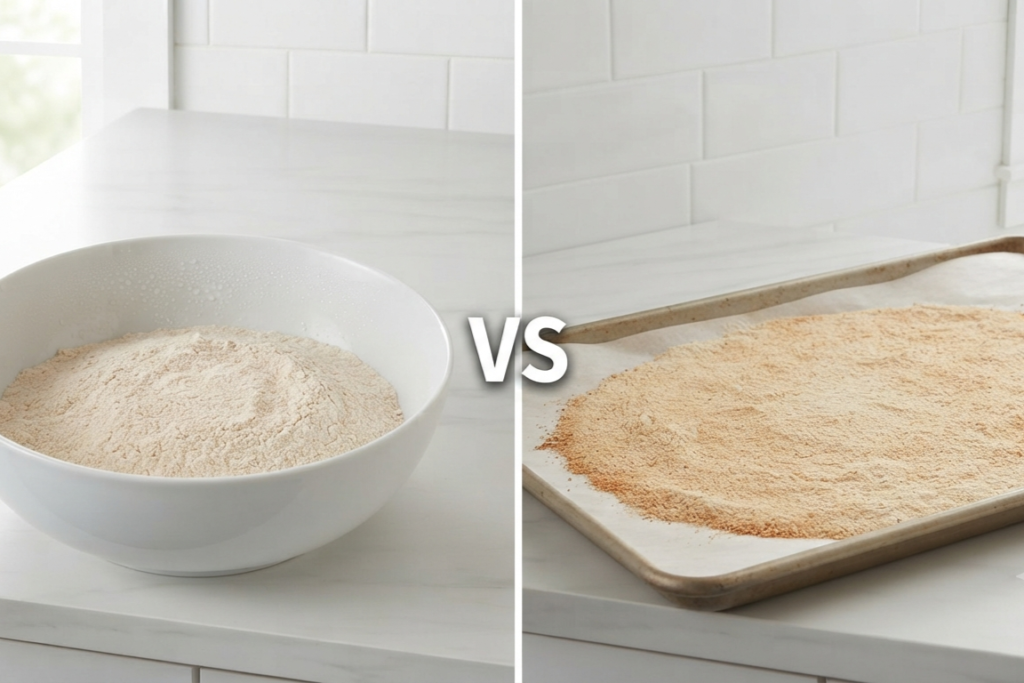
Both methods get the job done safely, so the right choice really comes down to how much flour you need.
- Small batch, just for one recipe? The microwave is faster and just as effective.
- Large batch, or treating a whole bag at once? The oven handles bigger quantities more easily, since most ovens are roomier than a microwave-safe bowl.
Final Thoughts
Heat-treating flour sounds like an extra chore, but it barely adds any time to your baking routine. Whether you go with the microwave or the oven, all you really need is an instant-read thermometer and a few minutes of stirring.
Once your flour hits 165°F all the way through, you’re safe to enjoy that bowl of cookie dough without worry. It’s a small step that makes a big difference.