
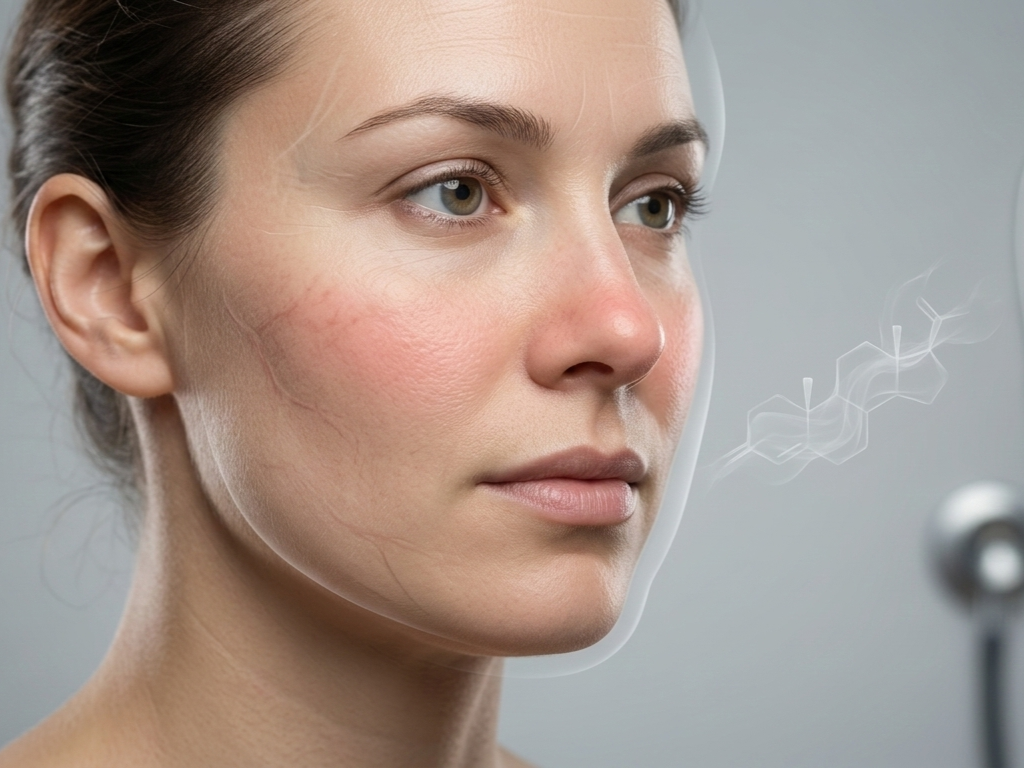
10 Signs Your Face Is Showing High Cortisol Levels
Cortisol is often called the “stress hormone.” It is a steroid hormone made by your adrenal glands, which are small glands that sit on top of your kidneys. Cortisol is a key part of your body’s stress response system. When you have the right amount, it is very important. It helps control your metabolism, your immune system, and your blood pressure. It also gets your body ready to deal with threats, whether they are physical or psychological [1]. Cortisol levels follow a natural daily pattern, called a circadian rhythm. They are highest in the morning to help you wake up, and they drop through the day so you can rest at night [2].
Problems start when your cortisol levels stay too high for a long time. This is called chronic elevation. It can be caused by a medical condition like Cushing’s syndrome. It can be a side effect of taking certain medicines called corticosteroids for a long time. Or it can be from non-stop psychological stress [3]. When cortisol is high for too long, it can affect your whole body. Some of the most visible and telling signs show up on your face and skin. Your face has many blood vessels, oil glands, and connective tissue. It is very sensitive to changes in your hormones. That is why it is often one of the first places where you can see the effects of too much cortisol.
Here are ten well-known signs on your face and skin that could mean you have high cortisol levels. This information comes from research and experts in endocrinology and dermatology.
1. Moon Face: Rounding and Puffiness of the Facial Contour
This is probably the most famous sign of chronically high cortisol. It is called moon facies, or moon face. It is a slow but clear change in the shape of your face. It becomes rounder and fuller. This happens because too much cortisol changes where your body stores fat. It makes fat build up in your cheeks, your temples, and along your jawline. This gives your face a distinct round, full-moon shape [4]. This is different from the puffy face you might get after eating a salty meal or not sleeping well. Moon face develops slowly over time and does not go away.
Doctors at the University of Colorado say that if your face is getting rounder and you also have other symptoms, you should get checked out. These other symptoms could be gaining weight in your belly, having thin arms and legs, or getting purple stretch marks on your skin [3]. This condition is most often caused by taking steroid medicines for a long time. But it can also be caused by tumors in the adrenal glands or the pituitary gland in your brain [5].
2. Facial Plethora: Persistent Redness and Flushing
Another common sign of too much cortisol is a face that always looks red and flushed. The medical name for this is facial plethora. Research shows that this redness comes from increased blood flow to the face. High levels of glucocorticoids, which is a class of steroid hormones that includes cortisol, cause more blood to perfuse, or flow through, the skin of your face [6]. The redness is usually spread out, affecting your cheeks, nose, and forehead. It is not the same as the quick flush you get from embarrassment or exercise.
Doctors consider facial plethora to be one of the earliest and most telling signs of Cushing’s syndrome. It is also one of the first things to get better when the condition is successfully treated [6]. The link between cortisol and a red face is also important for people with rosacea. Stress, which causes cortisol to spike, is a major trigger for rosacea. Studies show that up to 79 percent of people with rosacea say that emotional stress is a top cause of their facial flushing [7].
3. Acne and Increased Oiliness
There is a well-known link between cortisol and acne. When cortisol levels are high, they tell the sebaceous glands in your skin to make more oil, called sebum [8]. Sebum is the natural oil that keeps your skin moist. But when your skin makes too much, your pores can get clogged. This creates a perfect environment for bacteria to grow and for inflammation to start. That is the classic recipe for acne. This is why your skin often breaks out when you are under a lot of stress.
Beyond regular stress acne, the acne linked to Cushing’s syndrome can be more severe. It is caused by the combined effect of high cortisol and also higher levels of androgens, which are male sex hormones, from the adrenal glands [6]. Women and teenagers with Cushing’s syndrome often have noticeable facial acne as one of their main symptoms. This makes it an important clue for doctors.
4. Thinning Skin and Increased Fragility
One of the more hidden but serious effects of high cortisol on your face is that your skin gets thinner over time. Cortisol slows down the genes that are in charge of making collagen. Collagen is the main structural protein in your skin. It gives your skin its thickness and strength [9]. Over time, this leads to a condition called skin atrophy. Your skin becomes noticeably thinner, more see-through, and more fragile.
Thin skin is not just about how it looks. It is also more likely to tear from minor bumps or scrapes. And the blood vessels under the skin become more visible, giving your skin a papery, older look. This kind of skin damage from glucocorticoids has been well-documented in many studies [10].
5. Easy Bruising
This sign is closely related to skin thinning. Easy bruising is a well-known sign of high cortisol. When cortisol breaks down the collagen that supports the walls of your tiny blood vessels, those vessels get weak. They can break easily from even small bumps or pressure [11]. The bruises might show up without you even remembering how you got them. They also tend to be bigger and last longer than normal bruises.
Easy bruising is considered a very specific sign of Cushing’s syndrome. It is one of the key things doctors look for when diagnosing it [5]. Bruises from cortisol are different from bruises caused by blood thinners or not getting enough vitamins. They usually come along with other signs of high cortisol.
6. Slow Wound Healing
High cortisol levels make it harder for your skin to fix itself. Cortisol turns down key parts of your immune system that help with healing. It also gets in the way of making collagen and other proteins that your body needs to close up a wound [12]. Research has consistently shown that people under chronic stress, who have higher cortisol, heal from cuts and scrapes much more slowly.
A major study found that how stressed a person felt and their cortisol levels could predict how fast their wounds would heal. Higher cortisol meant slower healing [12]. On your face, this might look like blemishes, small cuts, or skin irritations that just hang on for a long time. They might leave behind marks that take weeks to fade.
7. Hirsutism: Unwanted Facial Hair Growth
In women, one of the most upsetting facial signs of high cortisol is hirsutism. This is the growth of coarse, dark hair in places where men usually grow hair. This includes the upper lip, the chin, and the sideburns [13]. This happens because too much cortisol tells your adrenal glands to make more androgens, which are male sex hormones. These androgens then turn on hair follicles in those sensitive areas of the face [6].
Hirsutism is a known symptom of Cushing’s syndrome. It is also linked to polycystic ovary syndrome (PCOS), a condition that can be made worse by high cortisol [14]. If a woman has unwanted facial hair, along with acne and irregular periods, she should get her hormones checked.
8. Dark Circles and Sunken Eyes
Dark circles under your eyes can have many causes. But chronic stress and high cortisol play a big role in several ways. First, high cortisol can mess up your normal sleep cycle. This leads to poor sleep and the tired-looking hollows and dark color under your eyes [15]. Second, high cortisol can increase your blood volume and make your blood vessels widen. This makes the delicate blood vessels under the thin skin of your eyes more visible [16].
Over time, cortisol also breaks down collagen, which makes the skin around your eyes even thinner. This makes the blood vessels show through even more. The result is a face that always looks tired and shadowed, even after a good night’s sleep. This is a sign that the problem might be a hormone imbalance, not just a bad night.
9. Premature Aging: Wrinkles, Fine Lines, and Loss of Volume
A person with chronically high cortisol can look older than they really are. Cortisol turns on enzymes called matrix metalloproteinases (MMPs). These enzymes actively break down collagen and elastin. Collagen and elastin are the two main proteins that keep your skin firm, plump, and smooth [17]. As these proteins are destroyed, your skin loses its bounce. Fine lines turn into deeper wrinkles. Your face loses the plump, full look of youth.
This process is made worse because cortisol also causes inflammation throughout your body. Inflammation creates free radicals, which are molecules that damage your skin cells and even your DNA [17]. The combination of broken-down structural proteins and damaged cells speeds up the visible aging of your face. No amount of fancy skincare can fully fix this without dealing with the root cause of the high cortisol.
10. Skin Dryness, Dullness, and Impaired Barrier Function
Finally, high cortisol can mess up your skin’s natural barrier. This barrier is what keeps moisture in and germs out. The inflammation caused by chronic high cortisol disrupts this barrier. Your skin cannot hold onto moisture as well as it should, because inflamed skin loses water faster than healthy skin [8]. This leads to skin that feels tight, rough, and looks dull, without its normal healthy glow.
Also, cortisol can weaken your immune system. This can make your skin more likely to get fungal infections. It can also make existing skin conditions like eczema, psoriasis, and seborrheic dermatitis worse [6]. When these conditions affect your face, they add to the redness, flaking, and irritation, making your skin look even less healthy.
When to Seek Medical Attention
Here is a quick summary of the ten facial signs of high cortisol, what causes them, and why they matter.
| Sign | Underlying Mechanism | Clinical Significance |
|---|---|---|
| Moon Face | Fat moves to the face | A key sign of Cushing’s syndrome |
| Facial Plethora | More blood flow to the face | An early and telling sign of high cortisol |
| Acne | Too much oil; more androgens | Common in Cushing’s; worse with stress |
| Thinning Skin | Less collagen; skin gets thin | Makes skin fragile and look older |
| Easy Bruising | Collagen loss in blood vessel walls | A very specific sign of high cortisol |
| Slow Wound Healing | Weaker immune system; less collagen | Cuts and scrapes take longer to heal |
| Hirsutism | Too many androgens | Affects women; linked to PCOS |
| Dark Circles | Poor sleep; more visible blood vessels | Shows fatigue and thin skin |
| Premature Aging | Collagen and elastin break down | Wrinkles and fine lines happen faster |
| Dryness and Dullness | Damaged skin barrier; inflammation | Skin loses moisture and its healthy glow |
It is important to know that having one or two of these signs by itself is not a reason to panic. Many of them can have simple, harmless causes. But if several of these signs show up together, if they last a long time, or if you also have other symptoms like gaining weight for no reason, feeling weak, having high blood pressure, or irregular periods, you should see a doctor [3].
Doctors can check for high cortisol with a few simple tests. These might include blood tests, a 24-hour urine test, or a late-night saliva test [1]. Finding and treating the cause early, whether it is from a medicine, a tumor, or lifestyle, can make a big difference in your health and how your skin looks.
Conclusion
Your face can tell you a lot about what is going on inside your body, especially with your hormones. Chronically high cortisol, whether from a medical condition or long-term stress, leaves clear marks on your face. These range from the very obvious, like the roundness of moon face and the constant flush of plethora, to the more subtle, like premature wrinkles and dry skin.
Learning about these signs is not about trying to diagnose yourself from social media. It is about knowing when your body might be sending you an important message. A healthy lifestyle that focuses on good sleep, managing stress, regular exercise, and a balanced diet is still the best way to keep your cortisol in a healthy range and maintain a vibrant, healthy complexion.