A Healthy Start: 10 Delicious Breakfast Recipes for a Fatty Liver Diet
If you have been told you have non-alcoholic fatty liver disease (NAFLD), or its newer name, metabolic dysfunction-associated steatotic liver disease (MASLD), you probably know that changing what you eat is a big part of managing it. A healthy diet can help reduce the fat and inflammation in your liver. In some cases, it can even help reverse the disease [1]. The eating plan that doctors most often recommend is the Mediterranean diet. It is full of fruits, vegetables, lean proteins, whole grains, and healthy fats [1].
Breakfast is a very important meal. It sets the tone for your whole day of eating. A good, balanced breakfast can give you energy that lasts. It can also stop you from craving processed or sugary foods later in the morning. And it can really help your liver health. The ten breakfast recipes here are all made to follow the main dietary rules for managing fatty liver disease. They focus on whole grains, lean proteins, healthy fats, and foods high in fiber and antioxidants. At the same time, they are low in unhealthy saturated fat, refined carbs, added sugars, and extra salt.
Key Dietary Principles for Fatty Liver Disease
Before you start cooking, it is helpful to know the basic ideas behind these recipes. The Mayo Clinic and the American Liver Foundation suggest these guidelines for people with MASLD [1].
Foods to Emphasize:
- Non-starchy vegetables: Think of spinach, broccoli, bell peppers, and mushrooms.
- Whole grains: Choose oats, whole-wheat bread, and couscous.
- Lean proteins: Good choices are eggs, egg whites, Greek yogurt, and beans.
- Healthy fats: Use olive oil, eat avocados, and have a small handful of nuts or seeds.
- Antioxidant-rich fruits: Berries and apples are great options.
Foods to Limit or Avoid:
- Highly processed foods
- Sugary drinks and sugary breakfast cereals
- Refined carbohydrates like white bread and pastries
- Foods high in unhealthy saturated fat
- Alcohol
Here is a quick look at all ten recipes and what makes them good for your liver.
| # | Recipe | Key Liver-Friendly Ingredients | Approx. Calories |
|---|---|---|---|
| 1 | Southwestern Breakfast Casserole | Spinach, whole-grain bread, eggs, non-fat milk | 280 per serving |
| 2 | Spinach and Mushroom Frittata | Egg whites, spinach, mushrooms | 100 per serving |
| 3 | Oatmeal with Fruit | Rolled oats, apple, walnuts, cinnamon | 220 per bowl |
| 4 | Greek Yogurt Parfait | Greek yogurt, berries, nuts | 130 per serving |
| 5 | Liver Loving Omelet | Eggs, bell peppers, olive oil, onions | 320 per serving |
| 6 | Breakfast Wrap | Whole wheat tortilla, eggs, spinach, avocado | 270 per wrap |
| 7 | Breakfast Smoothie Bowl | Almond milk, banana, spinach, berries, flaxseeds | 250 per bowl |
| 8 | Chia Seed Pudding | Chia seeds, coconut milk, fresh fruit, almonds | 230 per serving |
| 9 | Breakfast Couscous with Fruit | Couscous, raspberries, pumpkin seeds, coconut | 220 per cup |
| 10 | French Toast with Cinnamon | Whole-wheat bread, eggs, fat-free milk, cinnamon | 123 per slice |
1. Southwestern Breakfast Casserole
This casserole is hearty and full of flavor. It is a great choice for a weekend breakfast or for making ahead of time at the start of the week. It is made with whole-grain bread, which is a good base. It gives you lean protein from the eggs, calcium from the milk and cheese, and important nutrients from the spinach and bell peppers. Spinach is very good for your liver because it has lots of antioxidants that fight inflammation. The recipe uses salt-free seasoning to keep the sodium low, which is important for people with liver problems.
Ingredients:
- 6 slices whole-grain bread, cut into cubes
- 1 (10-ounce) package frozen chopped spinach, cooked and drained well
- 1 red bell pepper, chopped
- 1 1/2 cups low-fat sharp cheddar cheese
- 3 cups non-fat milk
- 5 large eggs
- 1 teaspoon garlic powder
- 1 teaspoon ground cumin
- 1 teaspoon salt-free seasoning blend
Instructions:
- First, preheat your oven to 350°F.
- Get a 9×13-inch baking dish. Layer the bread cubes evenly across the bottom of the dish.
- Sprinkle the cooked and drained spinach, the chopped red bell pepper, and the shredded cheese evenly over the bread cubes.
- In a large bowl, whisk together the eggs, non-fat milk, garlic powder, cumin, and salt-free seasoning until everything is well mixed.
- Pour this egg and milk mixture evenly over everything in the baking dish.
- Cover the dish and put it in the refrigerator. Let it sit for at least 4 hours, or you can leave it overnight. This lets the bread soak up all the liquid.
- When you are ready to bake, take the dish out of the fridge. Bake it, uncovered, for 45 minutes.
- Once it is done, let the casserole stand for 10 minutes before you slice it and serve it.
Nutrition (per serving):
- Servings: 9
- Calories: 280
- Total Fat: 13g
- Saturated Fat: 7g
- Cholesterol: 30mg
- Sodium: 220mg
- Total Carbohydrate: 23g
- Dietary Fiber: 4g
- Protein: 21g
2. Spinach and Mushroom Frittata
A frittata is like a crustless quiche. It is very flexible and a great liver-friendly breakfast option. This simple version uses only egg whites. This cuts down a lot on fat and cholesterol compared to using whole eggs. But it still gives you a lot of protein, 18 grams per serving. Mushrooms have special compounds that may help fight inflammation. Spinach gives you folate, iron, and vitamins A and C. All of these nutrients help your liver work well. This recipe is perfect if you want a light but protein-rich start to your day.
Ingredients:
- 4 egg whites
- 1/2 cup fresh spinach
- 1/4 cup sliced mushrooms
- 1/4 cup diced onions
Instructions:
- Preheat your oven to 350°F.
- While the oven heats, get a non-stick skillet and put it over medium heat. Add the mushrooms and onions and cook them until they are tender.
- Add the fresh spinach to the skillet and cook until it wilts. This only takes a minute or two.
- Put this cooked vegetable mixture into a small baking dish.
- Pour the egg whites evenly over the vegetables.
- Bake for 15 minutes, or until the egg whites are fully set and firm.
- Take the dish out of the oven and let it sit for 5 minutes before serving.
Nutrition (per serving):
- Servings: 1
- Calories: 100
- Total Fat: 0g
- Saturated Fat: 0g
- Sodium: 70mg
- Total Carbohydrate: 5g
- Dietary Fiber: 1g
- Sugars: 3g
- Protein: 18g
3. Oatmeal with Fruit
Oatmeal is one of the most well-known liver-friendly breakfasts. Rolled oats have a special kind of fiber called beta-glucan. Studies show that this fiber can help lower cholesterol and keep blood sugar levels steady. Both of these things are closely linked to fatty liver disease. Adding a diced apple gives you another type of helpful fiber called pectin. Cinnamon is a spice that may help your body use insulin better. Walnuts add a dose of healthy omega-3 fatty acids. This simple bowl of oatmeal is a real nutritional powerhouse.
Ingredients:
- 1/2 cup rolled oats
- 1 cup water
- 1/2 apple, diced into small pieces
- 1/4 teaspoon ground cinnamon
- 1 tablespoon chopped walnuts
Instructions:
- In a small saucepan, bring the water to a boil.
- Add the rolled oats and turn the heat down to a simmer. Cook for 5 minutes, stirring every now and then.
- Add the diced apple and the cinnamon to the pot. Cook for another 2 minutes.
- Pour the oatmeal into a bowl and top it with the chopped walnuts. Serve warm.
Nutrition (per serving):
- Servings: 1
- Calories: 220
- Total Fat: 7g
- Saturated Fat: 1g
- Sodium: 0mg
- Total Carbohydrate: 40g
- Dietary Fiber: 5g
- Sugars: 15g
- Protein: 5g
4. Greek Yogurt Parfait
Greek yogurt is a star ingredient for a fatty liver diet. It is very high in protein. One cup has about 18 grams. It also has live probiotics, which are good bacteria that help your gut. New research shows that a healthy gut is linked to a healthy liver. When you top the yogurt with fresh berries and nuts, you add even more goodness. Berries are full of antioxidants called anthocyanins. Nuts give you healthy fats and fiber. This makes a quick, complete, and satisfying breakfast.
Ingredients:
- 1 cup plain Greek yogurt
- Honey to taste (about 1 tablespoon is plenty)
- Optional toppings: fresh berries (like strawberries, blueberries, or raspberries), chopped nuts (like almonds or walnuts), or a sprinkle of low-sugar granola
Instructions:
- Scoop the Greek yogurt into a bowl or a glass.
- Drizzle a little honey over the yogurt. Start with one tablespoon and see how it tastes.
- Top it with your choice of fresh berries, chopped nuts, or a little granola. Serve right away.
Nutrition (per serving):
- Servings: 1
- Calories: 130
- Total Fat: 0g
- Saturated Fat: 0g
- Sodium: 60mg
- Total Carbohydrate: 10g
- Sugars: 10g
- Protein: 18g
5. Liver Loving Omelet
This omelet was made with liver health in mind. Eggs are a top source of choline. Choline is a nutrient that helps move fat out of your liver. Bell peppers are loaded with vitamin C and other good things called carotenoids. Onions have a powerful antioxidant called quercetin. Cooking with olive oil gives you heart-healthy monounsaturated fats, which are a key part of the Mediterranean diet. The recipe uses salt-free seasoning to keep the sodium low while still giving you great flavor.
Ingredients:
- 2 large eggs
- 1 tablespoon milk
- Salt-free seasoning, to taste
- 1/4 cup non-fat shredded cheese
- 1/4 cup diced bell peppers (any color)
- 1/4 cup diced onions
- 1 tablespoon olive oil
Instructions:
- In a small bowl, mix the diced bell peppers, diced onions, and the shredded cheese. Set this aside.
- In another bowl, whisk together the eggs, milk, and a little salt-free seasoning.
- Warm a small non-stick skillet over medium heat. Add the olive oil and swirl to coat the pan.
- Pour the egg mixture into the skillet. Let it cook until the edges start to set, which takes about 2 minutes.
- While the eggs are still a little runny on top, spoon the pepper, onion, and cheese mixture onto one half of the omelet.
- Carefully use a spatula to fold the other half of the omelet over the filling.
- Cook for another 1 to 2 minutes, until the cheese is melted and the omelet is cooked through. Slide it onto a plate and serve right away.
Nutrition (per serving):
- Servings: 1
- Calories: 320
- Total Fat: 25g
- Saturated Fat: 12g
- Cholesterol: 350mg
- Sodium: 450mg
- Total Carbohydrate: 6g
- Dietary Fiber: 1g
- Protein: 17g
6. Breakfast Wrap
This wrap is easy to take with you, which makes it great for busy mornings. It has scrambled eggs with colorful vegetables and creamy avocado, all wrapped in a whole wheat tortilla. Avocado is especially good for your liver. It has healthy monounsaturated fats, an antioxidant called glutathione, and vitamin E. All of these may help lower inflammation in the liver. The spinach and tomatoes add extra vitamins and antioxidants, making this a well-rounded and satisfying meal.
Ingredients:
- 1 whole wheat tortilla (8-inch size)
- 2 large eggs
- 1/4 cup diced bell peppers (red or green)
- 1/4 cup fresh spinach leaves
- 1/4 cup diced tomatoes
- 1/4 of an avocado, sliced
- 1/4 teaspoon black pepper (optional)
Instructions:
- Heat a non-stick skillet over medium heat.
- Add the diced bell peppers to the skillet and cook for about 2 minutes.
- Crack the eggs into the skillet with the peppers. Scramble them with a spoon until they are fully cooked.
- Add the spinach leaves and diced tomatoes. Cook for another minute until the spinach wilts.
- Warm the whole wheat tortilla in the same skillet for about 30 seconds on each side. You can also warm it in the microwave for about 15 seconds.
- Place the cooked egg and vegetable mixture in the center of the warm tortilla.
- Top with the sliced avocado.
- Fold in the sides of the tortilla and roll it up tightly. Serve right away.
Nutrition (per serving):
- Servings: 1
- Calories: 270
- Total Fat: 8g
- Saturated Fat: 1g
- Sodium: 0mg
- Total Carbohydrate: 30g
- Dietary Fiber: 8g
- Sugars: 4g
- Protein: 15g
7. Breakfast Smoothie Bowl
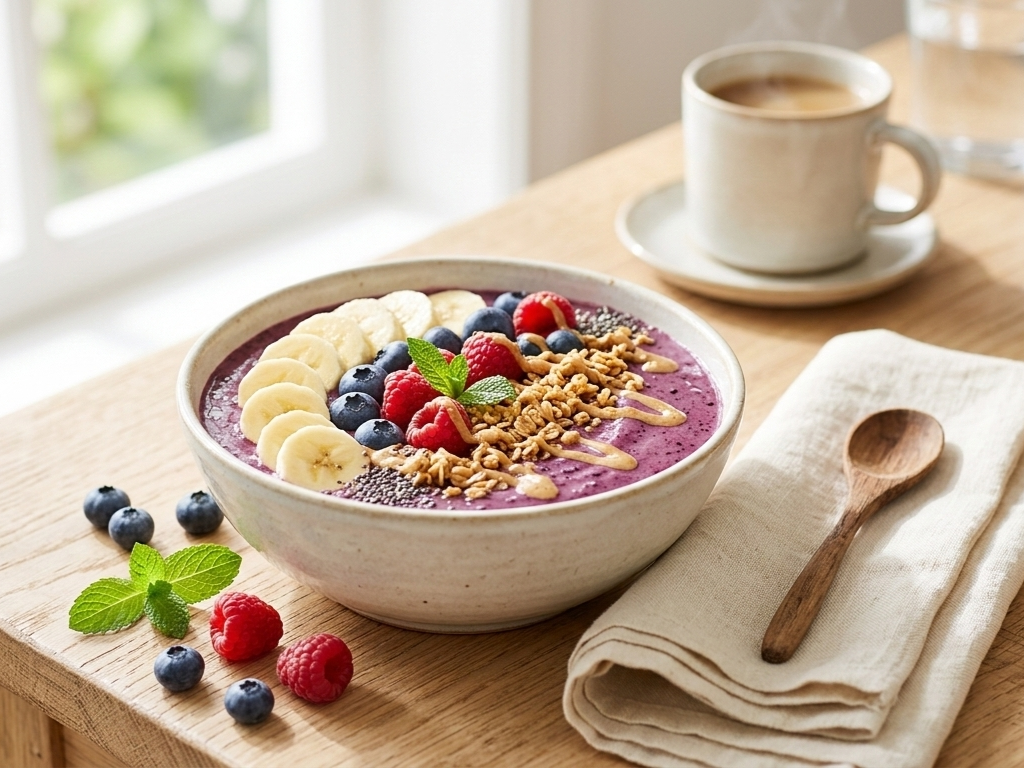
Smoothie bowls are a fun and colorful way to eat a lot of healthy nutrients in one meal. This recipe blends unsweetened almond milk with a banana, frozen spinach, frozen berries, and flaxseeds. It makes a thick, creamy base that you eat with a spoon. You will not taste the frozen spinach at all, but it adds a lot of folate, iron, and chlorophyll. Flaxseeds are one of the best plant-based sources of a type of omega-3 fat called ALA. This fat is linked to lower levels of fat in the liver. The frozen berries give you a strong dose of antioxidants and vitamin C.
Ingredients:
- 1 cup unsweetened almond milk
- 1 banana
- 1/2 cup frozen spinach
- 1/2 cup frozen mixed berries
- 1 tablespoon flaxseeds
Instructions:
- Put all the ingredients into a blender.
- Blend on high speed until the mixture is completely smooth. It should be thick, like a pudding, and not runny.
- Pour the smoothie into a bowl.
- If you want, you can top it with some extra fresh berries, sliced banana, seeds, or a small sprinkle of granola.
Nutrition (per serving):
- Servings: 1
- Calories: 250
- Total Fat: 7g
- Saturated Fat: 0.5g
- Sodium: 0mg
- Total Carbohydrate: 40g
- Dietary Fiber: 9g
- Sugars: 20g
- Protein: 5g
8. Chia Seed Pudding with Coconut Milk and Fresh Fruit
Chia seed pudding is the perfect make-ahead breakfast for people with fatty liver disease. Chia seeds are packed with omega-3 fatty acids, soluble fiber, and antioxidants. All three of these are great for your liver. The soluble fiber in the seeds forms a gel in your stomach. This helps slow down how fast you absorb sugar and helps you feel full longer. When you mix them with coconut milk, a little sweetener, and fresh fruit, you get a creamy, satisfying pudding. You can make it the night before and enjoy it all week.
Ingredients:
- 1/4 cup chia seeds
- 1 cup unsweetened coconut milk
- 1 tablespoon honey or pure maple syrup
- 1/2 teaspoon vanilla extract
- Fresh fruits for topping, like berries, sliced kiwi, mango, or banana
- 1 teaspoon sliced almonds or other nuts
- Optional: unsweetened shredded coconut or low-sugar granola
Instructions:
- In a bowl or a mason jar, mix together the chia seeds, coconut milk, honey or maple syrup, and vanilla extract.
- Stir everything really well. Let it sit for 5 to 10 minutes, then stir it again to make sure no clumps form.
- Cover the bowl or jar and put it in the refrigerator. Let it chill for at least 4 hours, but overnight is best. The seeds will soak up the liquid and swell up, making a thick pudding.
- When you are ready to eat, wash and slice your fresh fruit.
- Take the pudding out of the fridge and give it a stir to loosen it up. Spoon it into serving bowls or glasses.
- Top the pudding generously with the fresh fruit and sliced almonds. You can also add a sprinkle of coconut or granola. You can eat it right away or keep it in the fridge for up to 3 days.
Nutrition (per serving):
- Servings: 2
- Calories: 230
- Total Fat: 13g
- Saturated Fat: 5g
- Sodium: 50mg
- Total Carbohydrate: 23g
- Dietary Fiber: 10g
- Sugars: 9g
- Protein: 4g
9. Breakfast Couscous with Fruit
Couscous is a type of whole grain that does not always get a lot of attention. It deserves a place in a liver-healthy kitchen. It gives you complex carbohydrates and a good amount of fiber. This means you get energy that lasts without a big spike in your blood sugar. This recipe mixes warm couscous with fresh raspberries, which are one of the highest-fiber fruits you can eat. It also has raisins, pumpkin seeds, and unsweetened coconut. Pumpkin seeds are a great source of zinc and magnesium. These two minerals are important for your liver’s enzymes and your overall metabolic health.
Ingredients:
- 4 1/2 cups cooked couscous (cook it according to the directions on the package)
- 2 cups fresh raspberries
- 1/2 cup raisins
- 1/2 cup unsweetened shredded coconut
- 1/2 cup raw pumpkin seeds
- 1/4 cup pure maple syrup (this is optional)
Instructions:
- Cook the couscous according to the instructions on the package.
- While the couscous is still warm, put it in a large bowl. Add the raspberries, raisins, shredded coconut, and pumpkin seeds.
- If you want a little extra sweetness, drizzle the maple syrup over the top. Mix everything together well.
- Serve the couscous warm.
Nutrition (per serving):
- Servings: 8
- Serving Size: 1 cup
- Calories: 220
- Total Fat: 6g
- Saturated Fat: 2g
- Cholesterol: 0mg
- Sodium: 8mg
- Carbohydrate: 37g
- Fiber: 4g
- Sugar: 12g
- Protein: 7g
10. Whole-Wheat French Toast with Cinnamon
This is a healthier version of a much-loved breakfast classic. It swaps white bread for whole-wheat bread and uses fat-free milk to cut down on unhealthy saturated fat. Whole-wheat bread has a lot more fiber and nutrients than white bread. Cinnamon is more than just a spice. Some research suggests it may help your body use insulin better and can lower your fasting blood sugar. These are both very important for managing MASLD. Topping the French toast with fresh fruit instead of syrup cuts out a lot of added sugar and adds vitamins, antioxidants, and fiber.
Ingredients:
- 6 slices whole-wheat bread
- 3 large eggs
- 3/4 teaspoon pure vanilla extract
- 1/2 cup fat-free milk
- 1 1/2 teaspoons ground cinnamon
- Sliced fresh fruit for topping, like strawberries, bananas, or blueberries (optional)
Instructions:
- In a medium bowl, whisk together the eggs, fat-free milk, vanilla extract, and ground cinnamon until they are well combined.
- Take a slice of bread and dip both sides into the egg mixture. Let the bread soak up the liquid for a few seconds.
- Place the dipped bread slice onto a heated non-stick skillet or griddle over medium heat.
- Cook each side until it is golden brown. This takes about 2 to 3 minutes per side.
- Serve the French toast warm, topped with your choice of sliced fresh fruit.
Nutrition (per serving):
- Servings: 6
- Calories: 123
- Total Fat: 2.3g
- Saturated Fat: 0.6g
- Cholesterol: 61mg
- Sodium: 189mg
- Total Carbohydrate: 16.2g
- Dietary Fiber: 2g
- Protein: 8.4g
Conclusion
Managing fatty liver disease through your diet does not mean you have to give up flavor or variety, especially at breakfast. The ten recipes in this article show that eating for your liver can be delicious and satisfying from the very first meal of the day. Every recipe is built on the core ideas of the Mediterranean diet. They focus on whole grains, lean proteins, healthy fats, and plenty of fruits and vegetables. At the same time, they cut out the processed foods, refined carbs, and extra sugars that lead to fat building up in the liver.
If you have MASLD, it is a good idea to work closely with your doctor or a registered dietitian. They can help you make a meal plan that is just right for you. Changing what you eat is a key part of managing fatty liver disease. But it works best when you also get regular exercise, manage your weight in a healthy way, and follow your doctor’s advice. Starting each day with one of these healthy breakfasts is a great first step toward a healthier liver.