Top 8 Health Benefits of the Mediterranean Diet Backed by Science (Plus Easy Recipes)
The Mediterranean diet is one of the healthiest ways to eat in the world. It is not just a trend. This way of eating has been studied by scientists for many years. The research shows it has real health benefits.
This diet is based on how people eat in countries around the Mediterranean Sea. These include Greece, Italy, and Spain. The diet focuses on plant foods, healthy fats like olive oil, some fish and seafood, and little red meat.
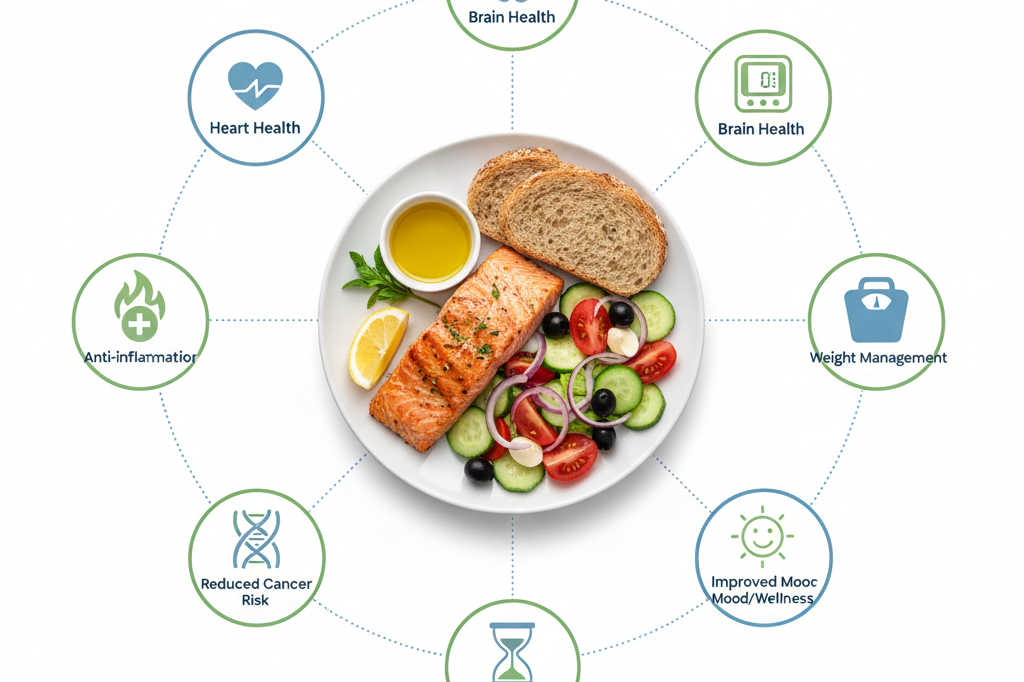
What makes this diet special is the science behind it. Studies show it helps many parts of your body stay healthy. From your heart to your brain, the benefits are real.
This article will show you the top eight health benefits of the Mediterranean diet. Each benefit comes with a simple recipe. This helps you see how to use these healthy foods every day.
1. Good for Your Heart
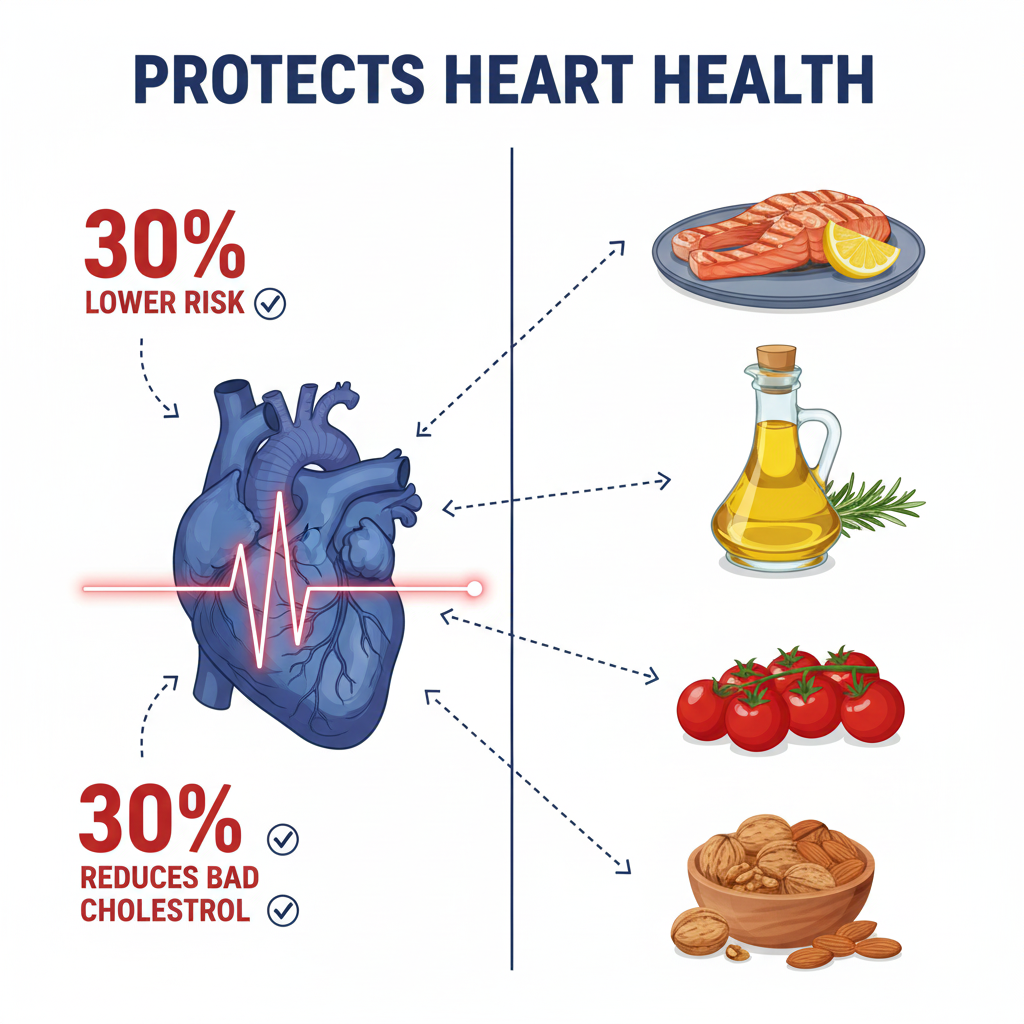
The most well known benefit is how it helps your heart. Many big studies show that people who eat this way have a lower risk of heart disease and stroke.
What Science Says:
One important study called PREDIMED found that people who ate a Mediterranean diet with extra olive oil or nuts had 30% fewer heart problems than people on a low fat diet.
The diet helps your heart by:
- Lowering bad cholesterol
- Raising good cholesterol
- Reducing blood pressure
- Improving how blood vessels work
- Reducing swelling in the body
- Lowering the risk of blood clots
Heart Healthy Recipe: Olive Oil and Lemon Baked Salmon
Ingredients:
- 4 salmon fillets (about 6 ounces each)
- 3 tablespoons extra virgin olive oil
- Juice and zest of 1 lemon
- 3 cloves garlic, chopped
- 1 tablespoon fresh dill, chopped
- 1 teaspoon dried oregano
- Salt and pepper to taste
- 1 cup cherry tomatoes, cut in half
- 1/4 cup kalamata olives, cut in half
- 1/4 cup red onion, sliced thin
Instructions:
- Heat oven to 375°F
- Mix olive oil, lemon juice, lemon zest, garlic, dill, and oregano in a small bowl
- Put salmon in a baking dish
- Pour the olive oil mix over the salmon
- Put tomatoes, olives, and red onion around the salmon
- Add salt and pepper
- Bake for 15 to 20 minutes until salmon flakes easily
- Serve with steamed vegetables or a Greek salad
2. Good for Your Brain
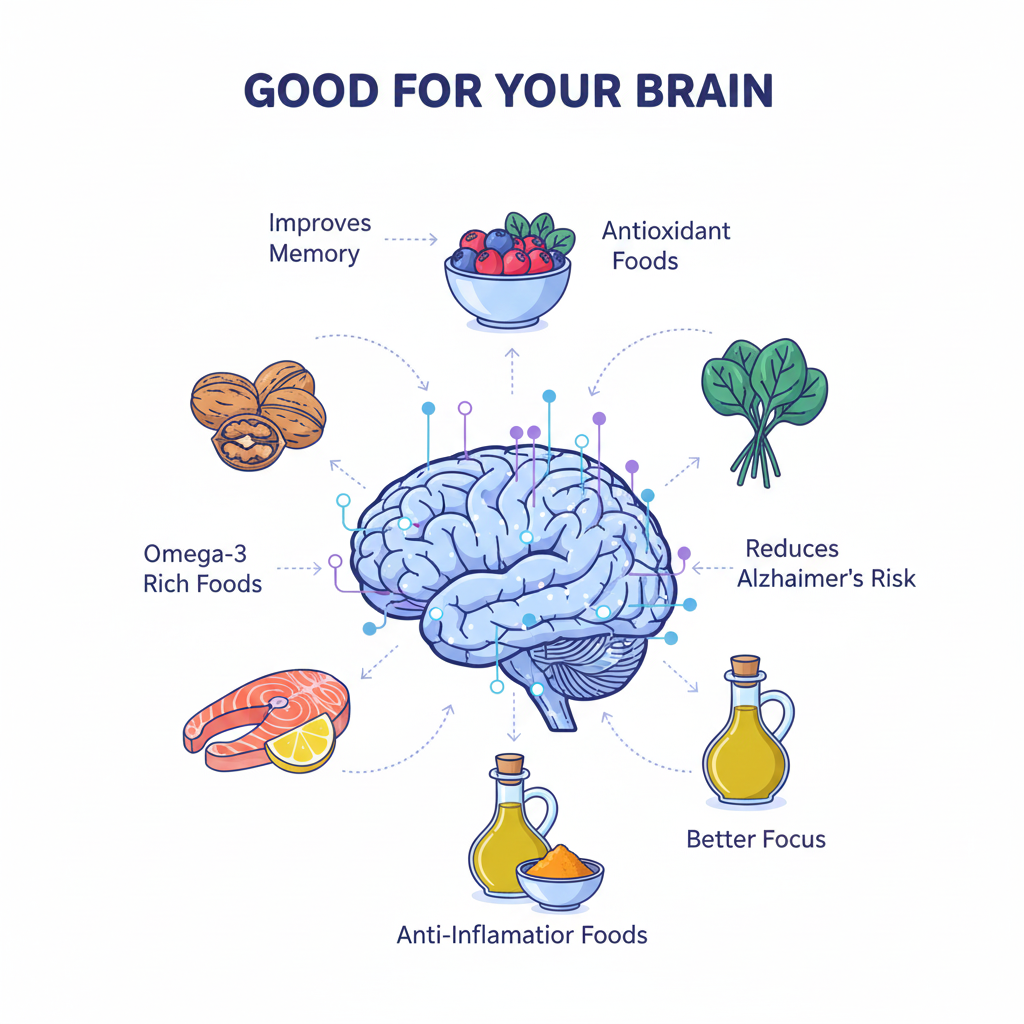
New research shows this diet may help keep your brain healthy. It might lower the risk of memory problems as you age.
What Science Says:
Studies from the National Institute on Aging found that people who followed this diet had fewer signs of Alzheimer’s disease in their brains.
The diet helps your brain by:
- Reducing swelling in the brain
- Improving blood flow to brain tissue
- Protecting against damage from stress
- Supporting good gut bacteria that affect the brain
- Giving your brain key nutrients like omega-3 fats and B vitamins
Brain Boosting Recipe: Walnut and Berry Breakfast Bowl
Ingredients:
- 1 cup Greek yogurt
- 1/4 cup walnuts, chopped
- 1/2 cup mixed berries (blueberries, strawberries, blackberries)
- 1 tablespoon honey
- 1 teaspoon cinnamon
- 1 tablespoon ground flaxseed
Instructions:
- Put Greek yogurt in a bowl
- Top with walnuts, berries, flaxseed, and cinnamon
- Drizzle with honey
- Enjoy right away for a brain healthy breakfast
3. Helps Prevent and Manage Type 2 Diabetes
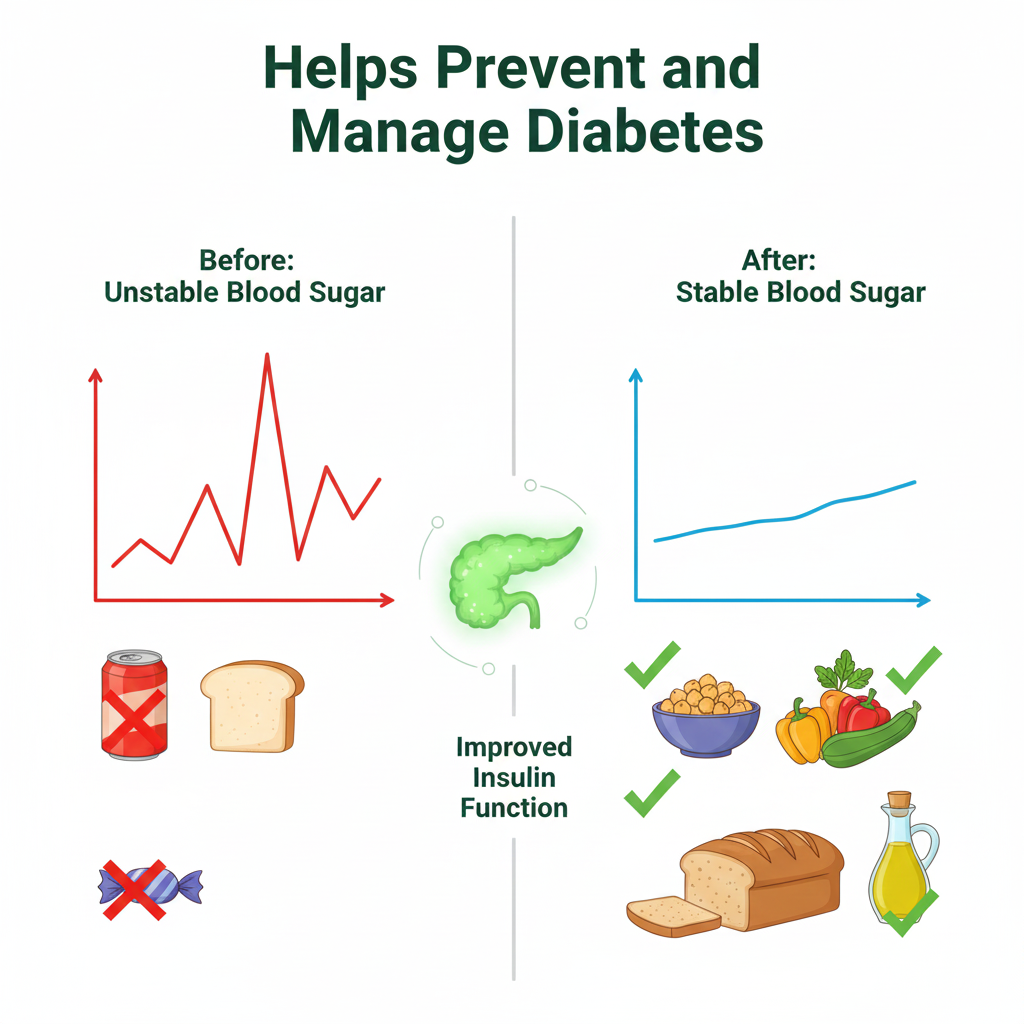
This diet can help prevent type 2 diabetes. It also helps people who already have diabetes control their blood sugar.
What Science Says:
One study found that people who followed this diet had 30% lower risk of getting type 2 diabetes over 20 years.
The diet helps with diabetes by:
- High fiber slows sugar absorption
- Healthy fats help insulin work better
- Antioxidants reduce stress on cells
- Lower sugar load compared to typical diets
- Helps with weight management
Diabetes Friendly Recipe: Greek Chickpea Salad
Ingredients:
- 1 can chickpeas (15 ounces), drained
- 1 cucumber, cut into small pieces
- 1 bell pepper, cut into small pieces
- 1/2 red onion, chopped fine
- 1 cup cherry tomatoes, cut in half
- 1/4 cup kalamata olives, sliced
- 1/4 cup feta cheese, crumbled
- 3 tablespoons extra virgin olive oil
- 2 tablespoons red wine vinegar
- 1 teaspoon dried oregano
- Salt and pepper to taste
- Fresh parsley, chopped
Instructions:
- Mix chickpeas, cucumber, bell pepper, red onion, tomatoes, and olives in a big bowl
- In a small bowl, mix olive oil, red wine vinegar, oregano, salt, and pepper
- Pour dressing over salad and mix
- Add feta cheese and fresh parsley
- Put in refrigerator for at least 30 minutes before eating
4. Helps with Weight Management
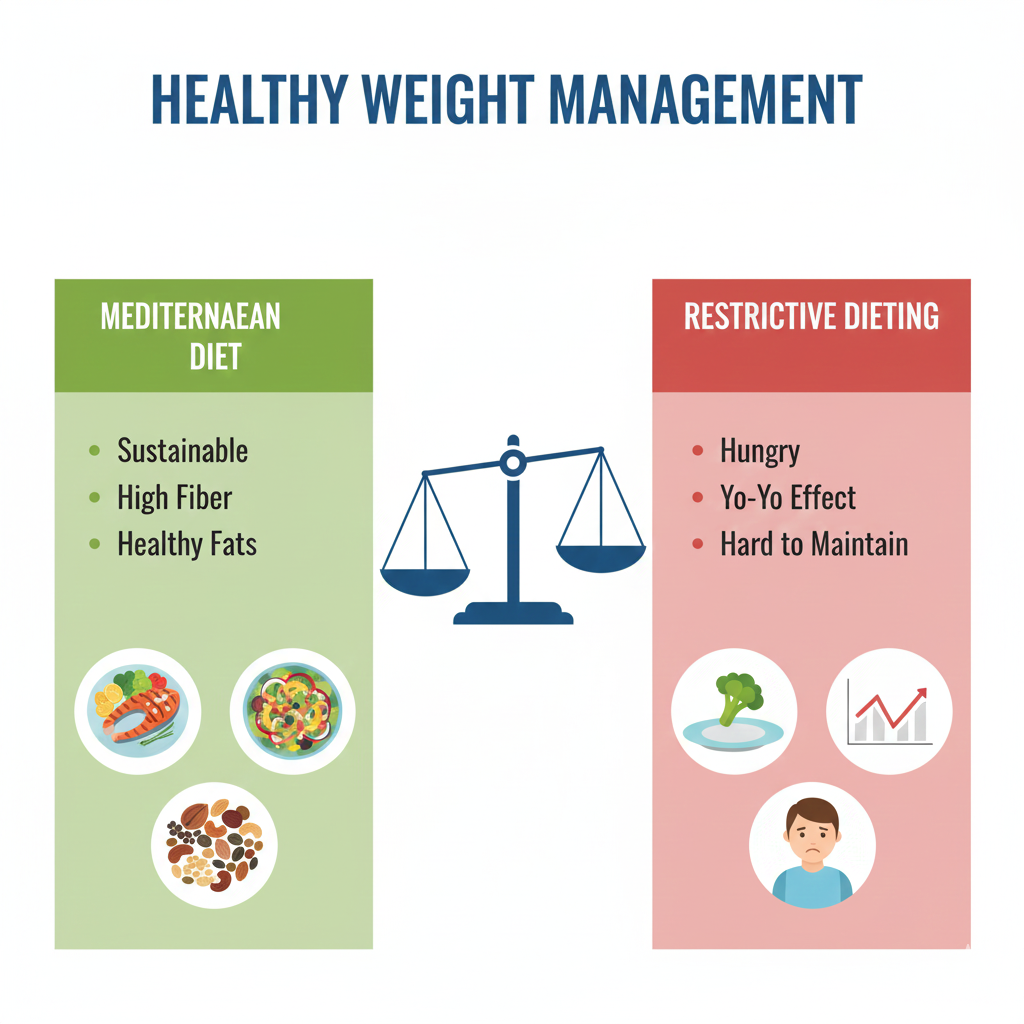
This diet is not a weight loss diet. But it can help you keep a healthy weight more easily than many other diets.
What Science Says:
Research shows that people who follow this diet lose more weight than people on low fat diets. They also keep the weight off longer.
The diet helps with weight by:
- High fiber makes you feel full
- Whole foods naturally control calories
- Healthy fats and proteins help you feel satisfied
- You can still enjoy some wine and tasty meals
- It is easy to follow long term
Weight Friendly Recipe: Ratatouille with Herbs
Ingredients:
- 1 eggplant, cut into small pieces
- 2 zucchini, cut into small pieces
- 1 bell pepper, cut into small pieces
- 1 onion, cut into small pieces
- 3 cloves garlic, chopped
- 2 cups tomatoes, cut into small pieces
- 3 tablespoons olive oil
- 1 teaspoon dried oregano
- 1 teaspoon dried thyme
- 1/4 cup fresh basil, chopped
- Salt and pepper to taste
Instructions:
- Heat olive oil in a big pan over medium heat
- Add onion and cook until soft (about 5 minutes)
- Add garlic and cook for 30 seconds
- Add eggplant, zucchini, and bell pepper
- Cook for 10 minutes, stirring sometimes
- Add tomatoes, oregano, and thyme
- Cook for 15 to 20 minutes until vegetables are soft
- Mix in fresh basil
- Add salt and pepper
- Serve as a side or over whole grain pasta
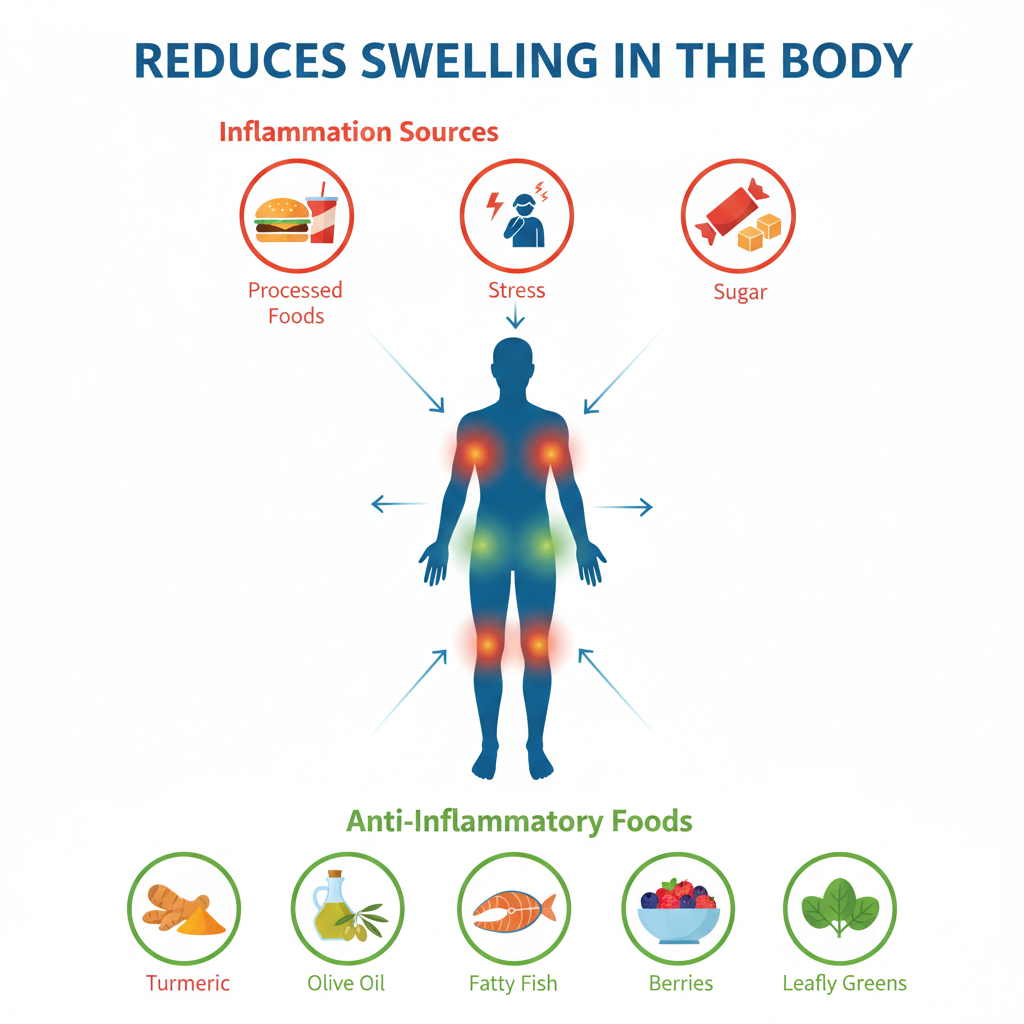
5. Reduces Swelling in the Body
Swelling in the body over a long time is linked to many health problems. These include heart disease, diabetes, and arthritis. This diet can help reduce this swelling.
What Science Says:
Studies show this diet lowers signs of swelling in the blood. This includes something called C reactive protein.
The diet reduces swelling by:
- Many antioxidants from fruits, vegetables, and olive oil
- Omega-3 fats from fish and nuts
- Good compounds from olive oil and colorful plant foods
- Limited processed meats and refined carbohydrates
Anti Swelling Recipe: Turmeric and Lemon Lentil Soup
Ingredients:
- 1 cup dried red lentils, rinsed
- 1 onion, cut into small pieces
- 2 carrots, cut into small pieces
- 2 celery stalks, cut into small pieces
- 3 cloves garlic, chopped
- 1 tablespoon olive oil
- 1 teaspoon ground turmeric
- 1/2 teaspoon ground cumin
- 1/4 teaspoon ground coriander
- 4 cups vegetable broth
- Juice of 1 lemon
- 2 cups fresh spinach
- Salt and pepper to taste
- Fresh parsley for topping
Instructions:
- Heat olive oil in a big pot over medium heat
- Add onion, carrots, and celery, cook until soft (about 5 minutes)
- Add garlic, turmeric, cumin, and coriander, cook for 1 minute
- Add lentils and vegetable broth
- Bring to a boil, then lower heat and cook for 20 to 25 minutes until lentils are soft
- Mix in lemon juice and spinach, cook until spinach wilts
- Add salt and pepper
- Top with fresh parsley before serving
6. May Lower Cancer Risk
What you eat is just one thing that affects cancer risk. But research suggests this diet may help lower the risk of some cancers.
What Science Says:
Studies found that people who followed this diet well had lower risk of several cancers. These include colorectal, breast, and liver cancers.
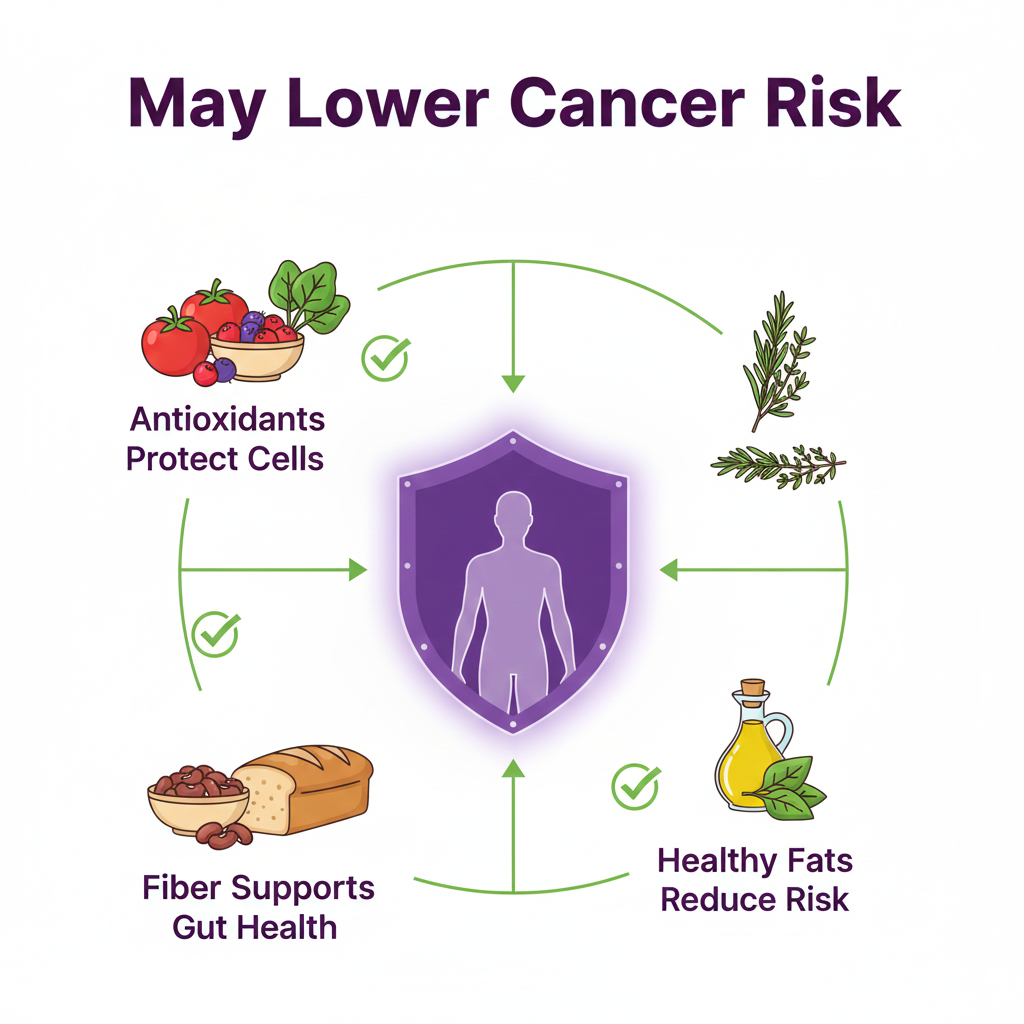
The diet may help prevent cancer by:
- Many antioxidants that protect cells
- Lots of fiber for gut health
- Healthy fats that reduce swelling
- Limited processed meats
- Moderate wine with meals
Cancer Fighting Recipe: Tomato and Herb Stuffed Bell Peppers
Ingredients:
- 4 bell peppers (any color), cut in half with seeds removed
- 1 cup cooked quinoa
- 1 can diced tomatoes (15 ounces), drained
- 1/2 cup chopped fresh parsley
- 1/4 cup chopped fresh basil
- 1/4 cup pine nuts, toasted
- 2 cloves garlic, chopped
- 2 tablespoons olive oil
- 1 tablespoon balsamic vinegar
- 1/4 cup feta cheese, crumbled
- Salt and pepper to taste
Instructions:
- Heat oven to 375°F
- In a bowl, mix quinoa, tomatoes, parsley, basil, pine nuts, garlic, olive oil, and balsamic vinegar
- Add salt and pepper
- Fill bell pepper halves with the quinoa mix
- Put in a baking dish and cover with foil
- Bake for 30 minutes
- Remove foil, add feta cheese, and bake 10 more minutes
- Serve hot or at room temperature
7. Helps You Live Longer
One of the best benefits is that this diet may help you live a longer, healthier life.
What Science Says:
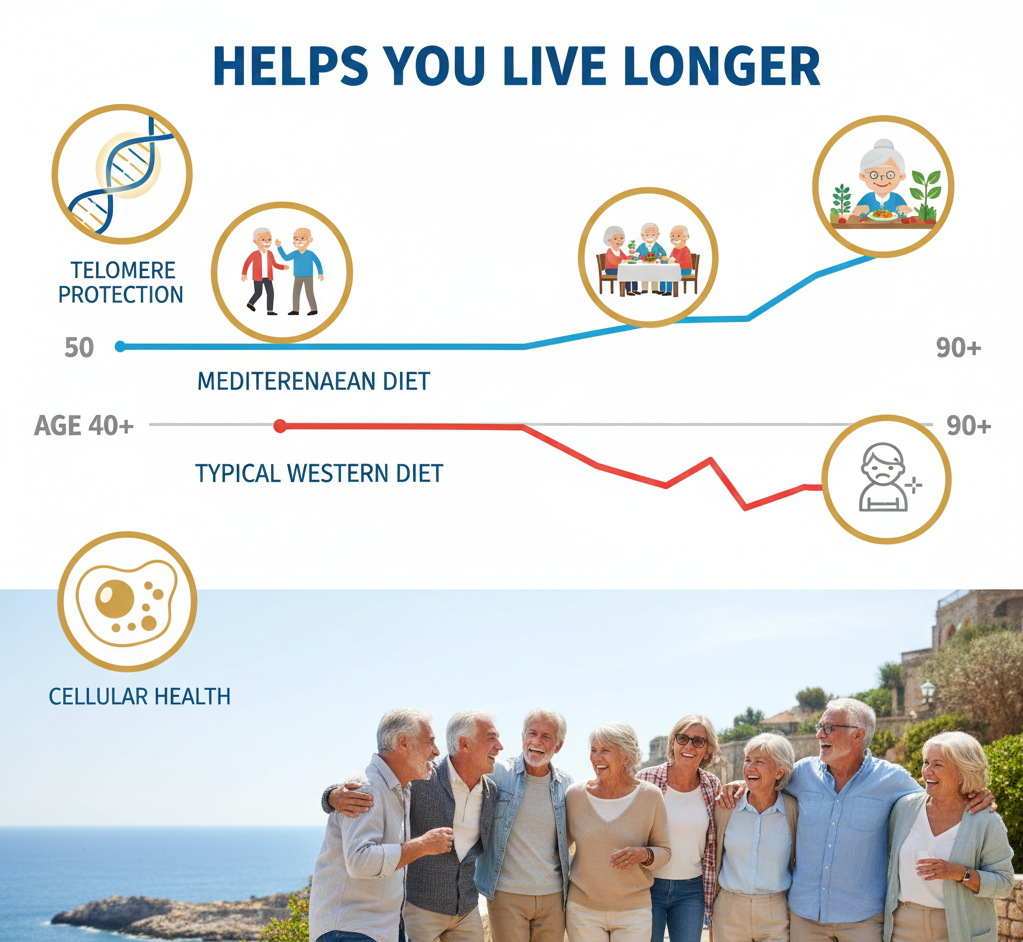
Research shows that people who follow this diet well have an 8% lower risk of dying from any cause. They also have lower risk of dying from heart disease or cancer.
The diet helps with longer life by:
- Lower risk of diseases that shorten life
- Reducing swelling and protecting cells
- Protecting parts of your cells that shorten with age
- Supporting good gut bacteria
- Helping your whole body work well
Longevity Recipe: Greek Style Baked Fish with Herbs
Ingredients:
- 4 white fish fillets (like cod or halibut)
- 3 tablespoons olive oil
- Juice of 1 lemon
- 3 cloves garlic, chopped
- 1 tablespoon fresh oregano, chopped
- 1 tablespoon fresh thyme, chopped
- 1 cup cherry tomatoes, cut in half
- 1/4 cup kalamata olives
- 1/4 cup red onion, sliced thin
- 1/4 cup fresh parsley, chopped
- Salt and pepper to taste
- Lemon wedges for serving
Instructions:
- Heat oven to 400°F
- In a small bowl, mix olive oil, lemon juice, garlic, oregano, and thyme
- Put fish in a baking dish and pour half the olive oil mix over it
- Put tomatoes, olives, and red onion around the fish
- Pour the rest of the olive oil mix over the vegetables
- Add salt and pepper
- Bake for 15 to 20 minutes until fish flakes easily
- Top with fresh parsley
- Serve with lemon wedges
8. Improves Mood and Mental Health
New research shows this diet may help your mental health. It might lower the risk of feeling sad or worried.
What Science Says:
One study found that people who followed this diet had 33% lower risk of feeling depressed compared to people eating a typical Western diet.
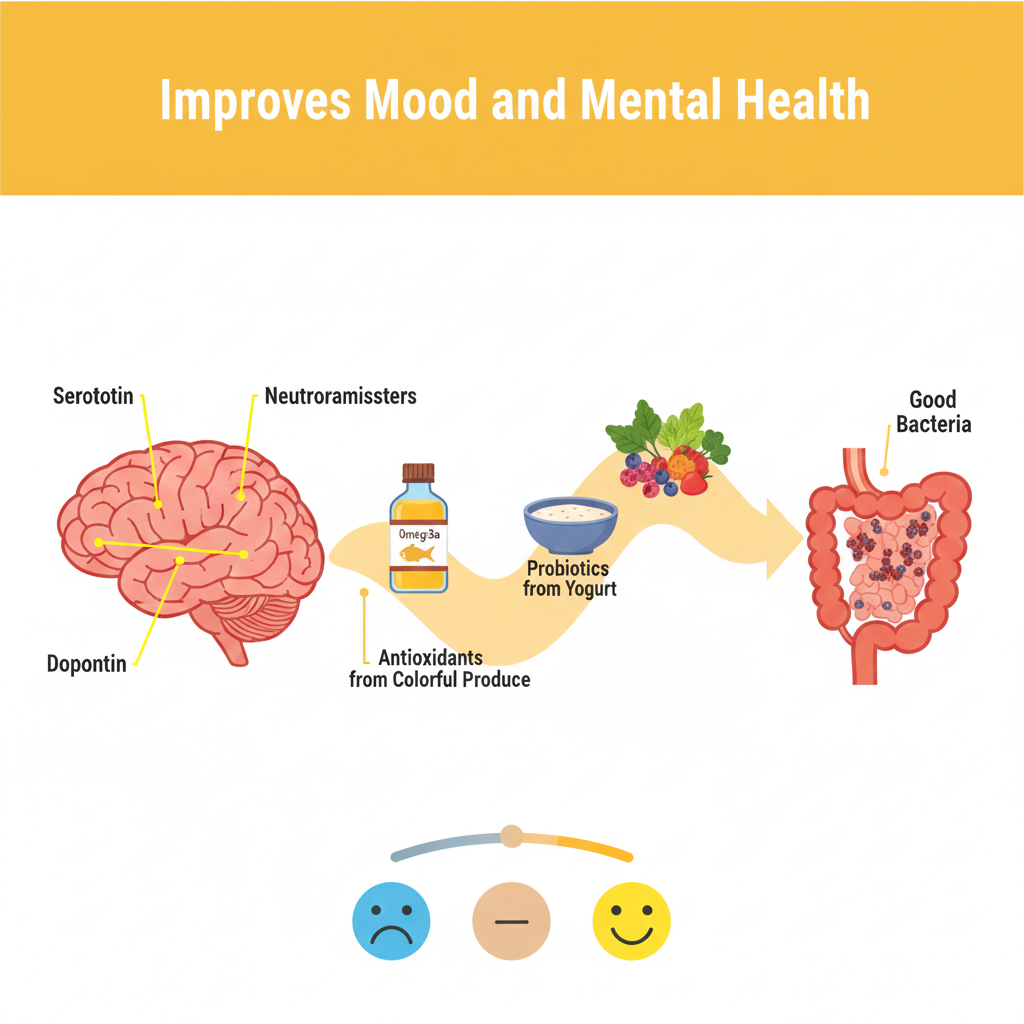
The diet may help your mood by:
- Reducing swelling that affects the brain
- Improving gut bacteria that affect mood
- Giving nutrients that help brain chemicals
- Better blood sugar control
- More omega-3 fats for brain function
Mood Boosting Recipe: Saffron and Vegetable Paella
Ingredients:
- 1 1/2 cups short grain brown rice
- 3 cups vegetable broth
- 1 onion, cut into small pieces
- 1 red bell pepper, cut into small pieces
- 1 yellow bell pepper, cut into small pieces
- 3 cloves garlic, chopped
- 1 cup artichoke hearts, cut into quarters
- 1 cup green peas (fresh or frozen)
- 1/2 cup cherry tomatoes, cut in half
- 1/4 teaspoon saffron threads, soaked in 2 tablespoons hot water
- 1 teaspoon smoked paprika
- 1/2 teaspoon turmeric
- 3 tablespoons olive oil
- 1/4 cup fresh parsley, chopped
- Lemon wedges for serving
- Salt and pepper to taste
Instructions:
- Heat olive oil in a big pan over medium heat
- Add onion and cook until soft (about 5 minutes)
- Add bell peppers and garlic, cook for 3 minutes
- Add rice and mix with oil
- Add saffron with its water, paprika, and turmeric
- Pour in vegetable broth and bring to a boil
- Lower heat, cover, and cook for 20 minutes
- Add artichoke hearts, peas, and tomatoes
- Cook 10 more minutes until rice is soft and liquid is gone
- Add salt and pepper
- Top with fresh parsley
- Serve with lemon wedges
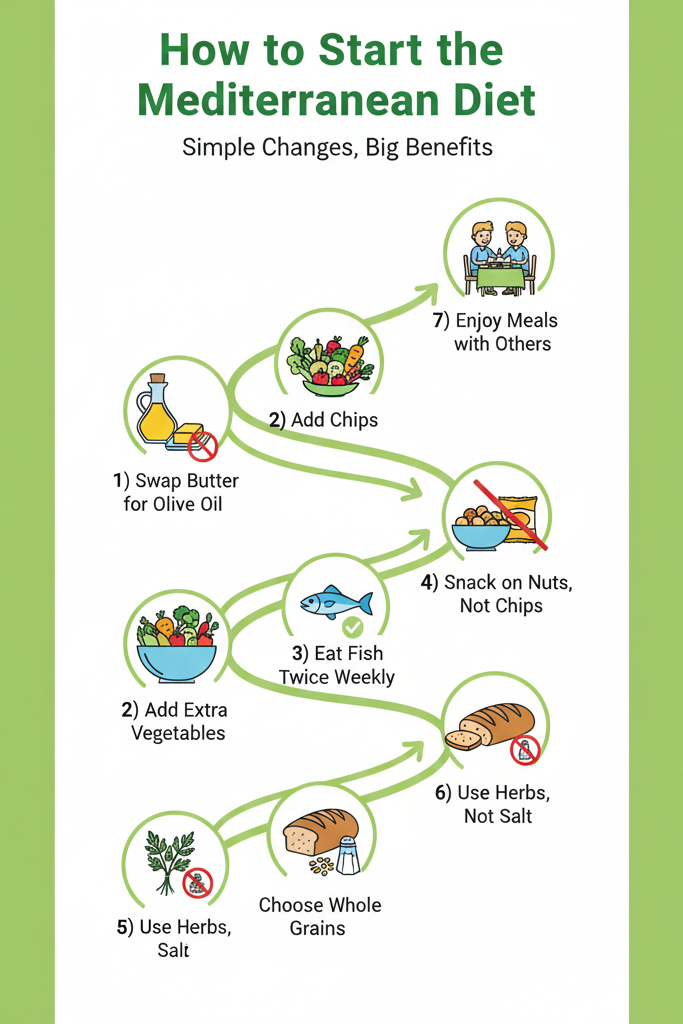
How to Start the Mediterranean Diet
Here are simple tips to begin:
- Start with small changes. Use olive oil instead of butter.
- Focus on plant foods. Make fruits, vegetables, and beans the main part of your meals.
- Choose healthy fats. Use olive oil, nuts, seeds, and avocados.
- Eat fish twice a week. Choose fatty fish like salmon or sardines.
- Eat less red meat. Have it only a few times a month.
- Enjoy some dairy. Try yogurt and small amounts of cheese.
- Use herbs and spices. They add flavor without salt.
- Eat with others. Enjoying meals with people is part of the lifestyle.
Conclusion
The Mediterranean diet has many health benefits backed by science. It helps your heart, brain, weight, and more. It may even help you live longer.
What makes this diet special is that it is enjoyable. It does not make you cut out foods you love. Instead, it focuses on adding healthy, tasty foods. It also encourages eating with family and friends.
By trying the recipes and tips in this article, you can enjoy the benefits of this healthy way of eating. You will nourish your body with foods that taste good and are good for you.