Mediterranean Diet Pantry Guide: Must-Have Foods for Beginners
Starting the Mediterranean diet begins with getting your pantry ready. Your pantry is where you keep foods that do not need to be in the refrigerator. Having the right foods in your pantry makes Mediterranean cooking easier and more fun.
A good pantry helps you because:
- It saves time: You have what you need to cook without going to the store
- It saves money: Buying pantry foods in larger amounts often costs less
- It gives you choices: You can make different meals with what you have
- It reduces waste: Pantry foods last longer than fresh foods
- It tastes better: Using real Mediterranean foods makes your meals taste authentic
Mediterranean Pantry Foods You Need
1. Oils and Vinegars
These are very important for Mediterranean cooking. They add flavor and healthy fats.
Must have:
- Extra virgin olive oil: The main oil for cooking and salad dressing. Look for dark bottles.
- Regular olive oil: For cooking at higher heat.
- Red wine vinegar: For salad dressings and marinades.
- Balsamic vinegar: Sweeter vinegar for vegetables and dressings.
- White wine vinegar: Lighter vinegar for seafood and dressings.
Storage tip: Keep oils and vinegars away from heat and light.
2. Beans and Lentils
These are protein foods that are good for you and cost less than meat.
Must have:
- Chickpeas: For hummus, soups, and salads. Get both dried and canned.
- Lentils: Cook fast for soups and salads. Green, brown, and red are good types.
- White beans: For soups and stews.
- Fava beans: Used in many Mediterranean dishes.
- Split peas: For thick soups.
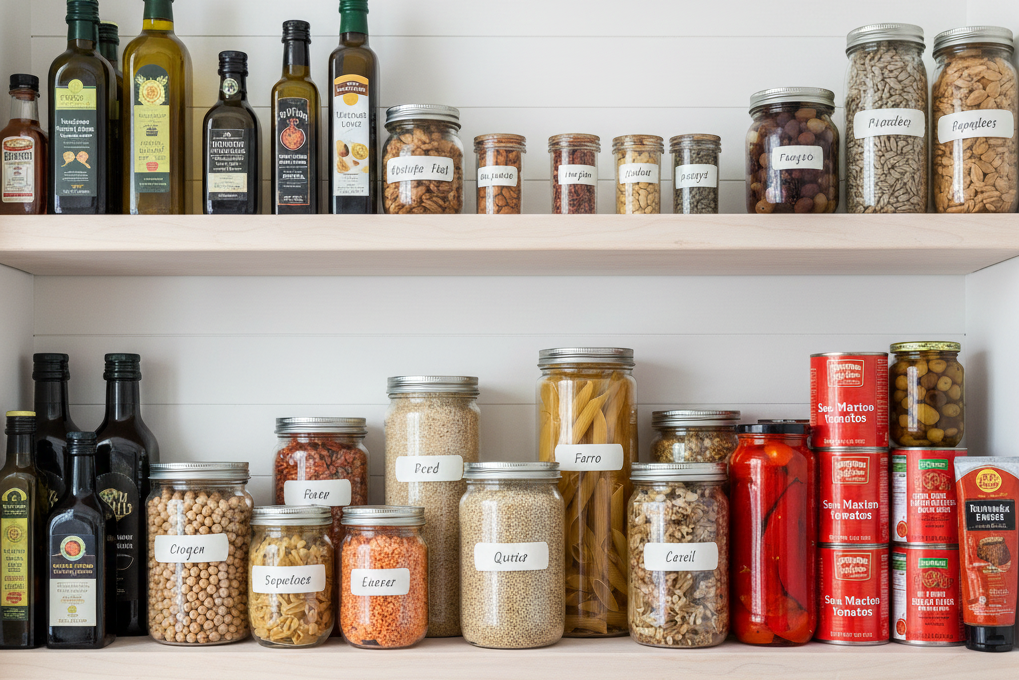
Storage tip: Keep dried beans in clear containers with labels.
3. Whole Grains
These give you energy and are the base of many meals.
Must have:
- Brown rice: Good with many different foods.
- Farro: An old type of wheat with a nice texture.
- Bulgur wheat: Cooks fast for tabbouleh salad.
- Barley: Good in soups.
- Whole grain couscous: Tiny pasta that cooks in minutes.
- Quinoa: A seed that acts like a grain with complete protein.
- Polenta: Made from corn for creamy side dishes.
- Whole grain pasta: Look for whole wheat or semolina types.
Storage tip: Keep grains in containers that keep air out.
4. Nuts and Seeds
These add healthy fats, protein, and crunch to your food.
Must have:
- Almonds: For snacking and salads.
- Walnuts: Have omega-3 fats for brain health.
- Pine nuts: For pesto sauce and grain dishes.
- Pistachios: For snacking and desserts.
- Sesame seeds: For tahini and topping foods.
- Sunflower seeds: For salads and snacks.
- Flaxseeds: Add omega-3s to smoothies.
- Chia seeds: For puddings and smoothies.
Storage tip: Keep nuts and seeds in the refrigerator so they do not go bad.
5. Herbs and Spices
These add flavor without using too much salt.
Must have dried herbs:
- Oregano: For Greek and Italian foods.
- Basil: For Italian foods.
- Thyme: Goes well with many Mediterranean dishes.
- Rosemary: For roasted meats and vegetables.
- Mint: For tea, desserts, and some main dishes.
- Bay leaves: For soups and stews.
- Sage: For chicken, pork, and beans.
Must have spices:
- Cumin: Common in Middle Eastern food.
- Coriander: Adds a citrus-like flavor.
- Paprika: Sweet and smoked types.
- Cinnamon: For both sweet and savory foods.
- Za’atar: A Middle Eastern herb blend.
- Red pepper flakes: For adding spice.
Storage tip: Keep herbs and spices in a cool, dark place. Label them clearly.
6. Canned and Jarred Foods
These are convenient and let you have Mediterranean flavors all year.
Must have:
- Canned tomatoes: Whole, diced, or crushed for sauces.
- Tomato paste: For strong tomato flavor.
- Olives: Kalamata and green olives.
- Capers: Add briny flavor.
- Artichoke hearts: For salads and pastas.
- Roasted red peppers: For sandwiches and salads.
- Tuna in olive oil: For quick protein in salads.
- Sardines: Have omega-3s for snacks or meals.
Storage tip: Group similar foods together. Use older items first.
7. Sweeteners and Baking Items
Mediterranean desserts are often less sweet and use natural ingredients.
Must have:
- Honey: A natural sweetener.
- Pure maple syrup: Another natural sweetener.
- Dried fruits: Dates, figs, apricots, and raisins.
- Almond flour: For gluten-free baking.
- Semolina flour: For authentic breads.
- Vanilla extract: For flavoring desserts.
Storage tip: Keep baking items in a cool, dry place.
8. Flavor Boosters
These add special flavors to Mediterranean dishes.
Must have:
- Tahini: Sesame seed paste for hummus.
- Harissa: North African chili paste for spice.
- Pesto: Basil and pine nut sauce.
- Sun-dried tomatoes: Strong tomato flavor.
- Pomegranate molasses: Sweet-tart syrup for dressings.
Storage tip: After opening, keep these in the refrigerator.
How to Organize Your Mediterranean Pantry
A well-organized pantry makes cooking easier. Here is how to do it:
1. Create Zones
Group similar foods together:
- Oils and vinegars area
- Beans and grains area
- Herbs and spices area
- Canned goods area
- Nuts and seeds area (in refrigerator)
2. Use Clear Containers
Put dry foods in clear containers so you can:
- See what you have
- Keep foods fresh longer
- Keep pests out
- Make your pantry look nice
3. Label Everything
Label containers with:
- Food name
- Date you bought it
- Cooking instructions if helpful
4. Keep Track of What You Have
- Make a shopping list when items get low
- Check dates each month
- Use older items before newer ones
5. Put Often-Used Items Where You Can Reach Them
Keep foods you use every day at eye level. Put special foods you do not use often on higher or lower shelves.
Step by Step Pantry Makeover
Follow these steps to get your pantry ready:
Step 1: Take Everything Out
- Remove all food from your pantry
- Throw away expired foods
- Give away foods you will not use
- Clean the shelves
Step 2: Sort What You Keep
Group foods by the categories above.
Step 3: Make a Shopping List
Write down what Mediterranean foods you need to buy.
Step 4: Get Storage Containers
Buy:
- Containers that keep air out for grains and beans
- Glass jars for herbs and spices
- Bottles with pour spouts for oils
- Baskets for grouping items
Step 5: Put Foods Back in an Organized Way
Arrange foods by your zone system.
Step 6: Label All Containers
Use clear labels so you know what everything is.
Step 7: Keep It Organized
- Tidy up each week
- Check what you have each month
- Deep clean every season
How to Save Money on Your Mediterranean Pantry
Building a Mediterranean pantry does not have to cost a lot:
1. Start with Basics
Begin with the most important foods:
- Olive oil
- Canned tomatoes
- Dried beans
- Basic herbs
- Brown rice and whole wheat pasta
2. Add Slowly
Buy 2-3 new items each week instead of everything at once.
3. Shop Smart
- Buy beans, grains, and nuts from bulk bins
- Look for sales on olive oil
- Check international food aisles for better prices
- Consider online shopping for hard-to-find items
4. Make Your Own Blends
Create homemade:
- Spice mixes
- Herb-infused oils
- Pesto sauce (freeze in small amounts)
5 Easy Meals from Your Pantry
With a stocked pantry, you can make these meals even without fresh shopping:
1. Mediterranean Bean Soup
Use: Dried beans, canned tomatoes, olive oil, herbs, grains
Add fresh: Onion, garlic, any vegetables
2. Quick Pantry Pasta
Use: Whole grain pasta, canned tomatoes, olive oil, herbs, tuna
Add fresh: Garlic, fresh herbs
3. Mediterranean Grain Bowl
Use: Cooked grain, canned chickpeas, sun-dried tomatoes, olives, tahini
Add fresh: Cucumber, tomato, greens
4. Homemade Hummus
Use: Canned chickpeas, tahini, olive oil, lemon juice, spices
Add fresh: Vegetables for dipping
5. Mediterranean Tuna Salad
Use: Canned tuna, canned beans, olives, roasted peppers, vinegar, olive oil
Add fresh: Onion, herbs
Final Thoughts
Getting your pantry ready is the first step to eating the Mediterranean way. With these essential foods organized and ready to use, you will find it much easier to make healthy, tasty Mediterranean meals regularly.
Remember that building your Mediterranean pantry takes time. Start with the basics and add new foods as you try different recipes. Your pantry will grow to match what you like to eat.
A well-stocked Mediterranean pantry helps you cook creatively, use what fresh foods you have, and keep eating healthy even when you are busy. Your pantry becomes more than just storage, it becomes your partner in healthy eating for years to come.