Holy Sucralose: The Hidden Ingredient in “Healthy” Energy Drinks
There is an ingredient hiding in plain sight. Most people never think twice about it. It sits quietly on food labels, tucked between vitamins and “natural flavors.” Meanwhile, the brands shout things like “zero sugar” and “no aspartame” on the front of the can.
But here is the problem.
What is being left out of the conversation matters more than what is being advertised.
This is the story of that ingredient. It might be quietly hurting your gut, your metabolism, and your health without you even realizing it.
Meet Marcus: The Guy Who Did Everything Right
Marcus is the kind of person people point to as “disciplined.” He works out five days a week. He prepares his meals ahead of time. He tracks his macros, the amounts of protein, fat, and carbs he eats.
On paper, he is doing everything right.
But something did not add up. He kept dealing with bloating. He had digestive issues. He felt constant discomfort. It was the kind of stuff that does not make sense when you are supposed to be “healthy.”
There was one habit he never questioned. Every day, Marcus drank three cans of Celsius, a popular energy drink. He thought it was a smart choice. It was clean energy. It had no sugar. It was marketed for fitness.
But that daily habit turned out to be the missing piece of the puzzle.
The Ingredient Hiding in Plain Sight
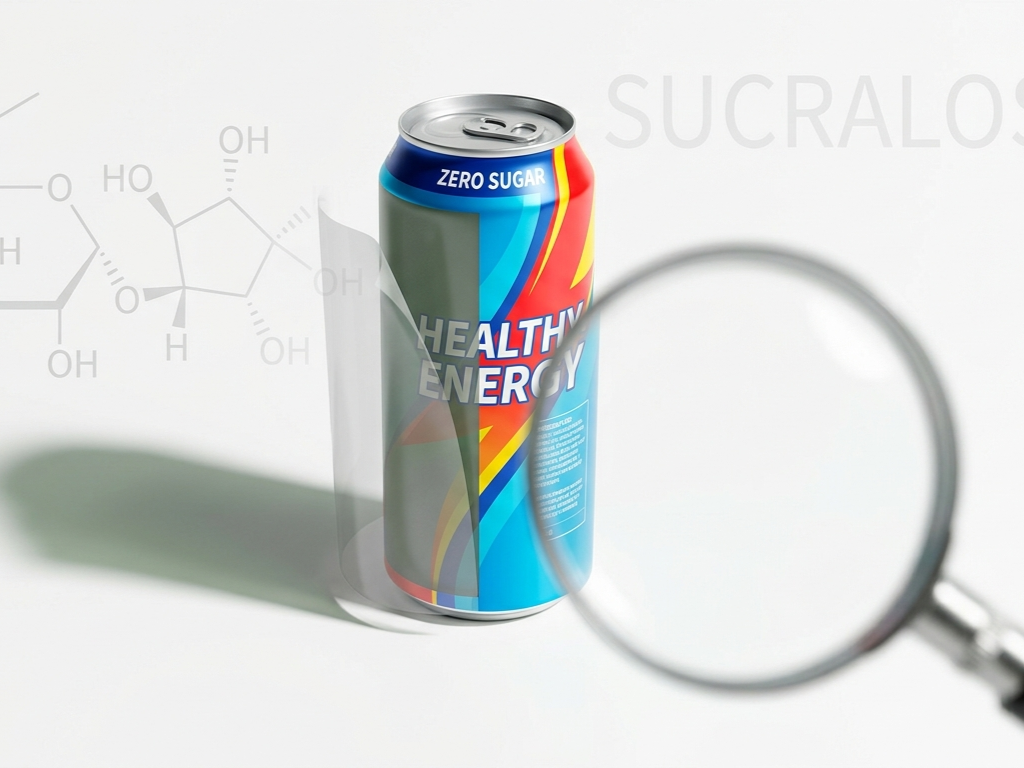
Flip over a can of Celsius and you will see it. Sucralose.
Each can has about 100 milligrams of it. Marcus was drinking 300 milligrams a day. Most people know sucralose by a different name. It is called Splenda. And despite how it is marketed, it is not as harmless as it sounds.
What Is Sucralose, Really?
Sucralose is not just “modified sugar.” It is a chlorinated compound. Scientists take a sugar molecule and replace parts of it with chlorine atoms. Chlorine is the same element used in disinfectants and pool chemicals.
The result is a substance that is about 600 times sweeter than regular sugar. And it is completely synthetic. Your body does not really know what to do with it.
And that is where the problems start.
Problem #1: It May Worsen Blood Sugar Control
Most people use sucralose to avoid blood sugar problems. But some research suggests the opposite can happen. Drinking it regularly has been linked to:
- Reduced insulin sensitivity
- A higher risk of metabolic problems
- A disrupted glucose response
In simple terms, the thing people use to “stay healthy” may be quietly working against them.
Problem #2: It Can Disrupt Your Gut
This is where Marcus started to connect the dots. Your gut is full of bacteria. These bacteria help control your digestion, your immunity, and even your mood.
Sucralose does not nourish that system. It can disrupt it. Because your body does not digest it well, most of it passes right through you untouched. And along the way, it may:
- Change the balance of bacteria in your gut
- Reduce the number of helpful microbes
- Contribute to bloating and discomfort
For someone drinking multiple cans a day, that adds up fast.
Problem #3: It May Irritate the Gut Lining
When something passes through your digestive system unchanged, it does not just disappear. It interacts with the lining of your gut. Some researchers think this can lead to something often called “leaky gut.” This is when the gut lining becomes more permeable.
That means unwanted particles can pass into your bloodstream. This can potentially trigger:
- Inflammation
- Fatigue
- Skin problems
- Brain fog
It is not just about your digestion anymore. It becomes a problem for your whole body.
Problem #4: Heat Changes Its Chemical Behavior
Sucralose is not very stable when it gets hot. When it is exposed to high temperatures, it can break down into other compounds. Researchers have flagged some of these compounds as potentially harmful. This matters because it shows you that this is not a natural, stable ingredient that your body recognizes. It is reactive.
Problem #5: It Doesn’t Deliver on Weight Loss
This is the biggest reason people choose “zero sugar” drinks. They expect to lose fat. But studies that look at long-term use of artificial sweeteners often show something surprising. The weight loss benefit is either very small or it is not consistent. In some cases, people’s appetite and cravings actually get worse.
So you end up drinking fewer calories, but you are not seeing any real results. That is a frustrating trade-off.
The Real Issue: Marketing vs. Reality
Energy drink brands are smart. They highlight what is missing. They put “no sugar” on the front. They put “no aspartame” on the front. They put “no high fructose corn syrup” on the front. But they do not emphasize what is actually inside. This creates a “health halo.” It makes the product seem healthier than it really is.
Marcus was not trying to make bad choices. He was just reading the label. But the label did not tell the whole story.
A Different Approach to Energy
After dealing with months of gut problems, Marcus finally made a change. He cut out the energy drinks. He switched to options with simpler ingredient lists. He chose drinks with real sources of caffeine and fewer synthetic additives.
Within a couple of weeks, things started to get better. He had less bloating. His energy was more stable. His digestion improved. Nothing extreme. He just removed one daily habit.
Why Natural Sweeteners Feel Different
There is a reason some alternatives sit better with people. Sweeteners like stevia or monk fruit come from plants. People have been using them for centuries. They are not chemically altered in a lab in the same way. That does not automatically make them perfect. But it does mean your body tends to recognize them more easily. And that matters.
How to Read Labels Without Overthinking It
You do not need to memorize every single ingredient. Just follow a few simple rules.
If the front of the package says:
- “Zero sugar”
- “Diet”
- “Sugar-free”
Flip the can over. Look for these names in the ingredient list:
- Sucralose
- Aspartame
- Acesulfame potassium
If you see these regularly in things you drink every day, it might be worth thinking about them again. On the other hand, shorter ingredient lists are usually a better choice.
The Bigger Picture: The Sugar-Free Trap
The food industry did not remove sugar because they wanted you to be healthier. They just replaced it. And often, that replacement comes with trade-offs. Fewer calories does not always mean better health. Sometimes it just means a different set of problems.
The Bottom Line
This is not about one brand or one specific drink. It is about being aware. Marcus did not change everything about his life overnight. He just questioned one habit. And that made the difference.
Because at the end of the day, your health is not built on one big decision. It is built on the small things you repeat every single day.
So next time you grab something labeled “healthy,” take five seconds. Flip it over. Read what is actually inside.