6 Exercises To Help Make Your Knees Stop Cracking And Popping
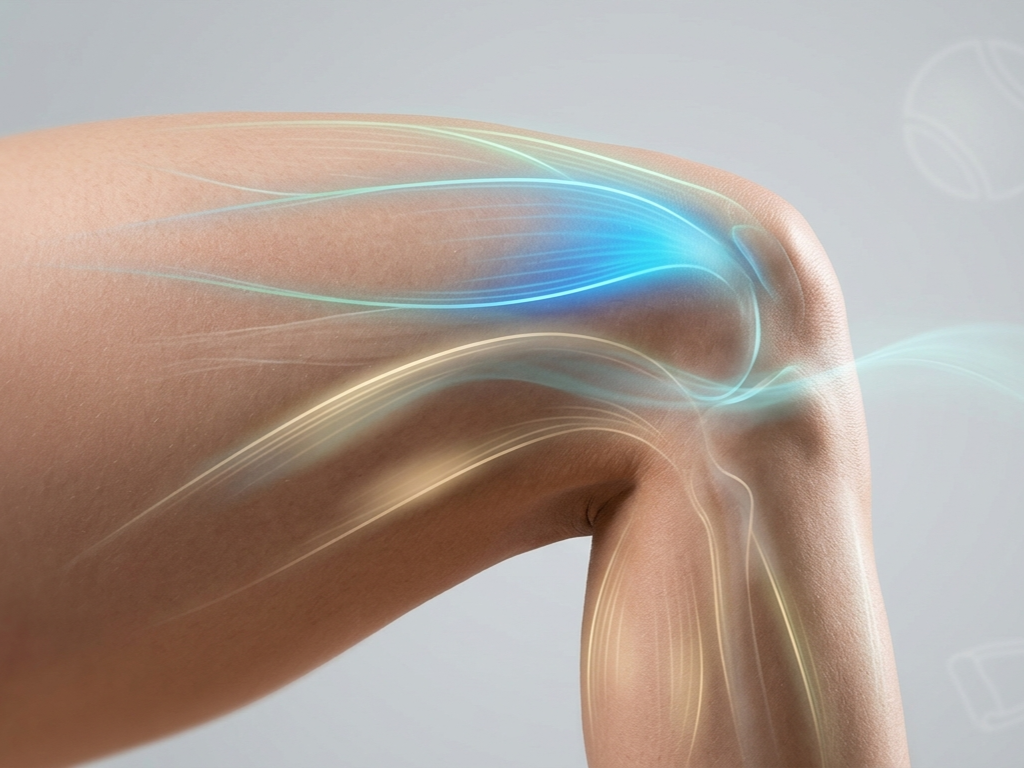
You stand up, and your knee cracks. You walk downstairs, and your knee pops. What is all that noise about? You might wonder if it is something to worry about.
Often, it is just the fluid that coats your joints being moved through certain ranges of motion. This is usually harmless. But other times, constant cracking and popping, especially when it comes with pain, can be a sign that something is wrong.
What Causes the Noise?
Generally, tight or misaligned muscles can pull your kneecap out of its proper alignment. Over time, this imbalance can cause clicking or popping. If it continues, the cartilage in your knee can become worn down. This could lead to early arthritis and other problems with the joint.
To help stop the noise and keep injuries away, try these exercises three times a week for the best results.
1. Calf Release
Why it helps: This is a technique called self myofascial release. It helps relieve muscle tension and tightness through direct pressure. Stretching simply makes the muscle longer. Releasing helps you activate tight muscles that are shifting the balance of your muscle structure. Use this technique to release tight calf muscles and help your kneecap get back on track.
How to do it:
- Sit on the floor with your calf resting on top of a tennis ball.
- Stack your other leg on top of the leg you are working on.
- Roll your leg up and down over the ball. Move from just below the back of your knee down to near your heel.
- When you find a spot that feels tender, stop and hold the position.
- Point your foot up and down slowly for about 30 seconds.
- Repeat this on any other tender spots you find.
2. Hip Flexor Release
Why it helps: Knee pain is often caused by a misaligned hip. Releasing the hip flexor, a large muscle at the front of your hip, can help fix this.
How to do it:
- Tape two tennis balls together. This makes a larger surface area for the big hip muscle.
- Lie on your stomach on the floor. Place the taped balls just below your hip bone.
- Let your body weight rest on the balls. Lean as much weight as you can handle comfortably.
- Bend the knee on the side you are working on to a 90-degree angle.
- Swing your leg from side to side as far as you can go without feeling too much pain.
- Repeat for 30 seconds to 2 minutes. Do this as needed.
3. IT Band Release
Why it helps: The IT band is a long band of tissue that runs down the outside of your thigh. It goes from your hip to your shin. It attaches to your knee and helps stabilize and move the joint. When it is tight or inflamed, it can pull your kneecap out of alignment.
How to do it:
- Lie on the side you want to release. Place a foam roller under your bottom leg, halfway between your hip and your knee.
- Slide your leg up and down over the foam roller. Move it from the top of your knee up toward your hip.
- Try to spend extra time on the tender areas as much as you can handle.
- Repeat for 30-second intervals, for a total of 2 minutes.
- To focus on one specific area, find a tender spot and stop moving. Bend your knee to a 90-degree angle, then straighten it. Repeat this bending and straightening motion for 10 to 15 seconds. Then move to other tender spots.
4. Side Steps with Resistance Band
Why it helps: The outer part of your quad muscle is often weaker than the muscle that runs along the top of your thigh. This imbalance can cause your kneecap to pull out of line. The solution is to strengthen that outer muscle.
How to do it:
- Place a medium resistance band around your legs, just below your knees.
- Lower down into a squat position. If squatting is uncomfortable, you can stand tall.
- Take two steps to the right. Then take two steps to the left.
- Work hard to pull your legs apart against the band as you move.
- Repeat for one set of 30 seconds to 1 minute.
- Do 3 sets, 3 days a week.
5. Inner Thighs Squat
Why it helps: Like the outer thigh, the inner thigh is often weaker than the top part of the quad muscle. To strengthen it and help prevent knee pain, inner thigh squats are a great exercise.
How to do it:
- Stand with your feet shoulder-width apart. Point your toes out at a 45-degree angle.
- Keep your weight on your heels.
- Start to squat by pushing your hips back as if you are trying to sit in a chair that is too far behind you.
- As you squat, move your knees out to the sides.
- Go as low as you can, but do not go lower than a 90-degree angle.
- Push back up through your heels.
- Do 3 sets of 15 repetitions. Do this 3 days a week.
6. Vastus Medialis Oblique (VMO) Activation
Why it helps: Your VMO is the teardrop-shaped quad muscle that runs along the inside of your kneecap. It is often one of the weaker muscles on the thigh. That can pull your kneecap off track. The solution is to strengthen it.
How to do it:
- Stand in a split stance with one foot forward and one foot back. Keep all your weight in your front leg.
- Squat straight down. Stop when your front knee is at a halfway point.
- Make sure your front knee stays directly over your ankle. It should not move forward past your toes.
- While squatting, twist your front leg to the right. Hold for 3 to 5 seconds.
- Release and rise back up. Push through the balls of your feet.
- Do 3 sets of 15 repetitions on each leg. Do this 3 days a week.
Final Thoughts
If your knees crack and pop often, especially with pain, these exercises can help. They work on releasing tight muscles and strengthening weak ones. This helps keep your kneecap in the right place. Always listen to your body. If an exercise causes sharp pain, stop and check with a doctor or physical therapist. Consistency is key. Doing these exercises three times a week can help you move with less noise and more comfort.