5 Healthy – Not-So Healthy Foods
It is frustrating when your body will not change. The scale will not move. Your jeans feel tighter than before you started eating “healthier.”
You might think, “What is going on? I started eating healthier foods. I stopped eating fast food. I even started exercising. It has been two weeks, and nothing is happening. I think I am actually worse off. This is not even worth it.”
If you are exercising consistently, two to four times a week, and you are still not seeing results, it is time to change things up. You cannot keep doing the same thing and expect different results. If something is not changing, it is either because your workout is not effective or your eating habits are not ideal. Usually, it is the food, and that is where I will focus today.
One of the biggest challenges with “healthy eating” is that many women have a hard time giving up processed food. It is cheap, quick, and easy. Others give up one processed food for what they think is a healthier option. In reality, it is just as bad, if not worse.
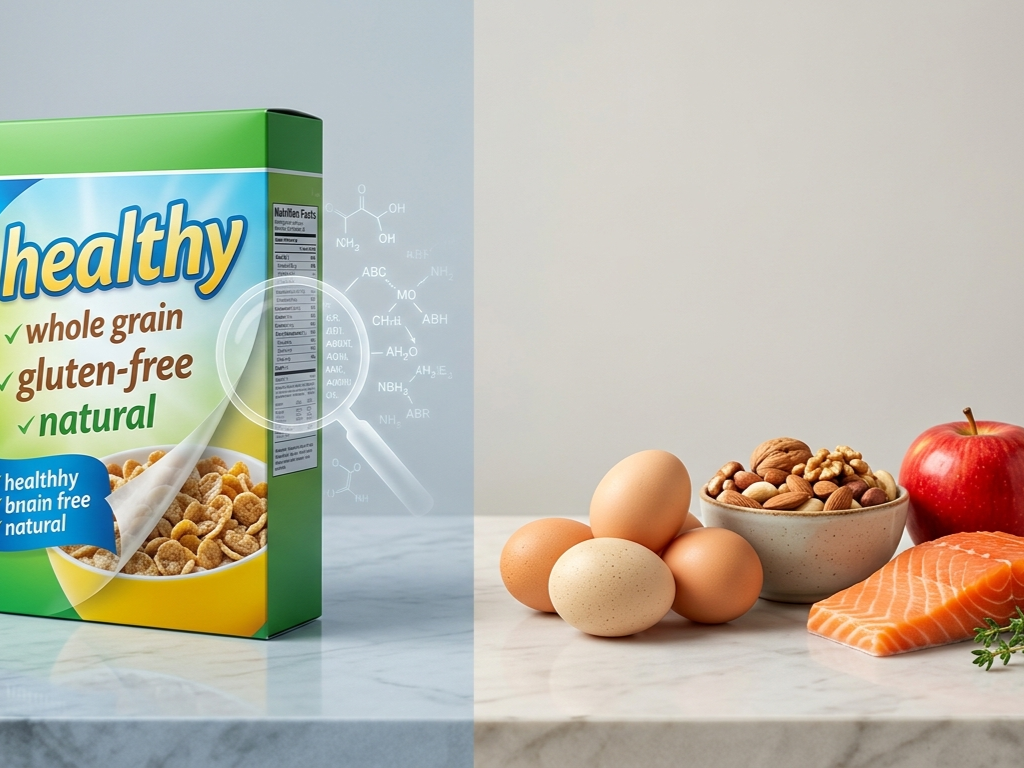
More than 80 percent of the foods in our supermarkets were not here 100 years ago. There is a good reason for that. More and more processed, packaged foods are being marketed as healthy, good for you, guilt-free, or skinny. Even some foods labeled as “trans-fat free,” “gluten-free,” “organic,” or “natural” are very processed. Remember this: organic does not always mean healthy.
Many of these “healthy” foods can stop your weight loss and fat loss results. Here are my top five “healthy” foods that might be keeping you from breaking through a plateau or from seeing any results at all.
1. Cereal
The only thing healthy about cereal these days is the toy inside. I would suggest buying a toy without the cereal. Here are the reasons why cereal should be avoided.
- Generic cereals are usually made from genetically modified grains like wheat or corn.
- Cereals are enriched and fortified with synthetic vitamins because processing destroys any natural vitamins.
- Many are loaded with high fructose corn syrup, sugar, or artificial sweeteners.
- Many contain genetically altered vegetable oils like canola, soybean, or corn oil.
- Most contain preservatives, additives, colorings, thickeners, binders, and dyes.
- They do not have enough good quality protein or non-inflammatory carbohydrates. This causes hunger to linger because you are not giving your body the right nutrients.
- We usually use conventional milk with our cereal, which makes the negative effects even worse.
The only cereal I would eat occasionally is Barbara’s gluten-free cereals. I eat it with adequate protein and use grass-fed raw milk or lightly pasteurized milk.
2. Pre-Packaged Snacks
100-calorie snack packs are what I am mostly talking about. But you can also think of chips, cookies, and other processed junk foods in this category. These “little” snacks have a massive impact on your health and body. And it is not the good kind of impact that the companies marketing them want you to believe.
If the package says “low-fat,” “low-sugar,” or “low-calorie,” you can bet you are in for a mix of refined oils, processed grains, artificial sweeteners, and preservatives. You also get a false sense of how many calories you actually need to maintain or develop a healthy metabolism.
One hundred-calorie snacks are okay only if you are eating good quality foods. For example, a piece of grass-fed cheese and organic fruit is 100 calories of awesome food. But if you eat processed, low-quality foods, you will never feel satisfied. You will keep eating until your 100 calories of snacks turn into 1000 calories of junk.
The best 100-calorie snacks contain a protein, a carbohydrate (like fruit, potatoes, or rice), and a healthy fat (like avocado or good quality butter).
3. Energy Bars
I think it is a good idea to avoid “energy,” “health,” or “nutrition” bars altogether. However, if you are ever in a pinch, here are the ingredients you should look for and avoid on the label.
Avoid:
- Soy protein: This is most likely genetically modified. It increases our body’s need for nutrients. It mimics estrogen in the body, inhibits thyroid function, and negatively affects digestion.
- Whey protein: This is usually from conventionally raised animals, which can cause inflammation.
- High fructose corn syrup: This comes from genetically altered corn products. It is problematic for liver function and can lower your metabolic rate.
- Sugar alcohols: These are very disruptive to digestion. They can cause gas, bloating, and slow down your metabolism.
- Artificial sweeteners: Many studies have shown they can have neurotoxic effects. They are chemically made.
- Unsaturated fatty acids: These can slow energy production by inhibiting thyroid function.
Generally, the only bars I think are beneficial are meat-based bars made from grass-fed beef or buffalo. They should have very few ingredients. The amount of nutrients listed on energy bar labels can be misleading. Quality, transportation, and other factors affect how well your body can actually use those nutrients.
Here are a few energy bars I like and recommend: Tanka Bars, Nick’s Sticks, and Epic Bars.
4. Bread
Is 100% whole wheat bread healthy? I can tell you with great confidence that “wheat bread” is not healthy for you. Let us look at the ingredient list for a popular wheat bread.
Here is an example:
Stone ground whole wheat flour, water, brown sugar, yeast, wheat gluten, contains 2% or less of each of the following: salt, vegetable oil (soybean oil or canola oil), dough conditioners (sodium stearoyl lactylate, calcium stearoyl-2-lactylate, monoglycerides, calcium iodate, ethoxylated mono and diglycerides, calcium peroxide, DATEM), cultured wheat flour, vinegar, calcium sulfate, monocalcium phosphate, yeast food (ammonium sulfate), soy lecithin.
From a physiology perspective, whole wheat flour is no different than regular enriched flour. In other words, our bodies cannot tell the difference between the two.
Here are three ingredients you should stay away from if you care about your health and want to lose fat.
- Whole wheat flour: Starting in your stomach, phytic acids in wheat and flour block nutrient absorption. This means that if you eat a sandwich with organic vegetables on the bread above, the chemicals in the bread will prevent your body from breaking down and using the nutrients in the vegetables.
- Soybean and canola oil: These are some of the worst oils you could put in your body. They are probably genetically modified, which can alter your genetic makeup. They also cause accelerated aging. Do you want to age faster? No.
- Conditioners: The same ingredients used in conditioners are used in plastics and household items. Do you eat glue, Tupperware, or cleaning products? I did not think so.
If you are really into bread, go for rice-based bread. Here is a brand I recommend for a sandwich now and then: Food for Life Brown Rice Bread.
5. Protein Powders and Shakes
I used to think protein shakes were a must-have for fitness success. That was until I actually researched what was in them. Have you ever thought about how your chicken breast turns into a powder? Processing and refinement is the answer. But at what cost? The cost of your health.
Most protein powders and shakes come from conventionally raised animals. These animals are mistreated, stressed out, and fed genetically altered grains like corn and soy. Their protein quality is much lower than that of animals raised in a healthy environment.
If the protein source is not from a conventionally raised animal, it is often from GMO soy, which is an even worse option. Just like all other processed foods, these products contain added preservatives, synthetic vitamins, flavor enhancers, and unnatural ingredients. They generally do not promote health.
The best protein shake is one that you shake around and cook in a pan. If you still believe in protein shakes, my advice is to read your labels carefully. Find a protein shake with good quality whey protein, preferably from a grass-fed, pastured source.
Final Thoughts
When you want to change your body, you must change your internal environment. You can do this by being aware of what you are putting in your mouth. Eat real food. Eat when you are hungry. Avoid processed foods. Start by getting rid of the junk.
Keep things simple and plan ahead. That way, you do not impulsively buy something you will regret later. If you have any questions about processed snacks, there are some decent products out there. Ask me about them in the comments.