10 Signs Your Teeth Are Affected by Gut Issues
The connection between your gut and the rest of your body is a big topic in health research these days. Many people know that problems with digestion can cause issues elsewhere, like skin problems or mood swings. But a lesser-known link is the one between your gut and your teeth.
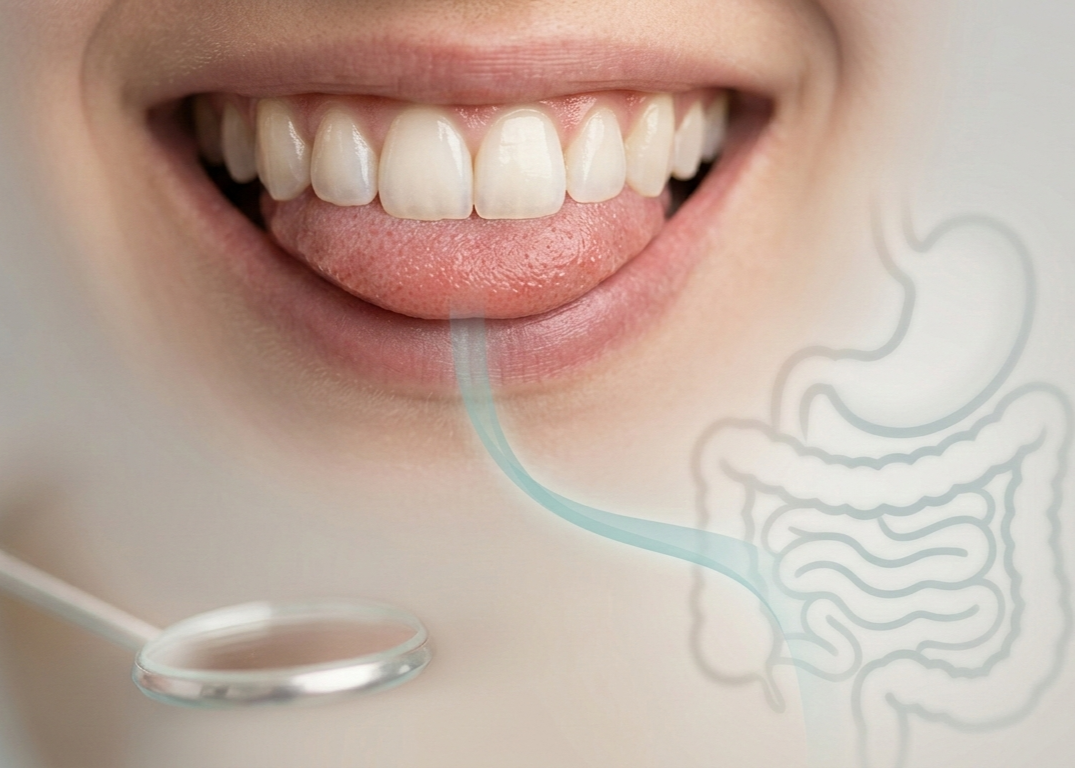
Your mouth is the very start of your digestive system. Scientists are learning more about a two-way connection called the oral-gut axis. This means that not only can the health of your mouth affect your gut, but the health of your gut can also have a big impact on your teeth and gums [6] [7].
When the balance of good and bad bacteria in your gut is upset, it is called dysbiosis. This can lead to inflammation throughout your body. It can also make it hard for your body to absorb nutrients properly. Both of these things can cause problems in your mouth [4]. On the other hand, harmful bacteria from an infection in your mouth can be swallowed and upset the delicate balance in your gut [4].
Recognizing these oral signs of gut trouble is important. It can help you find and treat the real cause of your dental problems. This article looks at ten key signs that your teeth and gums might be telling you something about your gut health.
The Gut-Mouth Connection: A Two-Way Street
Your mouth has the second largest and most diverse community of bacteria in your body, right after your gut. There are over 700 different kinds of bacteria living there [7]. These two ecosystems, your mouth and your gut, are in constant contact with each other. Every single day, the average person swallows about 1 to 2 trillion bacteria. All of these bacteria go directly into your gut and can change the types of bacteria living there [4].
When your gut is healthy, it helps keep your immune system in balance. It also helps control inflammation all over your body. But when gut dysbiosis happens, it can lead to a state of long-term, low-grade inflammation. This is often caused by a poor diet, too much stress, or diseases like Inflammatory Bowel Disease (IBD). This inflammation can make your gums more likely to get sick and can weaken your body’s ability to fight off bad bacteria in your mouth [2] [7].
It can become a vicious cycle. An unhealthy gut leads to mouth problems, and those mouth infections can send more harmful bacteria and inflammatory substances into your digestive system. This can make gut conditions like IBD, Irritable Bowel Syndrome (IBS), and “leaky gut” even worse [2] [8].
10 Signs of Gut-Related Dental Problems
Here are ten common dental problems that could mean you have an underlying issue with your gut.
1. Tooth Enamel Erosion
This is one of the most direct links between your gut and your teeth. It is caused by Gastroesophageal Reflux Disease (GERD). In GERD, stomach acid flows back up from the stomach into the esophagus and can even reach your mouth. This stomach acid is very strong and corrosive. It can slowly dissolve your tooth enamel, which is the hard, protective outer layer of your teeth. This process is called dental erosion, and once your enamel is gone, it cannot grow back [1]. Dentists are often the first doctors to notice GERD. They might see a pattern of erosion on the back of the front teeth or on the chewing surfaces of the back teeth [1].
2. Persistent Bad Breath (Halitosis)
Everyone gets bad breath sometimes. But if you have persistent bad breath that does not go away with brushing and flossing, it could be a sign of a gut problem. An imbalance in your gut, like Small Intestinal Bacterial Overgrowth (SIBO), can cause certain bacteria to produce smelly gases. These gases can travel back up your digestive tract and come out of your mouth. This kind of bad breath cannot be fixed with just mouthwash or better brushing [8] [9].
3. Inflamed or Bleeding Gums (Gingivitis)
Chronic inflammation is a main feature of gut disorders like IBD. This inflammation can travel through your whole body and show up in your mouth as gingivitis, which means swollen, red, and bleeding gums. In more severe cases, it can lead to periodontitis, which is a serious gum infection that can damage the bone that holds your teeth in place. Studies show that up to 50 percent of people with IBD have some kind of mouth problem [2]. The inflammation from the gut makes the gum tissues extra sensitive to the bacteria in plaque, so they react more strongly [7].
4. Frequent Cavities
If you brush and floss regularly but still get a lot of cavities, your gut might be to blame. Gut conditions like celiac disease and IBD can make it hard for your body to absorb nutrients. This includes vitamin D and calcium, which are essential for keeping your tooth enamel strong and resistant to cavities [4] [7]. Also, an unhealthy gut can change the makeup of your saliva. Saliva helps protect your teeth by washing away food and neutralizing acids. If your saliva is not working right, your teeth are more likely to get decay [8].
5. Recurrent Mouth Ulcers
Canker sores, also called recurrent aphthous ulcers, are painful sores that can show up inside your cheeks, on your tongue, or at the base of your gums. They are a well-known sign of both IBD and celiac disease [3] [5]. For some people, these sores appear just before a flare-up of their intestinal disease. One study found that in many cases of IBD, these mouth sores actually appear before the stomach symptoms do [3].
6. Dental Enamel Defects and Discoloration
Celiac disease is an autoimmune disorder. When people with celiac disease eat gluten, their body attacks their own small intestine. It can also cause permanent damage to the enamel of teeth that are still forming. These defects are often the same on both sides of the mouth and show up on the front teeth and molars. According to the National Institute of Diabetes and Digestive and Kidney Diseases (NIDDK), these problems can include tooth discoloration with white, yellow, or brown spots, poor enamel formation, pitting or banding on the teeth, and teeth that look mottled or see-through [5]. Because these defects happen while the teeth are forming, they are permanent. They will not go away with a gluten-free diet, but cosmetic dentistry can help fix the way they look [5].
7. Dry Mouth (Xerostomia)
Saliva is very important for your oral health. It helps neutralize acids, washes away bits of food, and fights bacteria. Some gut problems, like celiac disease, are linked to dry mouth [5]. This could be from dehydration, as a side effect of medication, or because the condition directly affects the glands that make saliva. A mouth that is always dry has a much higher risk of tooth decay and gum disease [8].
8. Teeth Grinding (Bruxism)
Grinding your teeth, especially at night, can be caused by stress. But that stress can be linked to your gut through something called the gut-brain axis. Conditions like GERD and IBS can activate your body’s “fight-or-flight” response, which can lead to more tension in your jaw muscles [9]. This constant clenching and grinding wears down your tooth enamel, can cause teeth to crack, and leads to jaw pain and headaches.
9. White Coating on the Tongue
Your tongue can tell you a lot about your digestive health. A thick, white coating on your tongue could mean you have an overgrowth of yeast called Candida. This is also known as oral thrush. It often happens when the balance of bacteria in your gut is upset. This can be caused by eating a lot of sugar, taking antibiotics, or having a weakened immune system. All of these things can let the Candida yeast grow too much [10]. An imbalance in your gut can show up directly on your tongue.
10. Increased Tooth Sensitivity
Tooth sensitivity can come from a few different gut-related problems. If you have enamel erosion from GERD, the sensitive layer underneath, called dentin, is exposed. This can cause pain when you eat or drink something hot, cold, or sweet [1]. Also, the systemic inflammation from a gut imbalance can lead to gum recession. When your gums pull back, they expose the sensitive roots of your teeth [8]. Finally, if your body is not absorbing nutrients well, your enamel can be weaker, which might also make your teeth more sensitive over time.
Conclusion
The connection between your gut and your mouth is strong and complex. It shows how important it is to look at your health as a whole system. If you have ongoing mouth problems that do not get better with regular dental care, it could be a sign that the real problem is in your gut.
If you notice several of these signs, it might be a good idea to talk to both your dentist and a doctor who specializes in digestion, called a gastroenterologist. By taking care of your gut health with a good diet, healthy lifestyle choices, and the right treatment, you can help your digestion and also build a stronger, healthier smile.