How to Keep Bread From Molding (15 Simple Tips)
There’s nothing like a fresh loaf of bread, whether it’s for a sandwich, a slice with butter and jam, or something to enjoy alongside a cup of tea. The frustrating part is how quickly mold can show up if bread isn’t stored the right way, and once it does, the whole loaf has to go.
After plenty of trial and error, here are 15 tips that actually keep bread fresh and mold-free for as long as possible.
Quick Reference Chart
| Method | Best For | How Long It Stays Fresh |
|---|---|---|
| Freezer | Long-term storage | Up to 3 months |
| Bread box | Everyday storage | Several days |
| Cloth bread bag | French or white bread | Up to 2 days |
| Brown paper bag | Rustic, hard-crusted bread | Up to 2 days |
| Beeswax wrap | Any bread, any location | Several days |
| Kitchen cabinet | Everyday storage | Several days |
| Kitchen drawer | Artisan bread | Up to 2 days |
| Oven or microwave (unused) | Everyday storage | Several days |
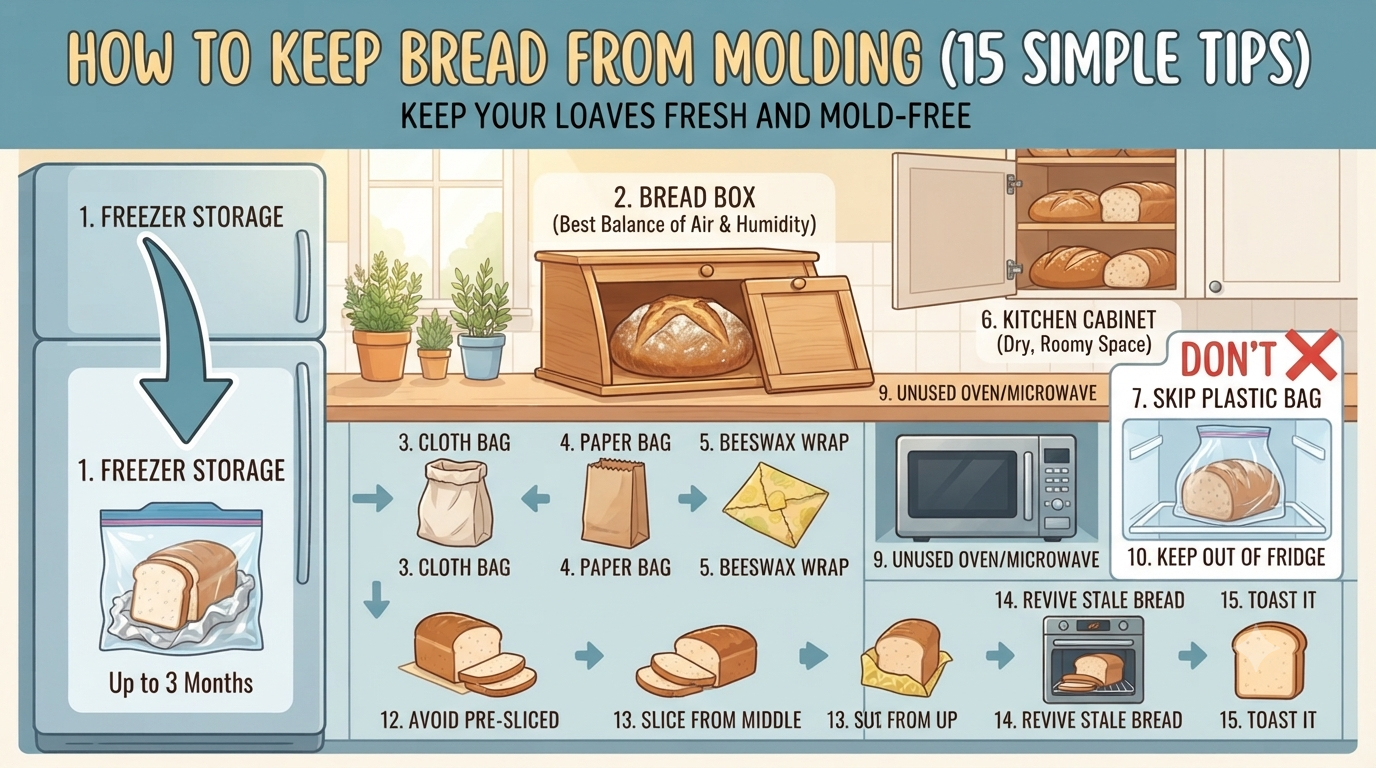
1. Store It in the Freezer
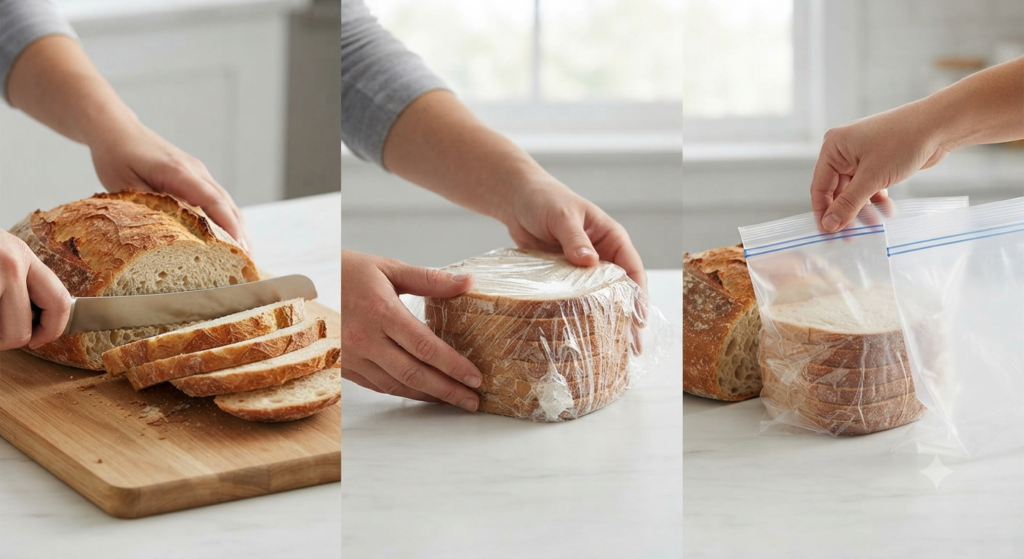
The freezer is one of the most reliable ways to keep bread mold-free. If your loaf isn’t sliced yet, slice it before freezing so you can pull out single slices instead of thawing the whole thing at once. Individual slices thaw in just minutes and hold onto their fresh taste much longer this way.
Wrap the sliced loaf in plastic wrap or foil, then place it inside a sealed plastic bag. Thicker freezer bags work best, since they help prevent freezer burn. Stored properly, bread can last in the freezer for up to 3 months.
2. Use a Bread Box
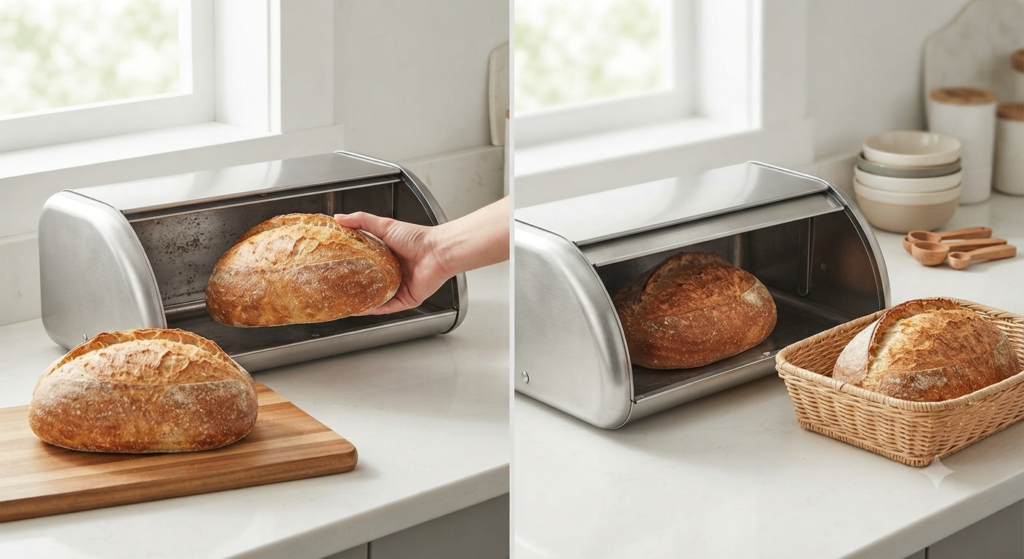
Bread boxes aren’t just decorative, they’re built specifically for this. There’s no need to wrap or slice the bread first. Just place the loaf directly inside.
The inside of a bread box strikes a good balance: enough air circulation to prevent mold, and enough humidity to keep the bread from drying out.
One thing to keep in mind: try not to store more than one loaf in the box at a time. More bread means more humidity building up inside, which works against you. When choosing a bread box, size matters more than material, so feel free to pick one that matches your kitchen’s style.
3. Try a Cloth Bread Bag
If a bread box isn’t in the cards, a cloth bread bag is a solid alternative. It creates enough of a seal to protect the bread while still allowing airflow, which keeps the loaf from drying out.
This works especially well for French bread, which tends to go stale quickly. Stored in a cloth bag, it can stay fresh for up to 2 days. No cloth bread bag on hand? A clean tea towel works just as well.
4. Use a Brown Paper Bag
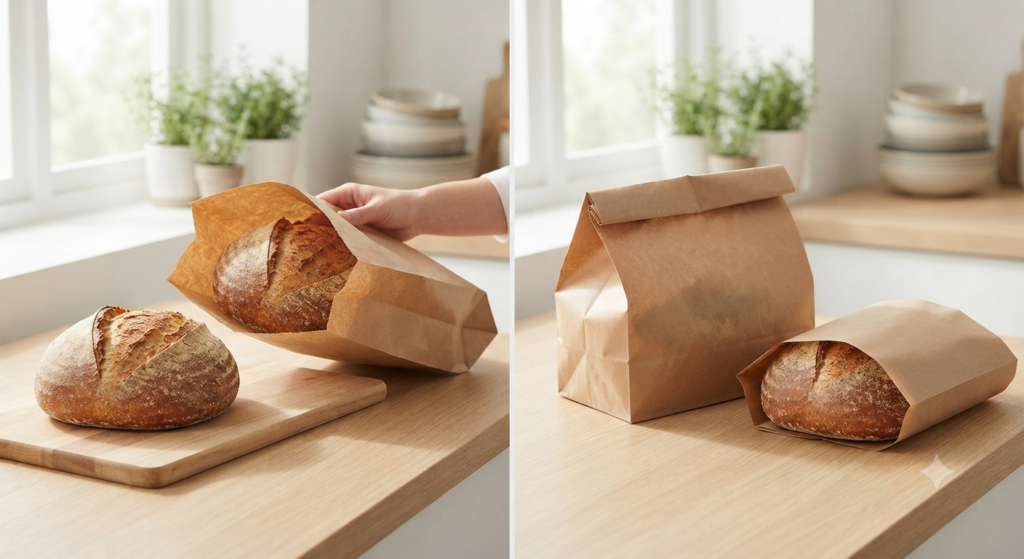
A simple brown paper bag keeps mold at bay, which is exactly why bakeries package bread this way. Just keep the bag closed and store it away from direct sunlight.
This method works particularly well for rustic, hard-crusted bread, keeping it fresh for up to 2 days.
5. Try Beeswax Wrap
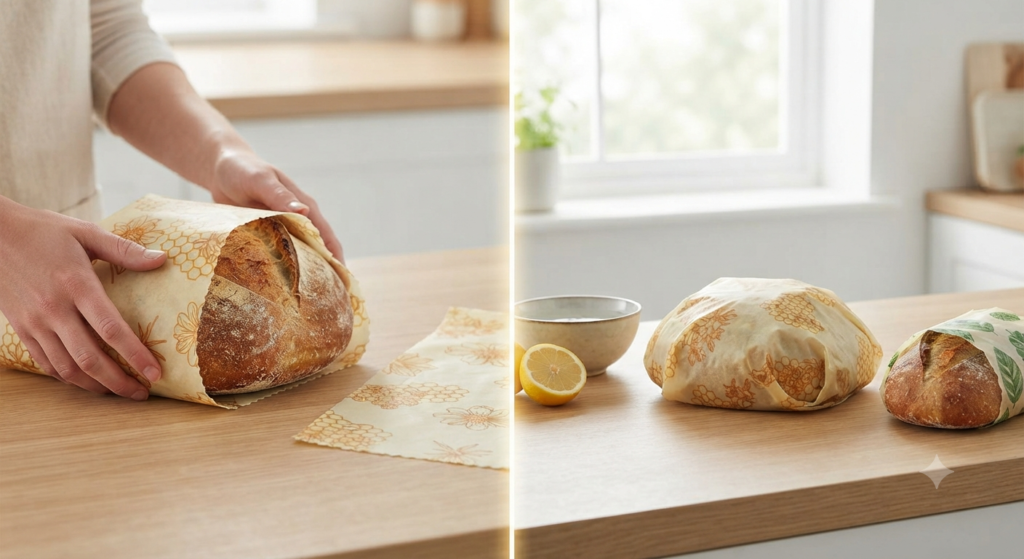
Beeswax wraps are a reusable, eco-friendly option that seals out air and moisture effectively. Unlike some other methods, beeswax-wrapped bread doesn’t need to be kept out of sunlight or away from moisture. It’s protected wherever you put it, and since it’s reusable, it’s a budget-friendly choice over time.
6. Store It in a Kitchen Cabinet
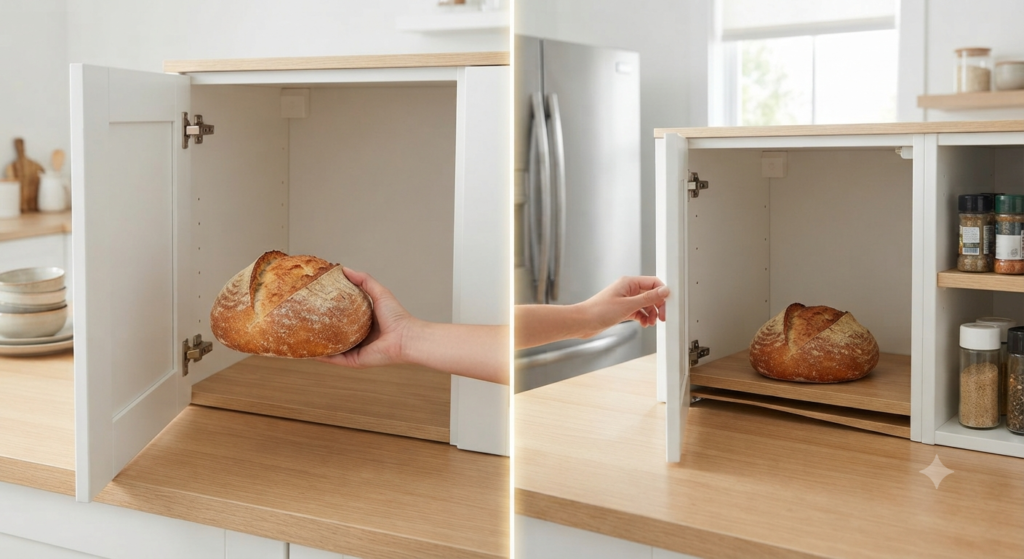
A kitchen cabinet offers a dry, roomy space with just enough of a seal to slow mold growth without drying the bread out too fast.
Pick an empty cabinet if you can. Cabinets holding spices or other strong-smelling items can pass those scents onto your bread. It’s also best to choose a cabinet that’s not near the fridge, where heat and humidity tend to build up.
7. Skip the Plastic Bag
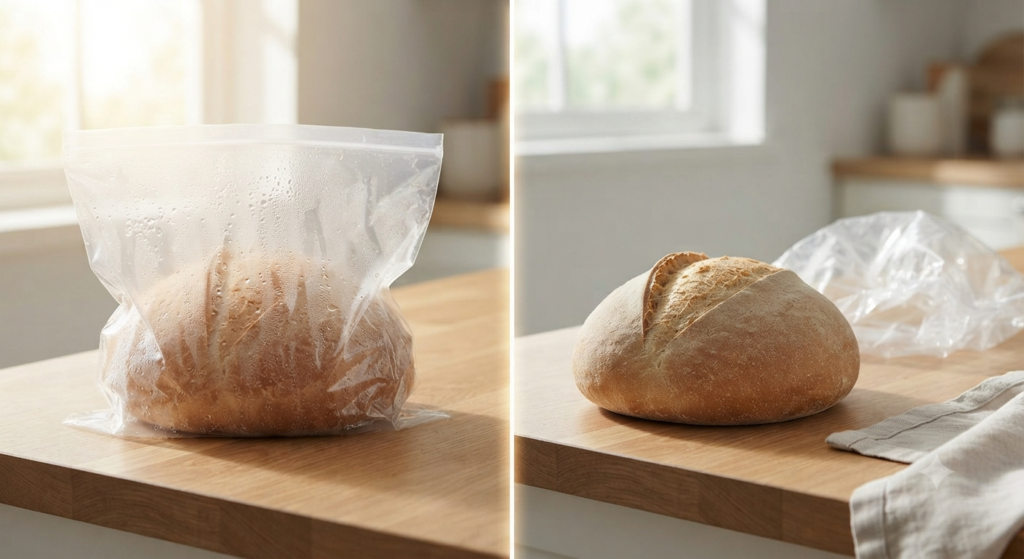
Plastic bags trap moisture and warmth, which are exactly the conditions mold needs to grow. If you have no other option, leave the bag open and set it on the counter, away from direct sunlight. The open bag allows some airflow, which helps slow mold down.
8. Use a Kitchen Drawer
A deep kitchen drawer can work a lot like a cabinet. Even a shallow drawer works if you slice the bread first. Wrap it in a clean tea towel with the sliced side facing down. This method keeps rustic artisan bread fresh for up to 2 days.
9. Store It in an Unused Oven or Microwave
An oven or microwave you’re not currently using makes a surprisingly good bread storage spot. Both are roomy enough for multiple loaves and free of any lingering smells that could affect the bread’s flavor.
Just be extra careful not to accidentally turn on the oven with bread inside.
10. Keep Bread Out of the Fridge
The fridge might seem like a safe bet, but it actually speeds up staling. Bread stored in the fridge can go stale in as little as a single day.
Here’s why: cold temperatures cause the starch in bread to crystallize, pulling moisture from the center of the loaf out toward the crust. The result is a dry, crumbly inside paired with a hard, tough exterior. Whatever mold protection you gain isn’t worth the trade-off in taste and texture.
11. Know That the Type of Bread Matters
Some breads mold faster than others. French and white bread, with their softer crusts, tend to be the most prone to both mold and staleness, so keep them away from direct airflow if you want them to last more than a day or two.
Darker breads like rye, sourdough, whole wheat, and whole grain naturally resist mold a bit longer, though using one of the storage methods above will still help preserve their flavor and texture.
12. Avoid Pre-Sliced Bread
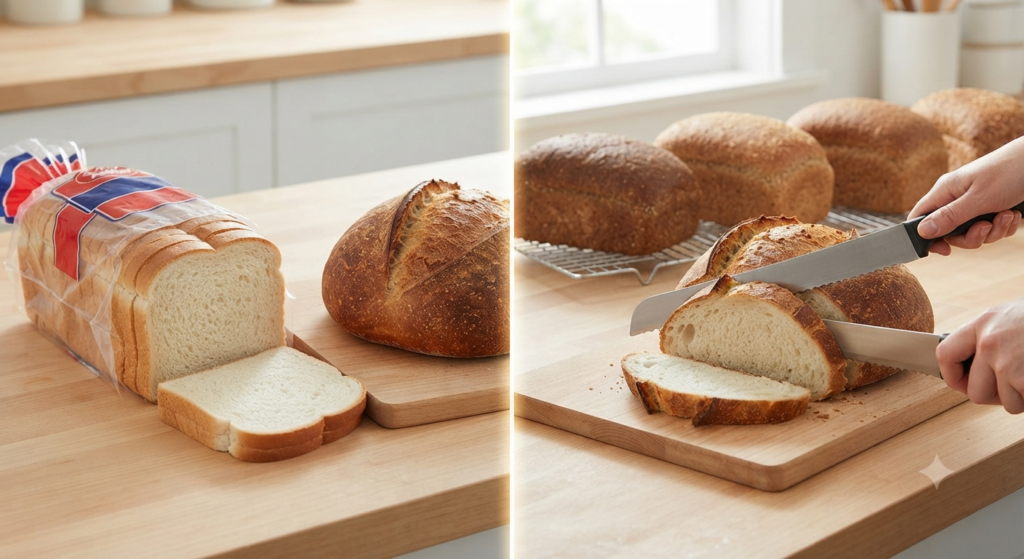
Pre-sliced bread exposes more of its soft interior to the air, which makes it mold and stale faster than a whole, unsliced loaf. Buying whole loaves and slicing only what you need not only keeps bread fresher longer, but also lets you control the thickness of each slice.
13. Slice From the Middle, Not the End
For unsliced loaves, cutting into the middle rather than the end helps keep the bread fresher. This leaves the crust intact on both ends, exposing less of the interior to air. Just push the two halves back together before storing.
14. Revive Stale Bread in the Oven
Keeping mold away doesn’t guarantee bread stays perfectly fresh forever. If a few slices have gone slightly stale, you can bring them back to life in minutes. Line a baking tray with parchment paper, place the slices on top, and warm them in the oven for no more than 5 minutes.
If that feels like too much effort, stale bread can also be repurposed into other dishes, like croutons or bread pudding, instead of going to waste.
15. Toast It Instead
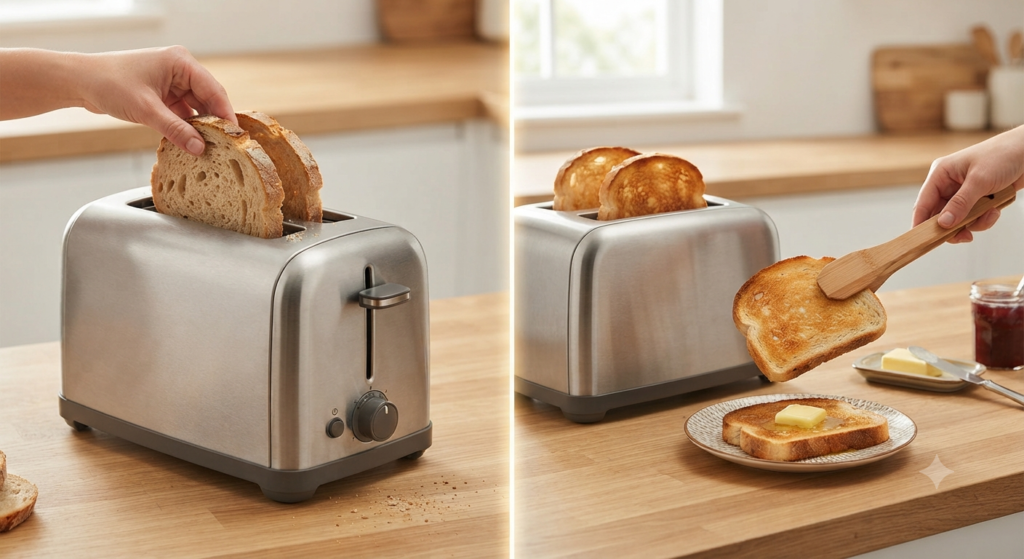
If bread is starting to go stale and reviving it doesn’t sound appealing, toasting is always a reliable option. A slice of toast with butter works just as well any time of day, morning, noon, or night.
Final Thoughts
Mold doesn’t have to mean the end of your bread within a day or two. With the right storage method, whether that’s the freezer, a bread box, or something as simple as a paper bag, your bread can stay fresh, tasty, and mold-free for much longer.