How to Fix Dry, Crumbly Cookie Dough (And Why It Happens)
You mix up your cookie dough, ready for that soft, buttery bite, and instead you’re staring at a dry, crumbly mess that won’t even hold together. It’s frustrating, but it’s also completely fixable.
Before jumping to a fix, it helps to know why your dough dried out in the first place. Once you know the cause, the fix is usually quick and easy.
Why Cookie Dough Turns Dry and Crumbly
A few common mistakes lead to dry dough. Here’s what to check first.
1. Not Enough Fat
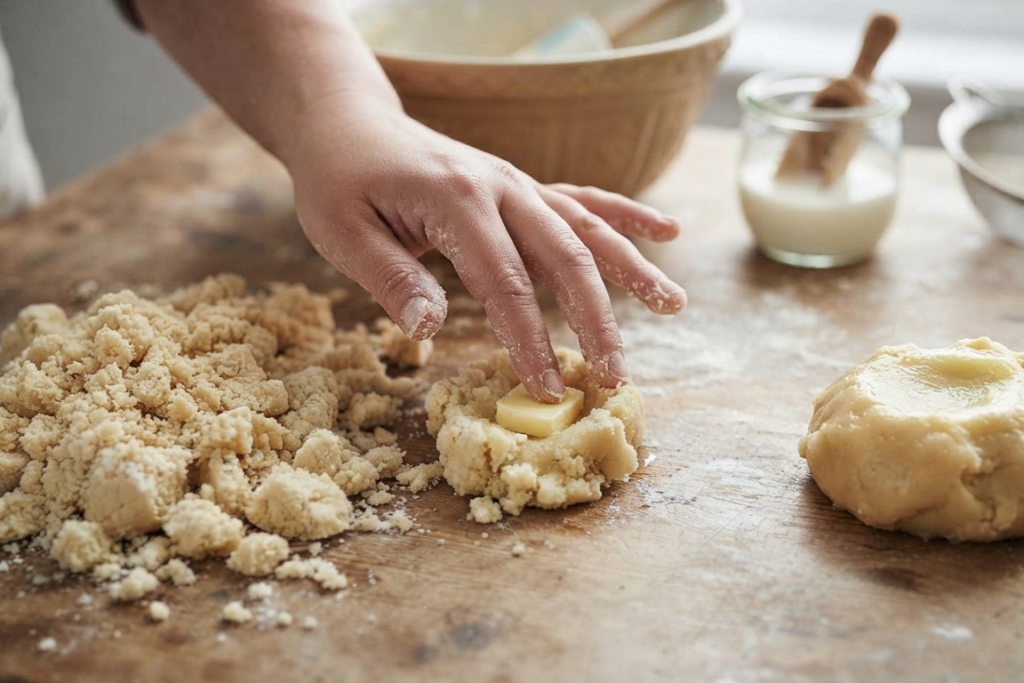
Fat is what gives cookie dough its smooth, pliable texture. It acts like a lubricant for the dry ingredients. If a recipe doesn’t call for enough fat, or if you measured it a bit short, the dough won’t bind together the way it should.
2. Not Enough Liquid
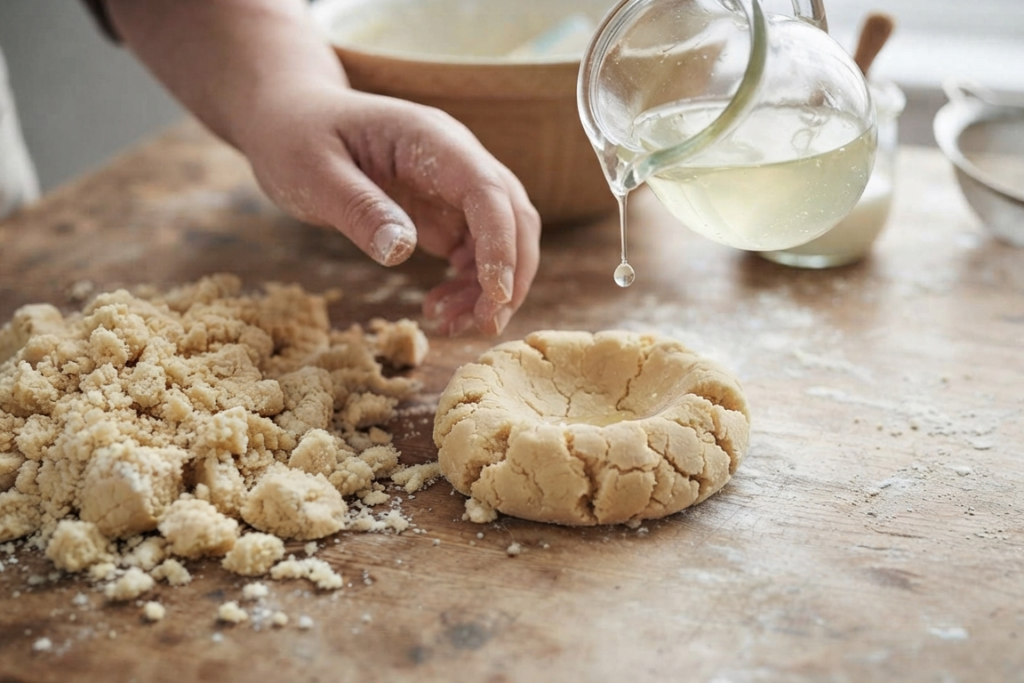
Most cookie recipes rely on liquid ingredients like milk, water, eggs, or vanilla extract to bring everything together. If you skipped one of these or measured it short, dry dough is the result. It’s worth double-checking every liquid ingredient in your recipe, including the eggs, since they add more moisture than people usually realize.
3. Too Much Flour or Dry Ingredients
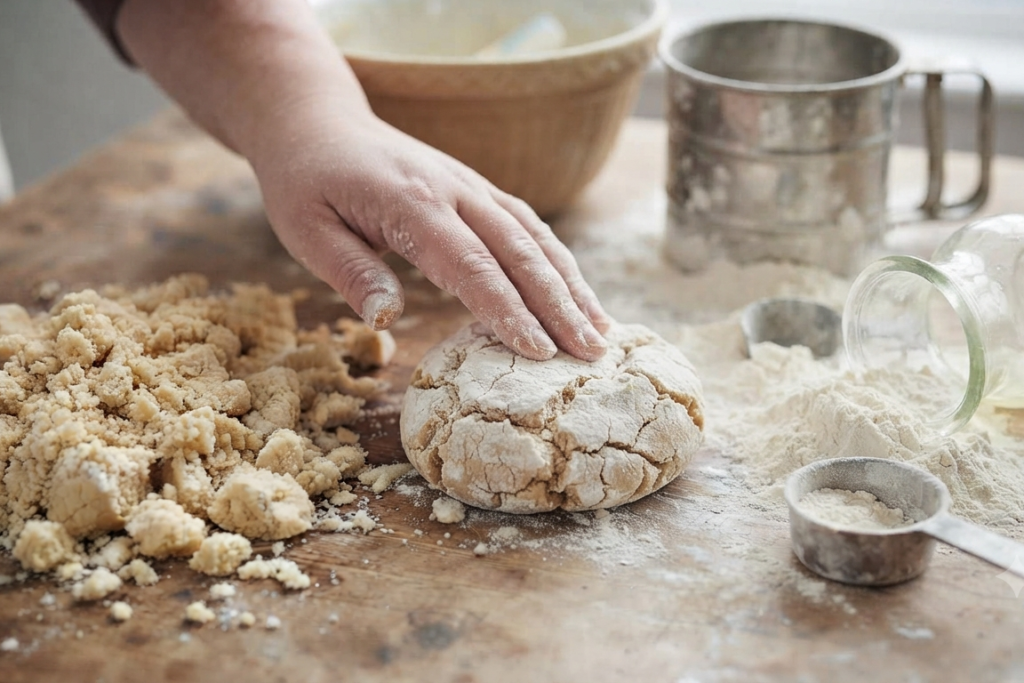
Even an extra 1/4 cup of flour can throw off the whole batch. This usually happens from a simple measuring mistake, like mixing up teaspoons and tablespoons while reading the recipe. More dry ingredients than the recipe calls for almost always means drier dough.
4. Overmixing
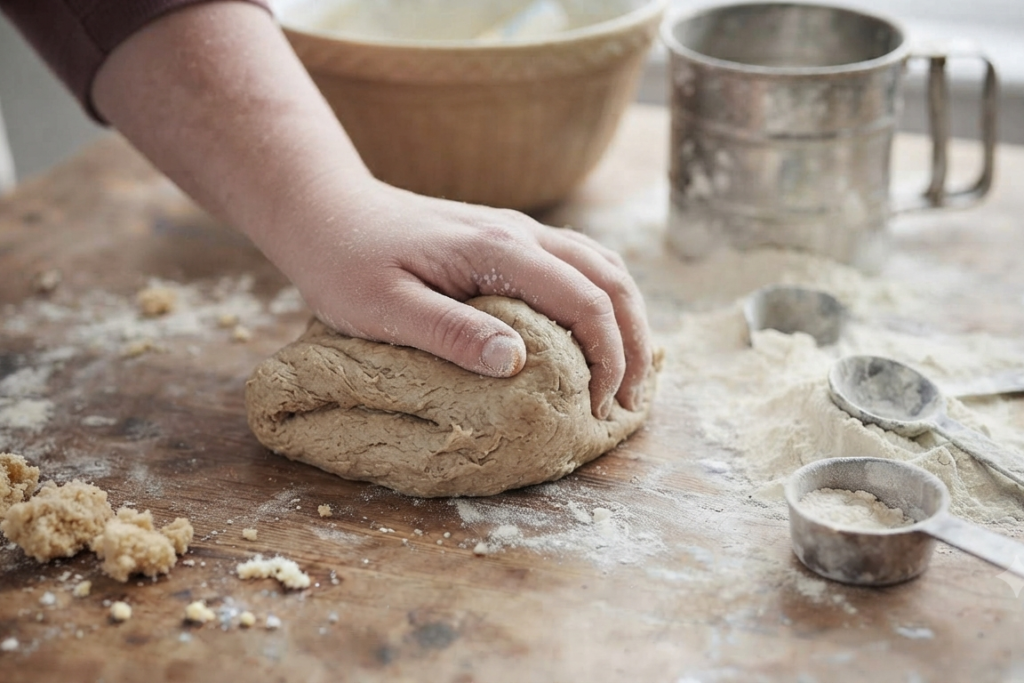
As soon as flour meets liquid, gluten starts to develop. The longer you mix, the more gluten forms, and that leads to a tougher, drier dough. Knowing when to stop mixing is half the battle.
5. Drying Out in the Fridge
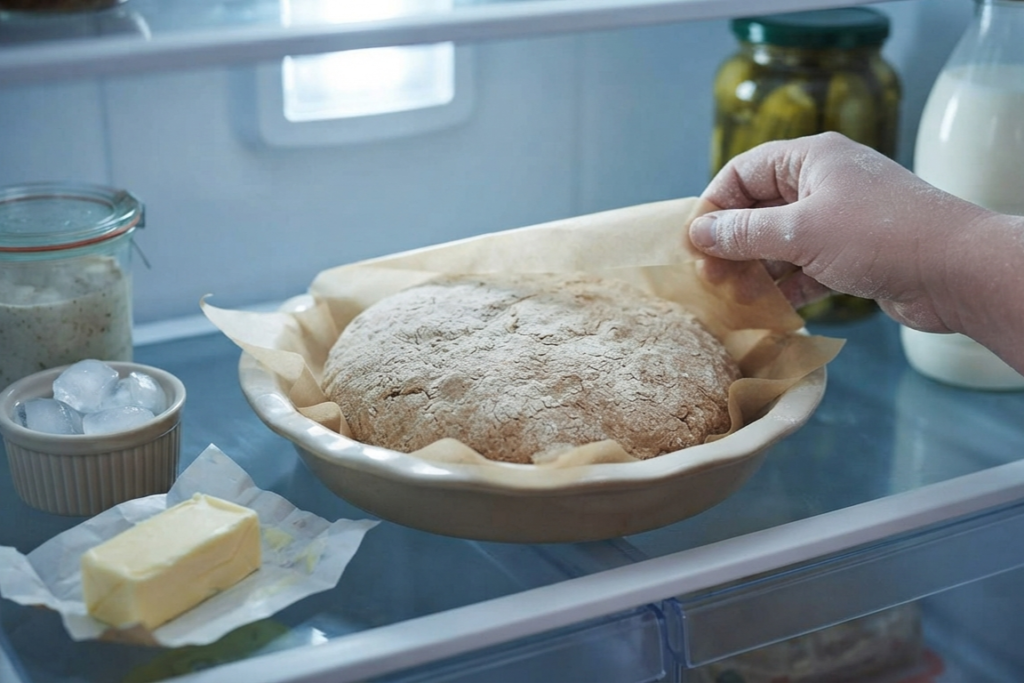
If you make dough ahead of time or buy it premade, the fridge itself may be the problem. Refrigerators constantly circulate air to stay cold, and that air pulls moisture straight out of your dough over time.
6. Using the Wrong Type of Flour
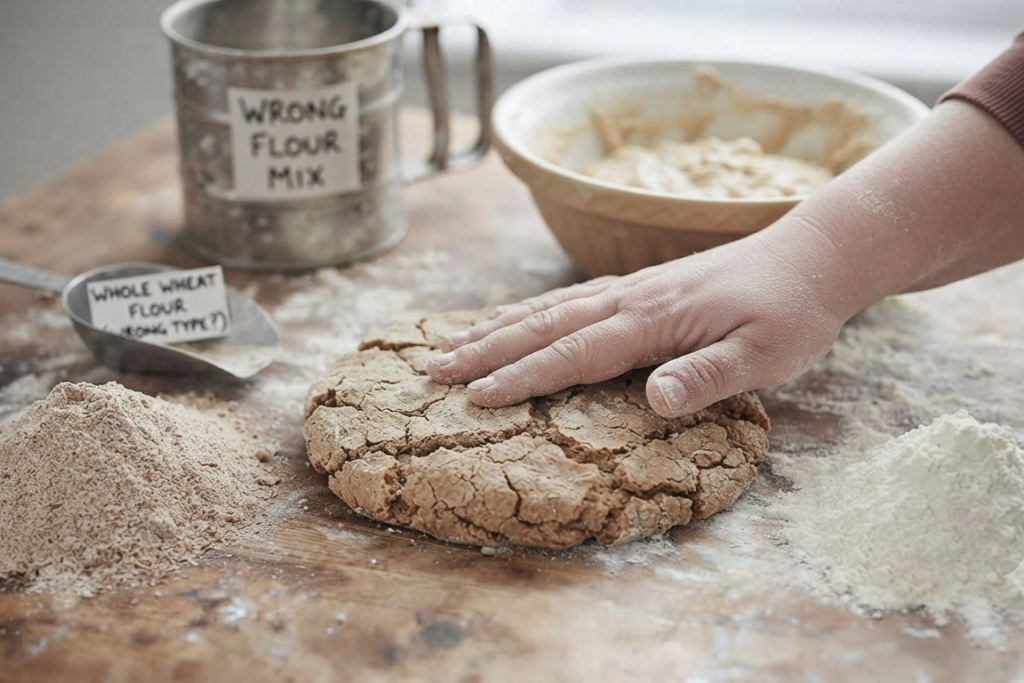
Not all flours behave the same way, even though it’s tempting to swap them in a pinch. Bread flour, for example, tends to dry out baked goods like cookies, since it has more protein and forms more gluten. Other flours don’t have enough protein, which can leave cookies less chewy than you’d like. The safest bet is sticking to whatever flour your recipe specifically calls for.
How to Fix Dry Cookie Dough
Once you’ve figured out what likely went wrong, here are five simple ways to bring your dough back to life.
1. Add Liquid, a Little at a Time
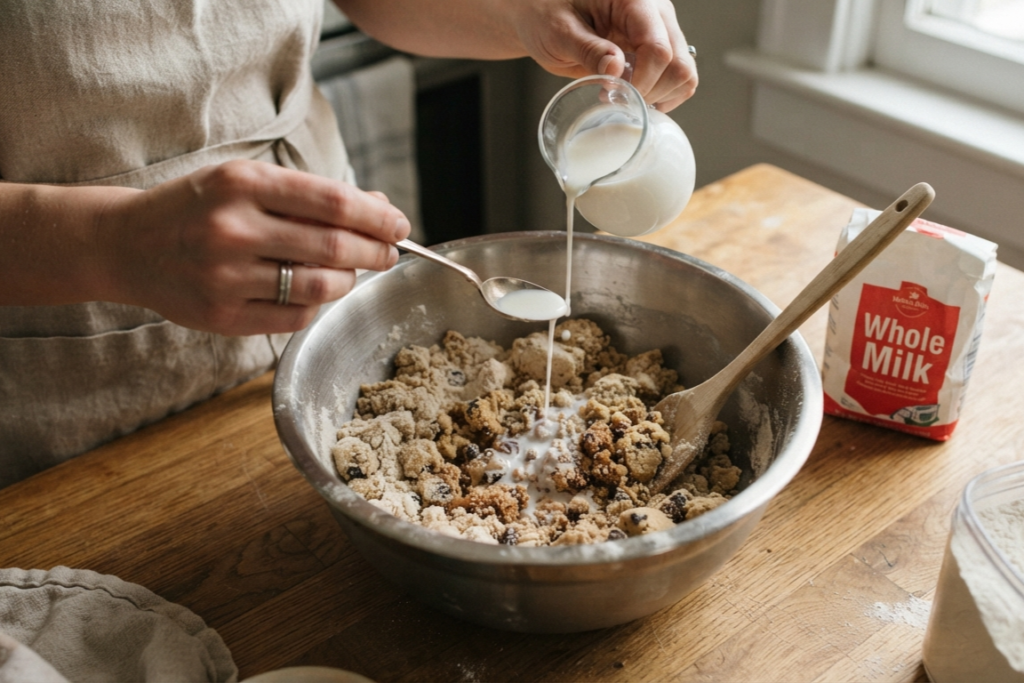
If your recipe already includes a liquid like milk, water, or eggs, add just 1 teaspoon at a time, mixing briefly after each addition. This slowly brings the dough back to a workable texture.
If you’ve added more than 1/4 cup of extra liquid and the dough still isn’t coming together, something else in the recipe was likely off. Go slow, mix gently, and check the texture after each addition.
This same trick works for dough that dried out in the fridge. Since the fridge pulls moisture out, adding a splash of milk or water back in helps restore that lost moisture.
2. Add a Little More Fat
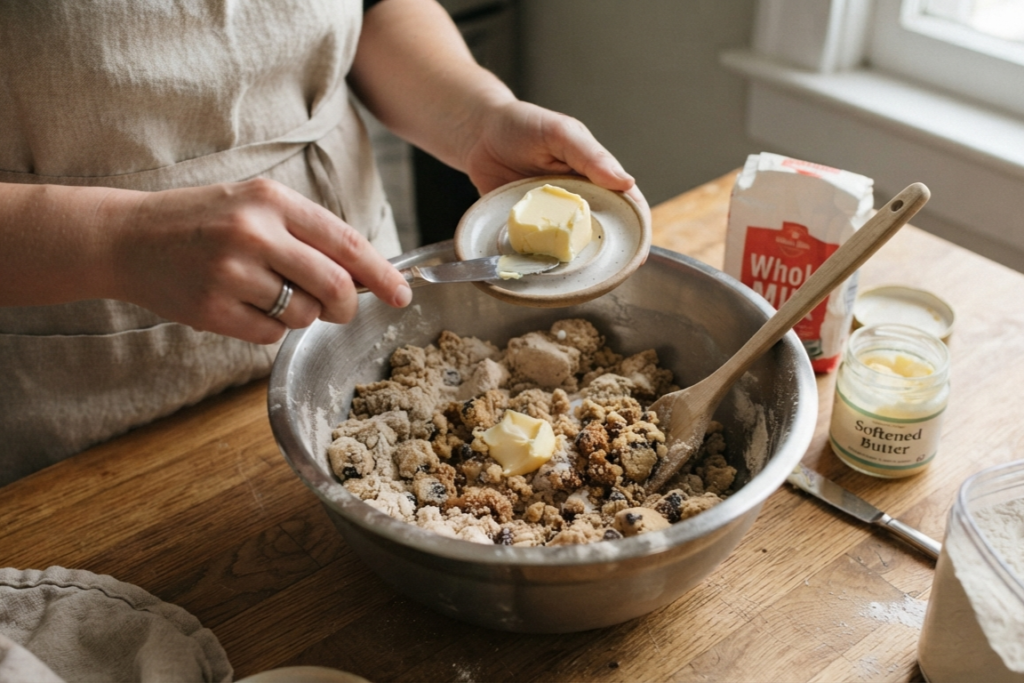
A small amount of extra fat can soften dough right up, but go easy here. Too much fat causes cookies to spread too much while baking, and it can even separate out into greasy, oily cookies.
Add 1 teaspoon of whatever fat your recipe uses, whether that’s butter, vegetable oil, or shortening, and knead it in gently with your hands.
Using your hands instead of a mixer or spoon also helps avoid overmixing, which is one of the main causes of dry dough in the first place.
3. Switch to Mixing by Hand
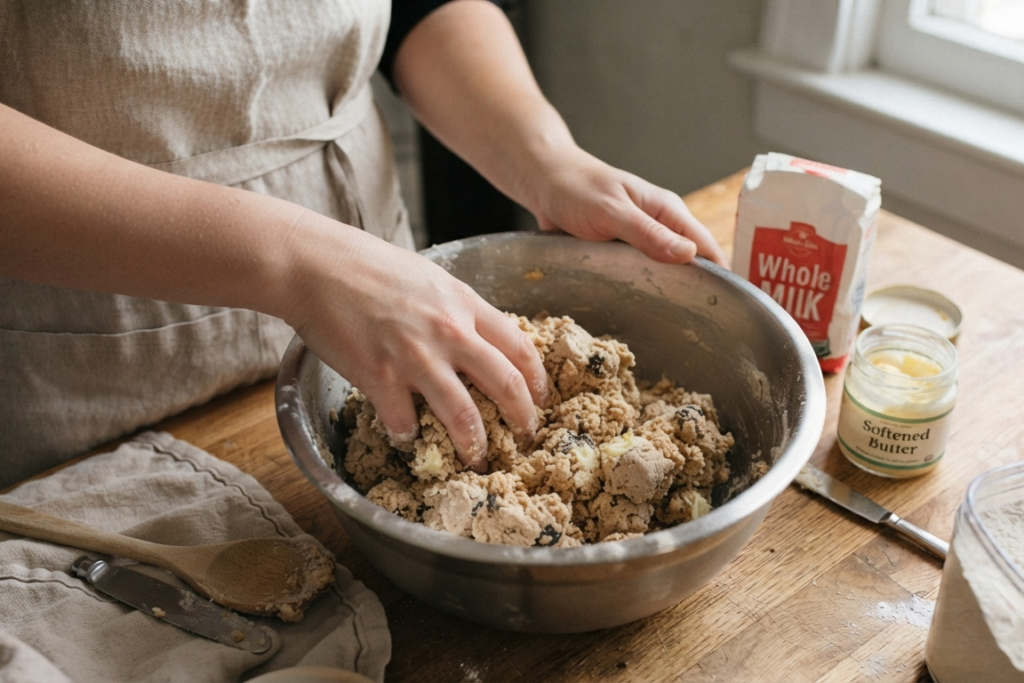
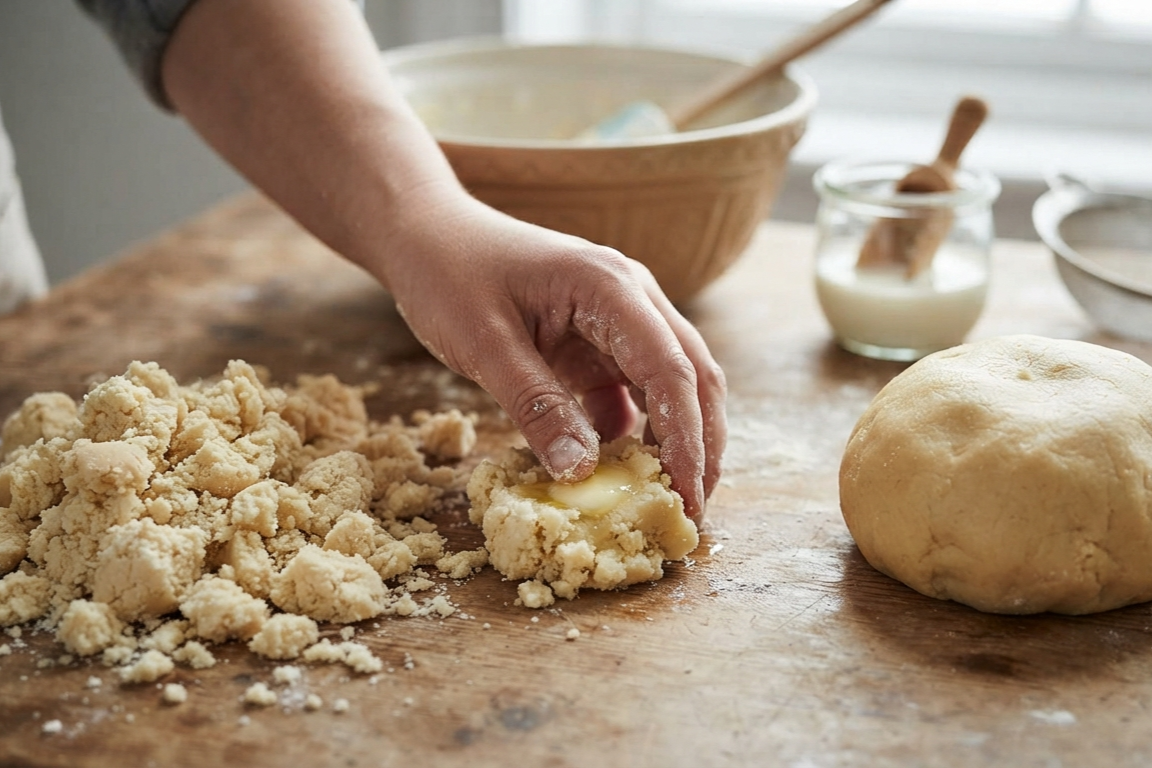
If your dough already looks crumbly, put down the mixer and use your hands instead. This makes it much easier to judge the dough’s texture as you go, and it naturally prevents overmixing.
You can also use your hands to scoop and shape the dough into balls, pressing them together firmly as you go.
4. Let the Dough Rest
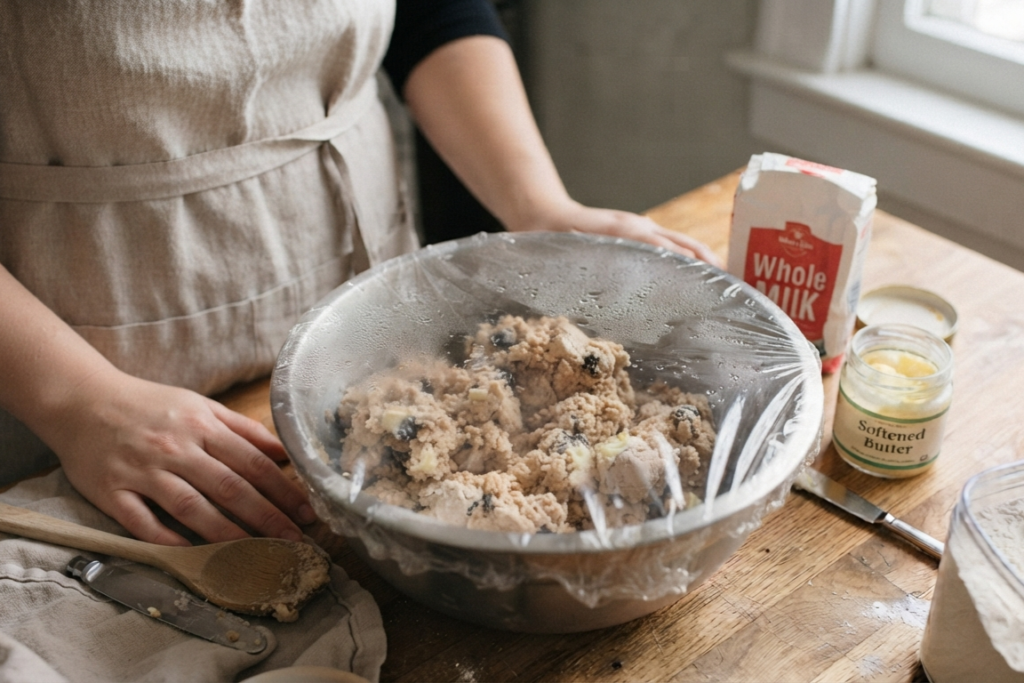
If overmixing is the likely culprit, resting the dough can fix it. Overmixed dough has extra gluten built up, and that gluten needs time to relax and soften.
Cover the dough and leave it on the counter at room temperature for at least an hour. Then scoop and bake it without mixing again. You’ll likely notice the dough feels noticeably softer after resting.
5. Fix the Recipe Itself

If you know exactly what went wrong, like accidentally doubling the flour, you can correct it directly. This works best when you know the specific mistake, since it lets you calculate exactly what to add.
For example, if you added 2 cups of flour instead of 1, mix up a second batch of the same recipe, but leave the flour out of that second batch entirely (you already have the extra cup of flour from your first batch). Then combine both batches of dough together, mixing until fully blended.
This fixes the texture, and as a bonus, you’ll end up with a bigger batch of cookies than you originally planned.
Final Thoughts
Dry cookie dough feels discouraging in the moment, but it’s rarely a lost cause. Add liquid or fat slowly, switch to mixing by hand, let the dough rest if you overmixed it, or rework the recipe if you know exactly where things went wrong. A few small adjustments are usually all it takes to get back to soft, workable dough.