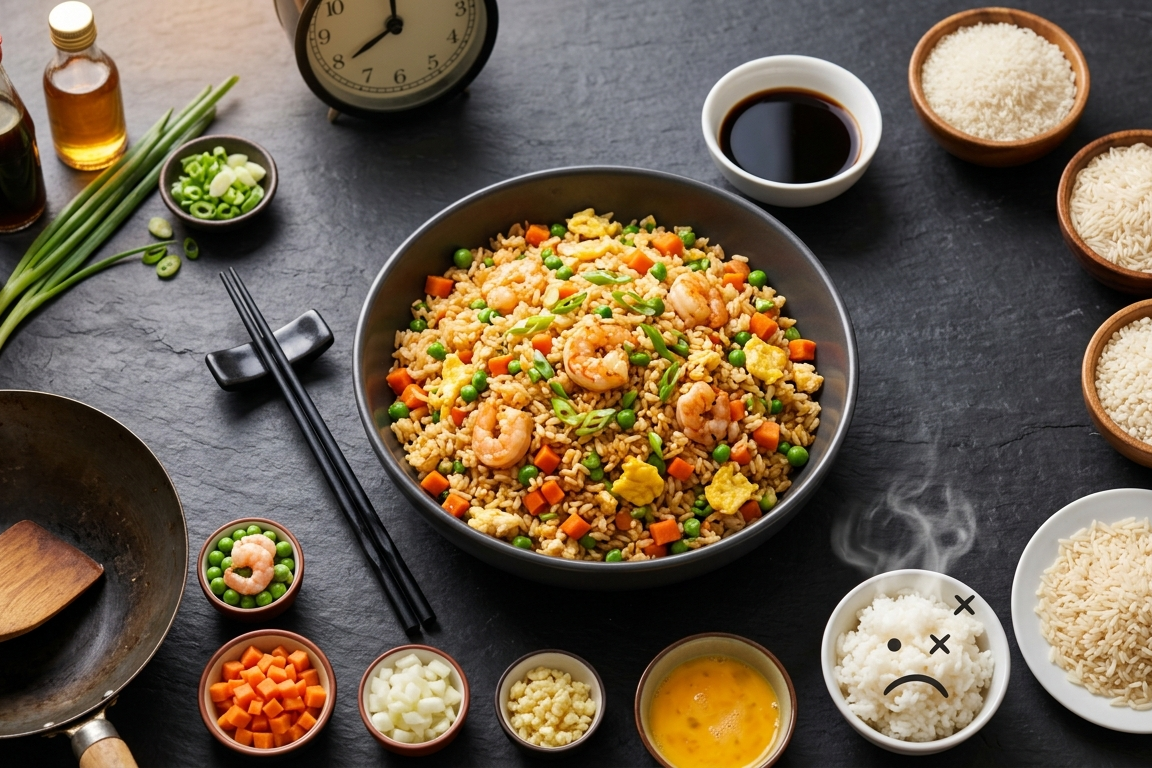
Best Rice for Fried Rice: How Restaurants Do It
I have always wondered how chefs of Asian restaurants do their fried rice magic. When they do it, every bite is perfect. The rice grains blend seamlessly with the meat, vegetables, and spices. No odd clumps, mushiness, or uneven flavors that I often encountered with our home cooked fried rice.
When I was old enough to take cooking lessons, I asked the chef what the secret usually is. His answer? Knowing which rice to use for fried rice and how to prepare it.
My 16 year old self had to pay to learn these rice tips and tricks. But in this post, you can have them all for free.
What Kind of Rice for Fried Rice: Does It Really Matter?
I have read multiple times online that the best rice for fried rice is whatever kind you have left over. While I appreciate the idea of reducing food waste, I must disagree with this statement.
Not every rice variety is suited for fried rice. Short grain rice, for example, such as Arborio, is too sticky to achieve that ideally separated and fluffy fried rice grains. Brown rice is also usually not recommended, as it cannot absorb flavors as well as white rice.
So, if you are wondering if it really matters what kind of rice you use for fried rice, the answer is a resounding YES.
Top Rice Variety for Fried Rice: Jasmine Rice
Before I jump straight to the best rice to use for all kinds of fried rice recipes, allow me to note this crucial tip: you must use day old rice for the best results.
Do not have time to let the rice sit in the fridge for an entire day or even overnight? At least let it rest for an hour or two. Just never use fresh off the stove or hot rice.
Using old rice ensures that the grains of your fried rice will avoid clumping, better absorb flavors, and have that ideal slightly firm yet tender texture. This technique will really bring out the best of the crowned rice variety below, the undeniably best rice for fried rice.
Jasmine Rice
The long grain rice most commonly found in Chinese and other take out fried rice boxes is Jasmine rice. It will really enhance the authentic Asian fried rice experience, where the grains can easily separate and absorb flavors. Of course, this only works if you let it rest after cooking, at least overnight if possible.
Reasons to Use Jasmine Rice for Fried Rice
Subtle Aroma: Jasmine rice has a subtle, floral aroma that adds another layer of complexity to the existing flavors of other fried rice ingredients. When fried, the fragrant aroma of Jasmine rice becomes more prominent, making the dish more appetizing.
Flavor Absorption: The best fried rice is one where even the rice grains themselves are packed with flavors. Jasmine rice will let you achieve this effortlessly with its ideal porosity.
Perfect Texture: Jasmine rice maintains its firmness when fried. It is soft yet does not become sticky or clumpy when cooked. This makes it extra easy and convenient to use for fried rice.
Go To Runner Ups
Every now and then, I end up not using Jasmine rice for my fried rice. Oftentimes, it is because of availability issues. But sometimes, I just like to switch things up when cooking.
When I am not using Jasmine rice for fried rice, I often opt for the two rice varieties below instead.
Basmati Rice
Just like Jasmine rice, Basmati rice is an aromatic long grain rice. Some people even confuse the two. I often use it when I want firmer, drier grains that can withstand vigorous stir frying. Or, if I want that extra chewiness that becomes the balancing bridge between the crunch of vegetables and the tenderness of protein.
Calrose Rice
In Japanese cuisine, Calrose rice and other medium grain rice are often the main ingredient in fried rice. This type of rice gives a soft mouthfeel that some people prefer over the fluffier texture of Jasmine rice. Plus, the stickiness of Calrose rice usually lets it absorb flavor better than its longer white rice counterpart. It is also easier to eat with chopsticks.
Rice Comparison Summary Table
| Rice Variety | Grain Type | Texture | Best For |
|---|---|---|---|
| Jasmine rice | Long grain | Fluffy, separate, slightly firm | Classic Asian fried rice |
| Basmati rice | Long grain | Firm, dry, chewy | Vigorous stir frying |
| Calrose rice | Medium grain | Soft, slightly sticky | Japanese fried rice, chopstick friendly |
| Arborio rice | Short grain | Too sticky | Not recommended for fried rice |
| Brown rice | Long grain | Chewy, nutty | Not recommended (poor absorption) |
The Importance of Day Old Rice
Using day old rice is not just a suggestion. It is a requirement for great fried rice. Here is why:
Less moisture: Fresh rice has too much moisture. It turns mushy when stir fried. Day old rice has dried out slightly. This helps the grains stay separate.
Better texture: Day old rice is firmer. It can withstand the high heat of the wok without breaking apart.
Flavor absorption: Drier rice absorbs sauces and seasonings better. Each grain becomes flavorful.
How to prepare day old rice: Cook the rice as you normally would. Spread it on a baking sheet to cool quickly. Cover and refrigerate for at least 4 hours, preferably overnight.
Rice for Fried Rice: Not Just a Filler
Rice typically makes up at least half of the volume of your fried rice. It is not just a filler that is supposed to bulk up the dish or a binder that keeps all the other ingredients together.
The grains in your fried rice will absorb the flavors you add and determine the overall texture of the dish. So, make sure to choose the right type of rice for your preferred fried rice outcome.
Asian Restaurant Inspired Fried Rice
Yield: 3 to 4 servings
Total Time: 30 minutes (Prep: 10 minutes, Cook: 20 minutes)
Ingredients
For the Fried Rice:
- 2 tablespoons unsalted butter (divided)
- 3 medium eggs (whisked)
- 1 cup cooked shrimp (or protein of your choice)
- 2 medium carrots (diced)
- 1 medium onion (diced)
- 3 garlic cloves (minced)
- 1/2 cup frozen peas (thawed)
- 4 cups cooked rice (preferably day old Jasmine rice)
- 3 tablespoons soy sauce
- 2 tablespoons oyster sauce
- 1 teaspoon sesame oil
- Sliced green onions (for garnish)
- Salt and black pepper (to taste)
Optional Ingredients:
- 1 teaspoon grated ginger
- 1 tablespoon fish sauce
Instructions
Step 1: Scramble the eggs
In a large skillet over medium heat, melt 1 tablespoon of butter. Pour in the whisked eggs. Scramble until fully set. Transfer the scrambled eggs to a plate and set aside.
Step 2: Sauté the vegetables
Add the remaining tablespoon of butter to the skillet. Sauté the diced carrots and onion in the skillet until tender, about 3 to 4 minutes. Add the minced garlic and grated ginger (if using). Cook for an additional minute.
Step 3: Add the rice
Stir in the chilled day old rice and thawed peas. Cook for 3 to 4 minutes until the rice starts to brown.
Step 4: Add the protein and eggs
Return the scrambled eggs to the skillet. Add the cooked shrimp (or your chosen protein). Stir everything together.
Step 5: Add the sauces
Add the soy sauce, sesame oil, and oyster sauce. Stir for 1 to 2 minutes until everything is heated through. Drizzle fish sauce if you want an extra depth of flavor or saltiness.
Step 6: Garnish and serve
Serve hot with sliced green onions for garnish, if desired.
Pro Tips for Restaurant Quality Fried Rice
Use a wok if you have one. The high heat and curved sides create wok hei, that smoky restaurant flavor.
Cook in batches. Do not overcrowd the pan. If you add too much rice at once, it will steam instead of fry.
Use high heat. Fried rice needs high heat to get that slightly charred, smoky flavor.
Add sauces at the end. This prevents the rice from becoming soggy.
Taste and adjust. Different brands of soy sauce and oyster sauce have different saltiness levels. Taste before serving and adjust as needed.