10 Clues Your Fingertips Give About Heart Health
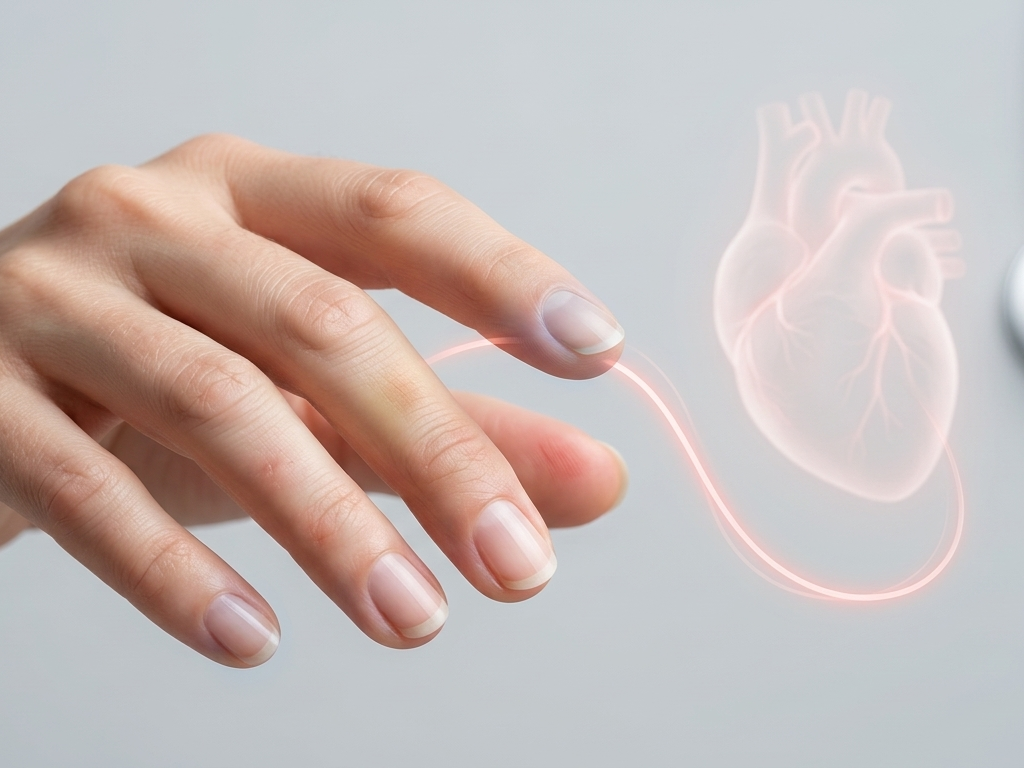
Our bodies are amazing. They often send us little signals when something is not quite right. Sometimes, these signals show up in places we might not think to look, like our fingertips. The color of your nails, the shape of your fingers, or even how they feel can give you valuable clues about your health, especially your heart health.
It is important to remember that noticing one of these signs does not mean you definitely have a heart problem. Many of these changes can have other, harmless causes. But being aware of these potential warning signs is a good thing. It can help you know when it is a good idea to talk to your doctor. This article explores ten important clues your fingertips can provide about the health of your heart. All of them are based on medical research and information from trusted expert sources.
1. Nail Clubbing
Nail clubbing is a change in the shape of your fingers and nails. When this happens, the fingertips get wider and rounder. The nails start to curve downward, kind of like the round part of an upside-down spoon. If you press on the nail bed, it might feel soft or spongy instead of firm [1].
Sometimes, nail clubbing can just be something you are born with and it is harmless. But more often, it is linked to more serious health conditions. According to the Cleveland Clinic, nail clubbing is most often connected to diseases of the heart and lungs [1]. This can include heart disease, infections in the heart, lung cancer, and other lung problems [2].
If you notice your fingers and nails starting to look like this, it is very important to see a doctor. They can check for any hidden health problems.
2. Splinter Hemorrhages
Splinter hemorrhages are tiny, thin lines of blood that show up under your fingernails. They run in the same direction as your nail grows, from the cuticle out to the tip. They are called “splinter” hemorrhages because they look like a tiny wood splinter stuck under your nail.
Sometimes, these lines can just happen from injuring your nail. Maybe you bumped it or slammed it in a door. But they can also be a sign of a very serious heart condition called infective endocarditis [3]. This is an infection of the inner lining of your heart and its valves. In this case, the tiny lines of blood are caused by small blood clots that damage the tiny blood vessels under your nails [4].
3. Cyanosis (Blue Fingertips)
Cyanosis is a word that describes when your skin, lips, or nails take on a bluish or purplish color. This happens when there is not enough oxygen in your blood.
Feeling cold can make your fingers look a little blue for a short time. That is normal. But if your fingers look blue even when you are warm, it is a sign that your blood is not getting enough oxygen. This can happen because of a blockage in a blood vessel. It can also be caused by more serious problems like heart failure or a heart defect you were born with [2].
4. Osler’s Nodes
Osler’s nodes are small, red, tender lumps that can appear on the pads of your fingers or toes. They can be quite painful. These little bumps are a classic sign of infective endocarditis, the same heart infection mentioned earlier.
They are caused by your body’s immune system fighting the infection. The things your body makes to fight the infection, called immune complexes, can get stuck in the small blood vessels of your fingertips. This causes a painful, inflamed lump. These lumps can last for a few hours or a few days and then go away on their own. But the heart infection causing them will not go away without urgent medical treatment [2].
5. Janeway Lesions
Janeway lesions are also a sign of infective endocarditis, but they are different from Osler’s nodes. The main difference is that these are not painful. They look like flat, irregular, reddish-brown spots. You might see them on the palms of your hands, the soles of your feet, and on your fingertips.
These spots are caused by septic emboli. That is a scary name for a simple idea. They are tiny clumps of bacteria from the heart infection that break off and travel through the bloodstream. They eventually get stuck in the small blood vessels of your hands and feet, which creates these visible spots [2].
6. Edema (Swollen Fingers)
Edema is the medical word for swelling. It happens when too much fluid gets trapped in the tissues of your body. You often see it in the feet and lower legs. But it can also happen in your hands and fingers.
When your heart is not pumping blood as well as it should, like in congestive heart failure, fluid can start to build up in different parts of the body. This can lead to swelling. If you notice that your fingers or hands are looking puffy or swollen for no clear reason, it is a good idea to have a doctor check it out [5].
7. Xanthomas
Xanthomas are fatty deposits. They are made of cholesterol that builds up under your skin. They look like yellowish-orange bumps or growths. They can feel waxy. You can get them in many places on your body, including on your hands and along the tendons in your fingers.
Seeing xanthomas is a strong sign that you have very high cholesterol levels. High cholesterol is a major risk factor for heart disease and a condition called atherosclerosis, where your arteries get clogged. These fatty deposits on your skin show that cholesterol is building up in your body, and it might also be building up in your arteries [2].
8. Capillary Refill Time
This is a quick and easy test that doctors sometimes use to check blood flow to your hands and feet. It is called capillary refill time. You can even try it yourself.
Press down on your fingernail firmly until the nail turns white. This pushes the blood out of the tiny blood vessels under the nail. Then, let go and count how many seconds it takes for the normal pink color to return to the nail. A normal capillary refill time is usually less than three seconds [6].
If it takes longer than three seconds for the color to come back, it might mean that blood is not flowing to your extremities as well as it should. This could be a sign of dehydration, shock, or other problems with your circulation that are related to your heart.
9. Cold Fingers (Raynaud’s Phenomenon)
Do your fingers ever turn white or blue and feel very cold and numb when you are cold or stressed? This might be a condition called Raynaud’s phenomenon. It happens because the small blood vessels in your fingers and toes squeeze too tight, cutting off blood flow.
There are two types of Raynaud’s. Primary Raynaud’s is common and is not usually linked to other health problems. Secondary Raynaud’s is different. It can be a symptom of another underlying disease, including some that can affect the heart. Some research suggests there might be a link between Raynaud’s and a higher risk of cardiovascular disease [7].
10. Weak Grip Strength
This clue is not something you can see on your fingertips, but it is about the strength of your hand. And it might surprise you how much it can tell you about your heart. A large international study published in a very well-known medical journal called The Lancet found something interesting. People with a weaker hand grip had a higher risk of having a heart attack, a stroke, or dying from heart disease [8].
The study suggests that testing your grip strength could be a simple and low-cost way to check someone’s risk for heart problems. A strong grip might be a sign of good overall muscle strength and fitness, both of which are very important for a healthy heart.
Conclusion
Your fingertips can actually tell you a lot about what is going on inside your body, especially with your heart. The signs we talked about in this article are not proof that you have heart disease. But they are important clues. They are signals that you should not ignore. If you notice any of these changes, it is always a good idea to talk to your doctor. Paying attention to these small things can sometimes lead to finding a problem early, and early treatment is one of the best ways to manage any health condition effectively.