10 Things Your Eyes Reveal About Your Liver
You have probably heard the saying that the eyes are the windows to the soul. But did you know they can also be a window to your liver? Your liver is a very important organ. It does many jobs. It cleans your blood, helps with digestion, makes proteins, and helps your blood clot. When your liver is having trouble, it can sometimes show signs in your eyes. Changes in the color of your eyes, how they feel, or even how well you see can all be clues.
Doctors have known about the link between the liver and the eyes for a long time. One major review called it “inter-organ communication” [1]. Another study said that eye signs of liver disease can be an “important diagnostic aid.” Sometimes, these eye signs can show up before any other symptoms [2].
Here are ten important things your eyes can reveal about the health of your liver.
Quick Reference: Eye Signs and Their Liver Connections
| Eye Sign | Associated Liver Condition | Key Mechanism |
|---|---|---|
| Yellow sclera (jaundice) | Hepatitis, cirrhosis, liver failure | Buildup of bilirubin |
| Xanthelasma (eyelid deposits) | Fatty liver, bile duct disease | Problems with cholesterol processing |
| Kayser-Fleischer rings | Wilson’s disease | Copper buildup in the cornea |
| Dry, irritated eyes | Primary biliary cholangitis, autoimmune hepatitis | Often happens with Sjögren’s syndrome |
| Night blindness | Chronic liver disease, cirrhosis | Lack of vitamin A |
| Retinal changes | NAFLD, liver-related diabetes | Problems with blood sugar control |
| Itchy eyes | Cholestatic liver disease | Buildup of bile salts |
| Eye floaters | Liver blood deficiency (TCM), liver disease | Changes in the eye’s gel |
| Subconjunctival hemorrhage | Acute or severe liver disease | Liver cannot make enough clotting factors |
| Uveitis and retinal vasculitis | Hepatitis B/C, autoimmune hepatitis | Immune system inflammation |
1. Jaundice: The Yellowing of the Eyes
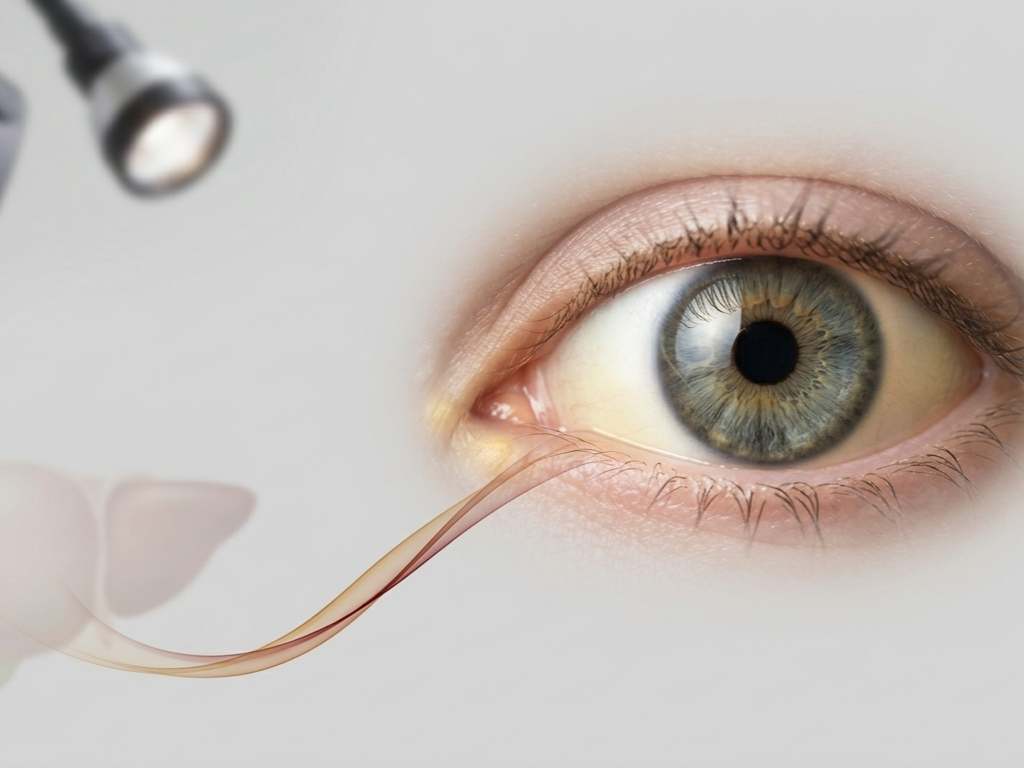
This is one of the most well-known signs of liver trouble. Jaundice is when the whites of your eyes, called the sclera, turn yellow. Your skin can also turn yellow [3]. The medical name for yellow eyes is scleral icterus.
This yellow color comes from a buildup of a substance called bilirubin. Bilirubin is a yellow-orange pigment. Your body makes it naturally when it breaks down old red blood cells. A healthy liver processes this bilirubin and gets rid of it. But if your liver is damaged or sick, it cannot do this job. The bilirubin builds up in your blood and settles in your tissues, including the whites of your eyes [4].
Jaundice can be a sign of many liver problems. These include hepatitis, alcoholic liver disease, and liver cancer. It can also happen with gallstones. The eyes often turn yellow before the skin does. So, if you notice a yellow tint in your eyes, you should see a doctor [3, 5].
2. Xanthelasma: Cholesterol Deposits on the Eyelids
Have you ever seen small, yellowish, soft, slightly raised patches on someone’s eyelids? That is called xanthelasma palpebrarum. These are deposits of cholesterol under the skin [6]. They are not dangerous by themselves, but they can be a warning sign.
Your liver is in charge of making and clearing cholesterol from your body. If your liver is not working well, it can have trouble managing cholesterol. This can happen in conditions like fatty liver disease or problems with the bile ducts. When this happens, cholesterol can build up in your blood and then deposit in the soft skin around your eyes [7].
Xanthelasma is often linked to high levels of “bad” cholesterol and is common in people with fatty liver disease. If you have these patches, your doctor should check your cholesterol and your liver [6, 7].
3. Kayser-Fleischer Rings: Copper’s Telltale Mark
These are one of the most striking eye signs in medicine. Kayser-Fleischer rings look like golden-brown or greenish-gold bands around the outer edge of the cornea, the clear part of your eye [8]. They are caused by copper building up in the eye.
These rings are a sure sign of a rare genetic disorder called Wilson’s disease [9]. In Wilson’s disease, the body cannot get rid of extra copper. Copper builds up in the liver, brain, and other organs, including the eyes. Over time, this copper can damage the liver badly. These rings are usually not visible to the naked eye at first. A doctor needs a special tool called a slit-lamp to see them [8, 9]. Finding them is a key step in diagnosing Wilson’s disease and starting life-saving treatment.
4. Dry and Irritated Eyes: A Sign of Autoimmune Liver Disease
Do your eyes often feel dry, gritty, or like they are burning? This is called dry eye syndrome. It can be a sign of certain autoimmune liver diseases.
One example is primary biliary cholangitis (PBC). This is a condition where the immune system attacks the small bile ducts in the liver. People with PBC often also have another autoimmune condition called Sjögren’s syndrome. Sjögren’s syndrome attacks the glands that make tears and saliva, leading to dry eyes and dry mouth [10, 11].
Research has shown that liver cirrhosis is a risk factor for dry eye disease [1]. Hepatitis C infection can also cause dry eyes [12]. If you have ongoing dry eyes along with feeling very tired or belly pain, you should get your liver checked.
5. Night Blindness: When the Liver Fails to Store Vitamin A
Night blindness is when you have trouble seeing in dim light. It is often one of the first signs of a vitamin A deficiency. And liver disease is a major cause of this deficiency [13].
Your liver is the main place your body stores vitamin A. It holds about 80 to 90 percent of all the vitamin A in your body. If you have chronic liver disease or cirrhosis, your liver may not be able to store this vitamin properly. You can become deficient even if you eat enough foods with vitamin A [14].
Vitamin A is needed to make a pigment in your eyes that helps you see in low light. Without enough vitamin A, this pigment cannot be made, and your night vision gets worse. If not treated, this can lead to more serious eye problems and even permanent vision loss [15, 16]. Early treatment can fix night blindness, but advanced damage cannot be reversed.
6. Retinal Changes and Diabetic Retinopathy
The retina is the light-sensitive tissue at the back of your eye. It can be affected by liver disease in a few ways. One important way is through blood sugar control.
A damaged liver can have trouble managing blood sugar. This can lead to insulin resistance and increase your risk for type 2 diabetes. For people who already have diabetes, liver problems can make it harder to control blood sugar. This can speed up the development of diabetic retinopathy. In this condition, the small blood vessels in the retina get damaged. They can leak or grow abnormally, which can harm your vision [17, 18].
Studies have found a strong link between fatty liver disease (NAFLD) and diabetic retinopathy [1]. Also, when a very sick liver cannot clear ammonia from the blood, this toxic substance can build up and damage the part of your brain that controls vision [17].
7. Itchy Eyes: The Itch of Bile Accumulation
Intense, non-stop itching is one of the most miserable symptoms of certain liver diseases. These are called cholestatic liver diseases, where the flow of bile from the liver is blocked. This itching often affects the palms, soles, and skin, but it can also affect the eyes [20].
The exact reason for this itching is not fully known. But doctors believe it is caused by a buildup of bile salts and other substances in the blood. These substances can stimulate the nerves in your skin that sense itch [21].
Conditions like primary biliary cholangitis and primary sclerosing cholangitis can cause this type of itching. If you have itchy eyes along with dark urine, pale stools, or yellow skin, you need to see a doctor. This kind of itch usually does not respond to allergy medicine and needs treatment for the liver problem itself.
8. Eye Floaters: A Subtle Signal Worth Noting
Eye floaters are those small, dark specks, threads, or cobweb-like shapes that drift across your vision. They are common and usually harmless. They are caused by tiny changes in the vitreous humor, the gel inside your eye.
However, a sudden increase in floaters, especially with flashes of light, can be a sign of a more serious problem. In liver disease, floaters can be linked to inflammation of the blood vessels in the retina. This has been seen in people with hepatitis C [12].
In Traditional Chinese Medicine, the liver is believed to be closely connected to the eyes. They say that liver blood deficiency can cause vision problems like floaters and blurry vision [22, 23]. If you have liver disease and notice more floaters, you should get your eyes checked.
9. Subconjunctival Hemorrhage: When the Liver Cannot Clot
A subconjunctival hemorrhage is a bright red patch on the white of your eye. It happens when a tiny blood vessel breaks under the clear covering of the eye. A single one is usually harmless and heals on its own. But if you get them often, for no reason, or in both eyes, it could mean you have a bleeding problem [24].
Your liver makes most of the proteins, called clotting factors, that help your blood clot. If you have severe liver disease, cirrhosis, or liver failure, your liver cannot make enough of these factors. This leads to a condition called coagulopathy, where you bleed easily [25].
This can show up as easy bruising, nosebleeds, bleeding gums, and these red patches in the eyes. If you have these for no clear reason, your doctor should check your liver and your blood’s ability to clot.
10. Uveitis and Retinal Vasculitis: Inflammation from Within
Uveitis is inflammation of the middle layer of the eye. Retinal vasculitis is inflammation of the blood vessels in the retina. Both are serious eye conditions. They have been linked to several liver diseases, especially viral hepatitis and autoimmune hepatitis [26, 27].
The link is through the immune system. The same inflammation that is attacking the liver can also trigger inflammation in the eye. People with hepatitis B and C have a higher risk of developing uveitis [26]. Autoimmune hepatitis has also been linked to uveitis. In some cases, the eye problem was the first symptom that led to the diagnosis of the liver disease [27, 28]. This shows how important it is to look for a hidden cause when someone has unexplained eye inflammation.
Conclusion
The link between your liver and your eyes is strong and complex. Your liver does so many important jobs for your body. When it starts to have problems, your eyes can be one of the first places where signs appear. These signs can be very clear, like the yellow of jaundice. Or they can be more subtle, like dry eyes or night blindness.
Knowing about these ten signs is helpful for everyone. None of these eye problems by themselves mean you definitely have liver disease. They can have many causes. But if you notice them, especially if you have more than one or if you also have other symptoms like fatigue or belly pain, you should see a doctor. Regular eye exams and routine health checks are a great way to catch problems early. Your eyes might be telling you something important about your liver.