10 Signs Your Hands Are Showing Circulation Problems
Our hands are amazing tools. We use them for so many things every single day. But did you know your hands can also tell you a lot about your health? Sometimes, they show the first small signs that something is wrong inside your body. One of those things is poor circulation. Poor circulation means your blood is not flowing as well as it should to certain parts of your body.
When your hands do not get enough oxygen-rich blood, they can start to show it. This can be caused by many things. Sometimes it is from lifestyle choices like smoking. Other times, it is from a medical condition like peripheral artery disease, diabetes, or an autoimmune disorder [1]. Your hands are far from your heart, so they are often the first place where you notice reduced blood flow. Here are ten signs your hands might be showing that could mean you have a circulation problem.
1. Persistently Cold Hands and Fingers
One of the most common signs of poor circulation is having hands and fingers that feel cold all the time. This happens even when you are in a warm room. When blood flow is reduced, less warm blood reaches your hands. This makes them feel cold to the touch [1].
Everyone’s hands get cold sometimes, especially outside in winter. But if your hands are always cold, and they do not warm up even when you are inside, it could be a warning sign. Specialists say that “cold intolerance” is one of the most frequent signs of poor hand circulation [4]. If your hands feel like ice cubes even when the rest of you is warm, you should talk to your doctor.
2. Numbness and Tingling (“Pins and Needles”)
Another classic sign of poor circulation is a feeling of numbness or tingling. People often describe it as “pins and needles” in their hands and fingers [2]. This happens because the nerves in your hands need oxygen and nutrients from your blood to work right. When blood flow is low, the nerves can start to misfire, sending these strange feelings.
Everyone gets that “pins and needles” feeling sometimes from sitting in a funny position. That goes away quickly when you move. But if the tingling happens a lot for no clear reason, and if it comes with other signs on this list, you should pay attention. Long-term poor circulation can also lead to nerve damage.
3. Skin Color Changes
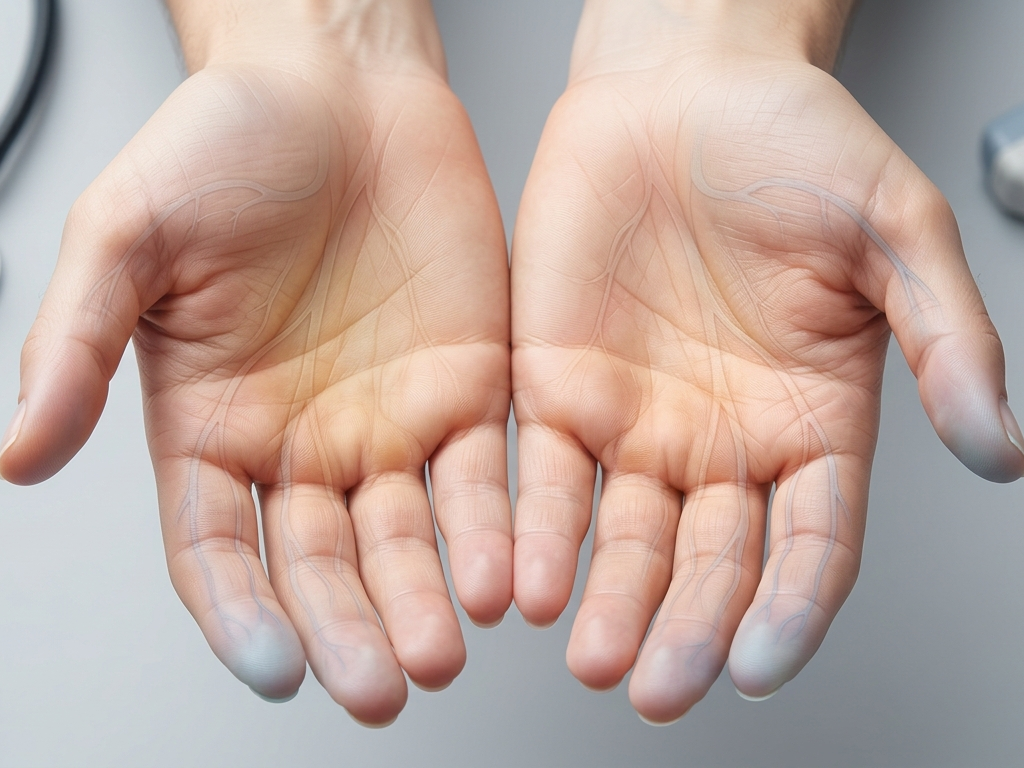
One of the most obvious signs of poor circulation is a change in the color of your skin. Your hands or fingers might look pale, white, blue, or purple. They might also look blotchy [3]. These color changes happen because your skin and the tissue underneath are not getting enough oxygen. Without enough oxygen, your skin loses its healthy pink color.
The most well-known example of this is Raynaud’s phenomenon. In this condition, the small arteries in your fingers suddenly get tighter, which stops blood flow. During an episode, your fingers can turn white, then blue, and then red as the blood flow returns [5]. The Mayo Clinic says these color changes often come with numbness and a stinging or throbbing pain when the hands warm up [5]. If you see these color changes, even if you do not have Raynaud’s, you should get checked out.
4. Swelling in the Hands and Fingers (Edema)
When your circulation is not working well, fluid can build up in your hands. This leads to swelling, which doctors call edema [2]. If your hands and fingers look puffy or feel tight, it could mean your circulatory system is having trouble moving blood back to your heart.
Swollen hands might feel heavy and stiff. You might notice your rings are harder to get off. Swelling can have other causes, like kidney problems or heart failure. But it is also a known sign of poor circulation. If the swelling does not go away, or if it gets worse during the day, you should see a doctor.
5. Slow Capillary Refill Time
This is a simple test you can do at home. It is called the capillary refill test. It checks how fast blood comes back to your fingertips after you press on them.
Here is how to do it. Press firmly on the tip of one of your fingernails for a few seconds. The skin under the nail will turn white. Then, let go and see how long it takes for the normal pink color to return. In a healthy person with good circulation, it should take less than two seconds [3].
If it takes longer than two or three seconds for the color to come back, your capillary refill time is slow. This could mean you have poor circulation in your hands [3]. Doctors use this test as a quick check. It is not a final diagnosis, but a slow time is a sign that something might be wrong.
6. Weak Grip Strength and Reduced Hand Mobility
A less obvious sign of poor circulation is that your hands start to feel weak. You might have trouble gripping things. Your fingers might feel stiff or hard to move. Your hand muscles and joints need a steady supply of oxygen and nutrients from your blood to work well. Without enough blood flow, they can get weak and tired [6].
You might find it harder to open jars, turn door handles, or hold things for a long time. Your fingers might feel stiff, especially in the morning. Grip weakness can also be from arthritis or nerve problems. But if it happens along with other circulation symptoms, it is a clue that blood flow to your hand muscles might be reduced [3].
7. Slow-Healing Sores or Wounds
Your body needs good blood flow to heal itself. When you get a cut or a sore on your hand, your blood brings in special cells and nutrients to fix the damage. If you notice that even small cuts on your hands are taking a very long time to heal, that is a serious warning sign of poor circulation [7].
In bad cases, these wounds can turn into chronic ulcers. These are open sores that just do not heal and can get infected easily. These ulcers are often painful and can show up on your fingertips. If you have a sore on your hand that will not heal, you need to see a doctor right away. Without treatment, it can lead to tissue death, called gangrene [7].
8. Brittle Nails and Slow Nail Growth
Your fingernails also need a healthy blood supply to grow and stay strong. The part of your nail that makes new nail, called the nail matrix, needs nutrients and oxygen from the blood. Poor circulation can starve your nail beds. This leads to nails that are brittle, thin, and break easily [8].
You might also notice your nails are growing much slower than they used to. These changes are easy to miss because they happen slowly. But they are important clues. Your nails might also look pale or have a blue tint at the base, which shows a lack of oxygen. If you have nail changes along with other symptoms, it is worth mentioning to your doctor.
9. Hair Loss on the Hands and Fingers
This is a less common sign, but it is a real one. The hair on the back of your hands and fingers needs blood to grow. When blood flow is low for a long time, the hair follicles do not get what they need. They can stop working, and the hair will stop growing [9].
Doctors sometimes look for hair loss on the hands when they are checking for peripheral artery disease. It is a subtle sign, but it can be an early clue that the arteries in your hands are getting narrow. If you notice that the hair on your hands is getting thinner or disappearing, and you have other risk factors like smoking or diabetes, tell your doctor.
10. Pain, Aching, or Cramping in the Hands
Pain in your hands, especially when you are using them, can be a sign of poor circulation. This kind of pain is called claudication. It happens when your muscles are working hard and they need more oxygen. If the blood flow is blocked, they cannot get enough oxygen, and they start to ache or cramp [11].
In your hands, this might feel like a deep ache or burning pain when you are typing, writing, or gripping tools. The pain goes away when you rest. In very serious cases, the pain can happen even when you are resting. This is a sign of a severe problem and you need medical help right away [11].
Understanding the Underlying Causes
The signs we talked about can come from different health problems. Here is a quick look at some common causes.
| Condition | What Happens | Common Hand Symptoms |
|---|---|---|
| Raynaud’s Disease | Arteries in fingers spasm from cold or stress | Color changes (white, blue, red), numbness, pain |
| Peripheral Artery Disease (PAD) | Plaque builds up and narrows arteries | Cold hands, pain, slow-healing wounds, hair loss |
| Atherosclerosis | Fatty deposits restrict blood flow | Cold hands, pain, numbness |
| Diabetes | High blood sugar damages blood vessels | Numbness, tingling, slow wound healing |
| Anemia | Not enough red blood cells to carry oxygen | Pale skin, weakness, cold hands |
| Autoimmune Disorders (like lupus) | Inflammation damages blood vessels | Color changes, swelling, pain, Raynaud’s |
| Smoking | Nicotine makes vessels tighter | Cold hands, poor circulation, ulcers |
When to See a Doctor
If you have any of these signs, it is a good idea to see a doctor. Some of these things can happen for simple reasons. But if they keep happening, or if you have more than one, it could mean something more serious.
You need to get emergency help right away if you have sudden, severe pain in your hand. Also, if your hand suddenly becomes cold, pale, and numb very fast, that could mean a sudden blockage in an artery. If you have any chest pain, trouble breathing, or feel like you might pass out, call for help immediately [1].
Finding and treating circulation problems early can make a big difference. Many of the conditions that cause poor hand circulation can be managed with lifestyle changes, medicine, or minor procedures. Paying attention to what your hands are telling you is an important step for your long-term health.