
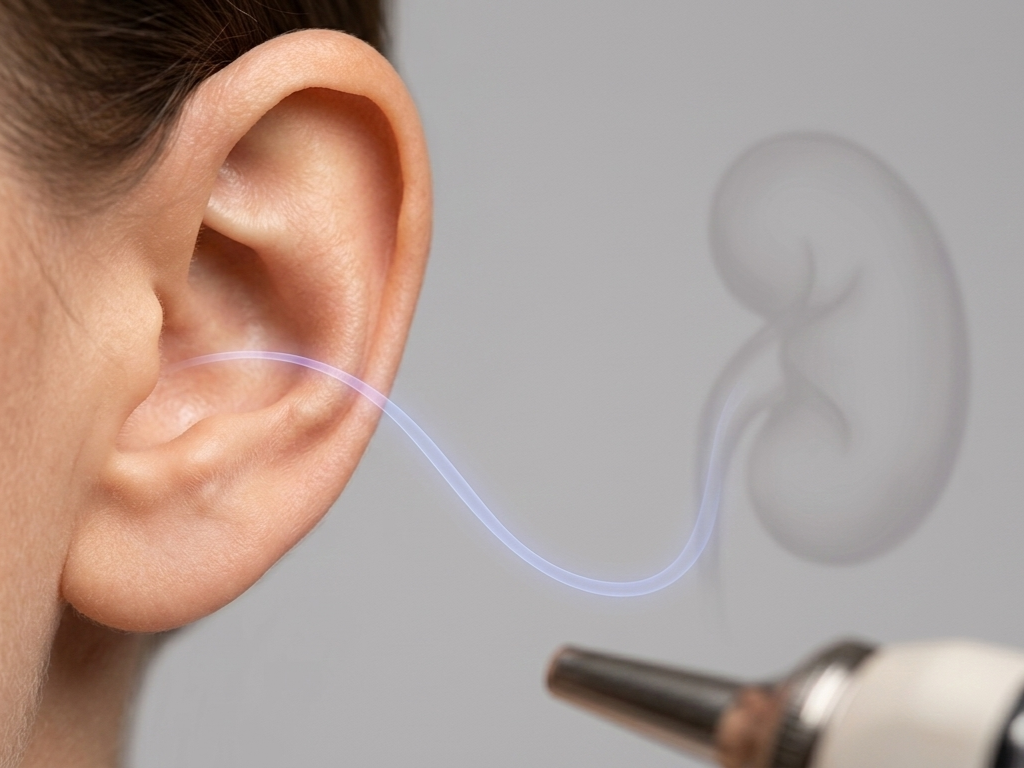
10 Ear Changes That Could Be Linked to Kidney Problems
March is National Kidney Month. It is a time to learn about the important job our kidneys do and how to keep them healthy. Chronic Kidney Disease (CKD) is a common problem. It affects about 1 in 7 adults in the United States. But the surprising thing is that 9 out of 10 people who have it do not know it [1].
Most people know that things like diabetes and high blood pressure can hurt your kidneys. But many do not know about the surprising link between your kidney health and your ears. Changes in your ears can sometimes be an early warning sign that your kidneys are in trouble.
This article explains ten specific changes in your ears that science has linked to kidney disease. We will look at the symptoms, why they happen, and the research that shows this important connection.
The Deep-Rooted Kidney-Ear Connection
The link between your kidneys and your ears is not just a coincidence. It is based on deep similarities in how they are built and how they work. The tiny filtering unit in your kidney is called a nephron. It has a lot in common with a part of your inner ear called the stria vascularis. Both of these tiny structures are very important for balancing fluids and electrolytes in your body. They use the same kinds of tools, like ion channels, to manage things like sodium, potassium, and calcium [2].
Because they are so similar, when something goes wrong with your kidneys, your ears can be affected too. If your kidneys are not filtering waste well, toxins can build up in your blood. These toxins can hurt your ears. Problems with electrolyte balance can also cause issues. Even some genetic problems can affect both organs at the same time. Researchers have found that antibodies made against kidney tissue can also end up in the inner ear. This shows a strong link between the two [2].
Here are ten ear changes that could mean you have a kidney problem.
1. Sensorineural Hearing Loss (SNHL)
The most common hearing problem for people with CKD is called Sensorineural Hearing Loss, or SNHL. This type of hearing loss happens because of damage to the inner ear or the nerve that connects the ear to the brain.
A major study from Australia in 2010 found that over 54 percent of people with moderate CKD had some hearing loss. Only 28 percent of people their age without CKD had the same problem [3]. Many other studies around the world have found similar results. In India, the rate was 64 percent. In Nigeria, it was 68 percent. In Iran, it was 45 percent [2]. This type of hearing loss often makes it hard to hear high-pitched sounds, which can make it difficult to understand what people are saying.
Here is a look at hearing loss rates in different countries:
| Region | Prevalence of Hearing Loss in CKD Patients |
|---|---|
| Australia | 54% (moderate CKD) |
| India | 64% |
| Nigeria | 68% |
| Iran | 45% |
| Croatia | 63% |
Table 1: How common hearing loss is in people with Chronic Kidney Disease around the world [2, 3].
2. Tinnitus (Ringing in the Ears)
Tinnitus is the name for hearing a ringing, buzzing, or other noise in your ears when there is no outside sound making it. This is another common problem for people with kidney issues.
A study from 2022 found a strong link. It showed that people with CKD are more than ten times more likely to have tinnitus [4]. The reason is often the same kind of inner ear damage that causes hearing loss. When the tiny hair cells in your inner ear are hurt by toxins in the blood or by poor blood flow, the signals they send to your brain get messed up. This can make you hear sounds that are not really there [5].
3. Sudden Sensorineural Hearing Loss (SSNHL)
Most hearing loss from CKD happens slowly over time. But some people can have a sudden, fast drop in their hearing. This is called Sudden Sensorineural Hearing Loss, or SSNHL.
A study from 2023 looked at this over many years. It found that people with CKD were more likely to have this sudden hearing loss than people without kidney disease [6]. This scary symptom can happen almost instantly or over a few days. It is often linked to blood vessel problems. High blood pressure and heart disease, which are common in people with CKD, can cause blood vessels to harden. This can block blood flow to the inner ear and cause sudden damage [6].
4. Vertigo and Dizziness (Vestibular Dysfunction)
Your inner ear does more than just help you hear. It also has a system that controls your balance. This is called the vestibular system. So, it makes sense that kidney disease can also cause problems with your balance.
This can lead to vertigo, which is a spinning feeling, or just general dizziness and feeling off-balance. One study found that a very high number of patients on dialysis, about 78 percent, had problems with tinnitus, vertigo, or both [7]. These symptoms can be triggered by the fast changes in fluids and electrolytes that happen during dialysis treatment. This can upset the delicate balance in your inner ear [2].
5. A Sensation of Fullness in the Ear (Endolymphatic Hydrops)
Some people with kidney disease say they feel a constant pressure or fullness in their ears. This feeling is called aural fullness. It is a main symptom of a condition called endolymphatic hydrops. This is when too much fluid builds up in the inner ear [8].
Both your kidneys and your inner ear’s fluid system are in charge of keeping the right balance of electrolytes. So, if your kidneys are not working right, it can easily throw off the fluid balance in your inner ear. This leads to that uncomfortable feeling of pressure [3].
6. Meniere’s Disease
When endolymphatic hydrops causes a specific set of bad symptoms, it is called Meniere’s disease. These symptoms include sudden attacks of vertigo, hearing loss that comes and goes, tinnitus, and a feeling of fullness in the ear.
A study from 2021 found that people with CKD have a much higher risk of getting this inner ear disorder [3]. The reason is thought to be the same as for endolymphatic hydrops. The kidneys cannot regulate fluids and electrolytes properly, which causes a harmful imbalance in the inner ear.
7. High-Frequency Hearing Loss
A specific type of hearing loss often seen in people with CKD is trouble hearing high-frequency sounds. One study showed that while 25 percent of a healthy group had this problem, it jumped to almost 69 percent in a group with CKD. In a group getting dialysis, it was almost 79 percent [9].
This kind of hearing loss often shows a certain pattern. There is often a “dip” or drop in hearing ability around the 6 kHz range. This is a strong clue that the inner ear has been damaged. The tiny hair cells that detect high-pitched sounds are often the first to be hurt by toxins or poor blood flow [2].
8. Ototoxicity: Hearing Damage from Medications
The link between kidney disease and hearing loss is made more complicated by the medicines used to treat it. Many drugs that are needed to manage CKD and its problems can be ototoxic. This means they are poisonous to the ear.
For example, loop diuretics like furosemide (also called Lasix) are often used to help the body get rid of extra fluid. They are known to sometimes cause temporary hearing loss. Other, stronger drugs like aminoglycoside antibiotics can cause permanent damage [2, 10]. Your kidneys are supposed to clear these drugs from your body. When your kidneys are not working well, the medicines can build up to harmful levels. Then they can damage the delicate parts of your inner ear.
9. Uremic Neuropathy and Auditory Nerve Damage
When kidneys fail, waste products build up in the blood. This is called uremia. This toxic environment can damage nerves all over the body. This is called uremic neuropathy. The nerve that carries sound from your ear to your brain, the auditory nerve, can be hurt by this too.
The build-up of uremic toxins can mess up how the nervous system works. This can stop sound signals from getting from the inner ear to the brain properly. It causes a type of hearing loss that can get worse as the kidney disease gets worse [2].
10. Congenital Ear Malformations
Sometimes, the link between the ear and the kidney is there from before birth. Some genetic syndromes affect how both organs grow in a developing baby.
Alport Syndrome is a genetic disease caused by a problem with a gene that makes a certain kind of collagen. This faulty collagen affects the filtering part of the kidneys and the inner ear. This leads to kidney failure and hearing loss that usually starts in late childhood [11].
Branchio-Oto-Renal (BOR) Syndrome is another genetic condition. It affects how tissues in the neck, ears, and kidneys develop. People with this syndrome can have malformed outer, middle, or inner ears. For example, they might have small pits or tags of skin in front of their ears. They also have problems with how their kidneys are built. This leads to hearing loss that can be of different types [12].
Conclusion
There is a strong and clear link between the health of your kidneys and your ears. Changes in your ears are not always just a small problem by themselves. They can be important clues to bigger issues in your body, like the slow, silent progress of Chronic Kidney Disease.
If you are at risk for kidney problems, pay attention to your hearing and balance. If you notice any changes, like trouble hearing, ringing in your ears, dizziness, or a feeling of fullness, talk to your doctor. Finding and treating kidney disease early can help keep your kidneys working longer. It might also help protect your hearing.